Avatars of Hindu God Vishnu

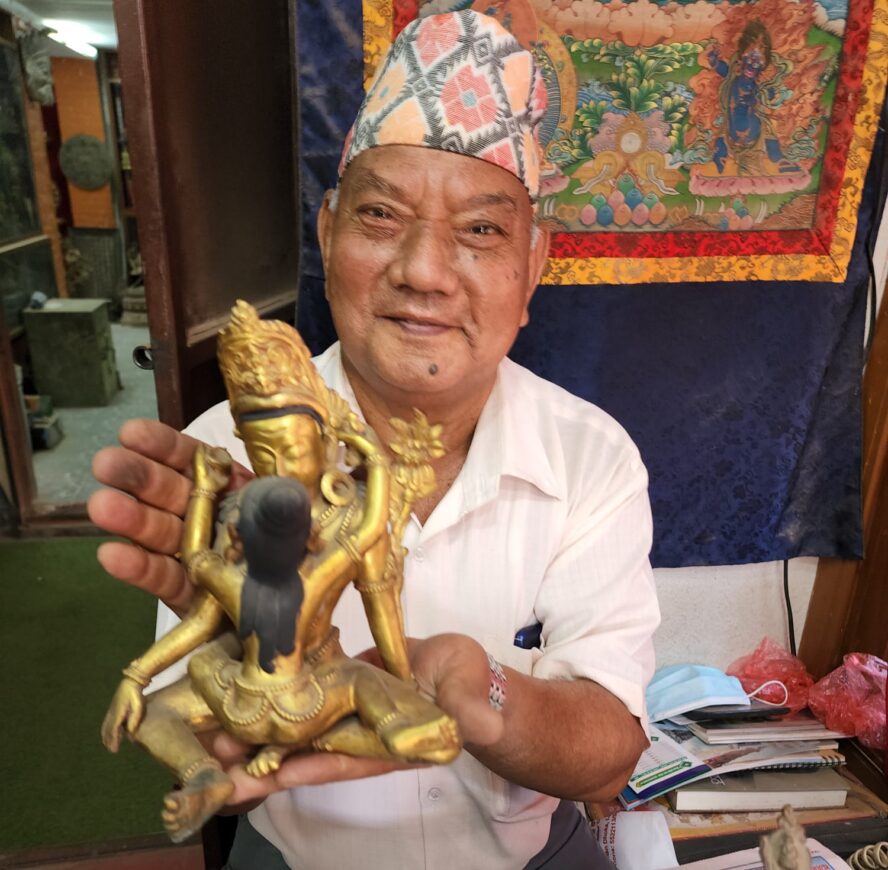
Yoga Narasimha, avatar of hindu god vishnu

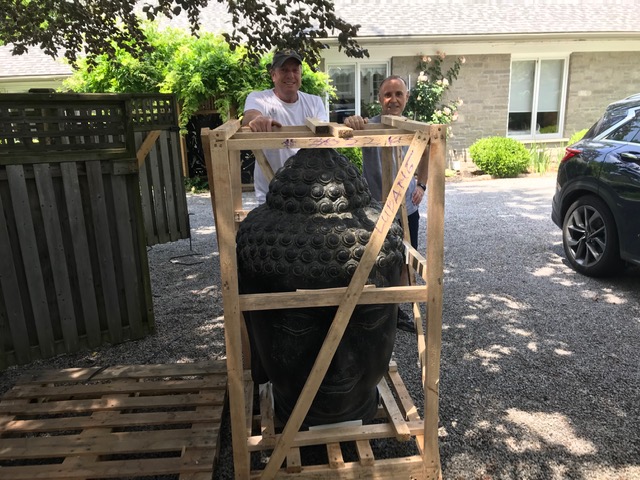
Bronze Narasimha statue, 4th avatar of Lord Vishnu

When most people think of Avatars they think of the recent Blockbuster hit by James Cameron.  But the original concept of Avatars stems from the Hindu Religion and is most widely associated with Hindu God Vishnu.  Within Hinduism, Avatars are thought to be descendants of Hindu deity’s, deliberately placed upon earth.  The reason Hindu God Vishnu, the Preserver, is most closely associated with this concept is because he is thought to have many, each with a specific aim or purpose in existence.


Within the Bhagavad Gita there is a passage that describes the purpose of these destined Avatars of Vishnu as bringing about dharma back to the social order of the world:


 “Whenever righteousness wanes and unrighteousness increases I send myself forth.  For the protection of the good and for the destruction of evil, and for the establishment of righteousness, I come into being age after age.”


Another reason for the close association with Vishnu and his Avatars is because his descendants are thought to be integral to his teachings.  Other deities do not have such close ties to their descendants.

Although there are thought to be countless descendants of Vishnu in some respects, there are 10 main avatars that are often referred to as Dasavatara.  Krishna and Rama are the most widely known of Vishnu’s 10 avatars.

The other 8 are as follows:

1)      Matsya- fish avatar

2)      Kurma- tortoise avatar

3)      Varaha- boar avatar

4)      Narasimha- half man-half lion avatar

5)      Vamana -dwarf avatar

6)      Parashurama- sage avatar

7)      Gautama Buddha

8)      Kaliki- who has yet to come

Hindu God Shiva: Destroyer & Creator

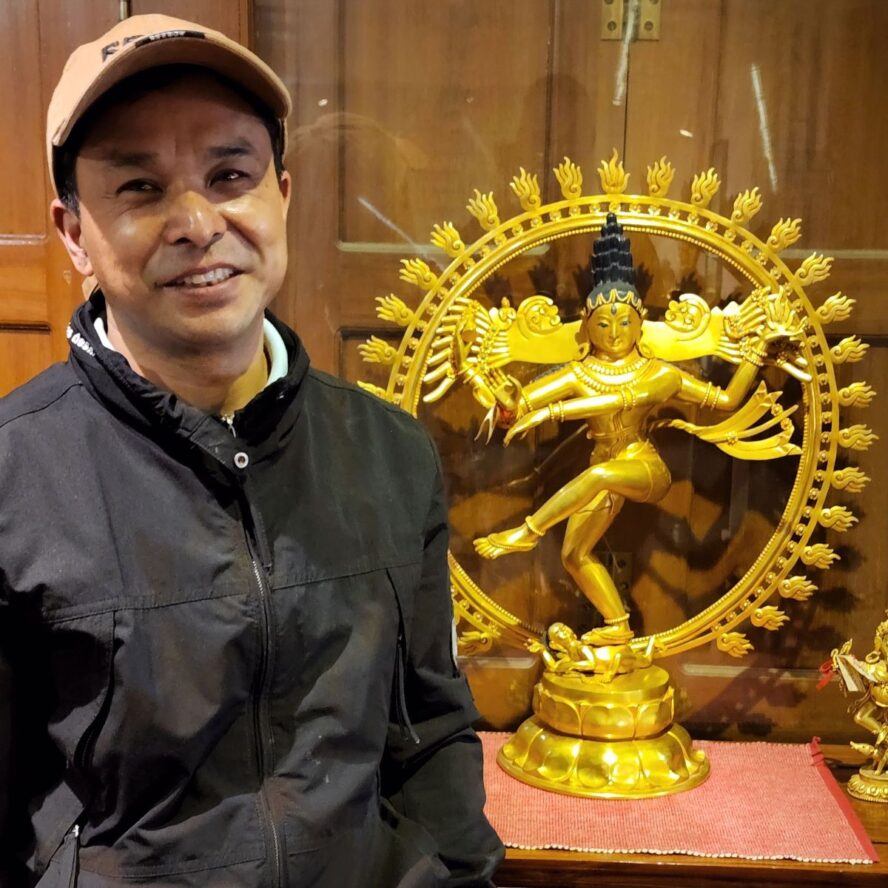
Hindu God Shiva as Lord of Dance Nataraja

Shiva destroys and creates the world anew as the Lord of Dance, Nataraja!

When many first hear of the Hindu God of Destruction, Shiva, they automatically think of something evil or alarming.  They think him something to be feared.    Yet, his powers are constructive, not just destructive.   He brings about necessary and beneficial transformation.   It can be said that the world is in a constant state of flux.   Just as life is given at birth, so too must it eventually cease to exist.   In that same regard, the world is constantly evolving and partaking in birth, deaths, and rebirths.

Hindus believe that Hindu God Shiva is responsible for the destruction of the universe in order that he may then re-create it into a more perfect form.  They believe that even now he infiltrates the world in order to shed illusion and destroy the worlds many imperfections.  Not only is he the Destroyer, he can also be thought of as a god of change or formation, causing a constant cycle of destruction and creation in order to bring about necessary good.

There is no doubt that the world as we know it houses many flaws.    In order to bring about real change, Hindus look to Shiva to re-create the world in a better image.  Worshipers look to him for guidance in ridding their troubles.  They may pray upon a Shiva statue so that he may bring about renewal in the world.  Many worship Shiva as their primary God.   Join Hindu’s around the world in worshiping Hindu God Shiva for both his destructive and constructive qualities.

Bring a Shiva or other Hindu statues into your home or place of worship from Lotus Sculpture.

Hindu God Vamana, Vishnu Avatar – The Dwarf Brahmin

Bronze Vishnu statue as the brahimn, dwarf avatar Vamana

Bronze Vishnu statue as the brahimn, dwarf avatar, Vamana leaping off the Hands of the Demon, Bali

The fifth avatar, Vamana, appeared in the Tretayuga in order to destroy Bali, the king of demons.  The fourth lineal descendant of Hiranyakashyap, named Bali, through his devotion and penance defeated Indra, the Hindu god of firmament, humbled other gods and extended his authority over the three worlds.  All the gods appealed to Lord Vishnu for protection and He became manifest in His Dwarf Avatar of Vamana for the purpose of restraining Bali.

When Bali was making a great religious offering, Lord Vishnu in the form of Vamana, a dwarf brahmin, appeared before him in the company of other Brahmins. Bali was extremely pleased to see a holy man with such a diminutive form and promised to give him whatever he should ask. Lord Vishnu asked only for as much land as he could measure by three steps. Bali laughingly agreed to grant the boon of three steps. Lord Vishnu grew in stature and thus stepped over heaven in his first stride and earth in the second stride. Then out of respect to Bali’s kindness and his grandfather Prahlad’s great virtues, Lord Vishnu stopped short and left him in pathal, the subterranean region. Thus, Vishnu as the dwarf brahmin Vamana, vanquished the demon king Bali and restored the three worlds to their rightful moral code. Bali’s capital was Mahabalipuram.

The Hindu God Ayyappan, Son of Shiva & Vishnu

Hindu God Ayyappan

View the Bronze 15 inch Statue of the Hindu God Ayyappan

The legend and history are intermingled in the genesis of the Hindu God Ayyappan. It is believed that Ayyappan was born as progeny of the union of the Hindu God Vishnu and the Hindu God Shiva. Vishnu appeared as Mohini, the beautiful enchantress – the alluring damsel appearing at the time of the churning of the Ocean Of Milk to entice the asuras and divide the nectar (Arnrith) among the Devas themselves. Shiva succumbed to the beauty of Mohini and Ayyappan was born out of this union. Hence his other name Harihara Putra (HARI-Shiva, HARA-Vishnu, PUTRA-Son). Ayyappan is regarded as the third son of Shiva, the other two being Ganesha and Murugan.

Ayyappan, the Celibate God of Kerala, is host to every religious trend and practice the Hindu faith ever manifested in its entire history. His temple is unique in India, in that there is no distinction of caste or religion in determining who can enter it. Non-Hindus are equally welcome.

Postures of the Buddha

Large_Chiang_Saen_Buddha_Statue

View all Buddha Statues from Lotus Sculpture

The Buddha is often depicted within art and sculpture holding many different poses or postures.  A lot of times these poses include specific hand gestures as well as positioning of the legs.  Many people wonder the meanings behind these certain hand gestures and seated positions.  The Buddha is often seen with either his ankles tucked, called the Double Lotus position, or with one leg resting atop the other which is called a Single Lotus position.  These seated positions are in combination with certain hand gestures called Mudras.

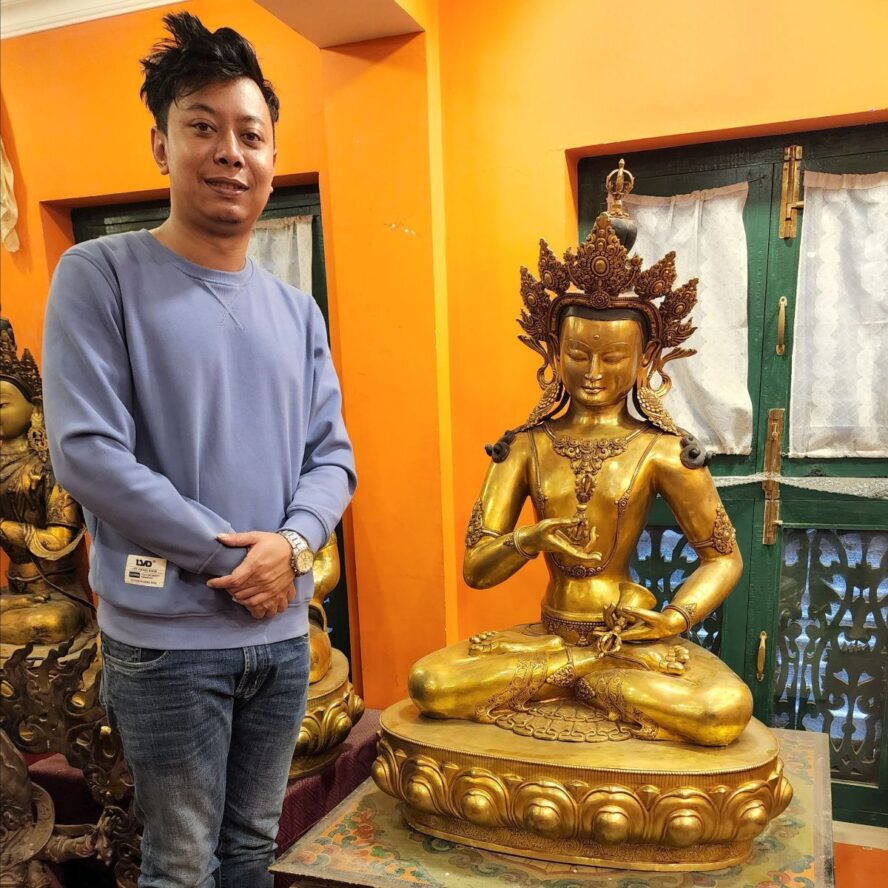
One such posture that is commonly seen is the Buddha sitting with crossed legs (Double Lotus) and both hands resting palms up upon his knees.  This stance represents meditation and is the most common posture due to the Buddha’s enlightenment through meditation underneath the Bodhi Tree.  This stance, called the Meditation Buddha, represents inner wisdom, emotional stability, and clarity of the mind.

Another important posture is that of the Buddha with legs crossed (Double Lotus), left hand resting face up within his lap, and right hand pointing to the ground with his palm facing towards him.  This pose is regarded as the Buddha calling the earth as witness to the moment he reached enlightenment.  This stance, called the Enlightenment Buddha, signifies gaining insight, achieving great character, and having self-discipline.

Here are a few more common postures of the Buddha:

Protection Buddha: The Buddha sits in either Double or Single Lotus position with right hand raised facing outward and left hand in the lap.  This position represents having courage and offers the bearer protection against fear, delusion, and anger.

Teaching_Budda

Teaching Buddha Statue

Teaching Buddha: The Buddha sits in a Double Lotus position with hands up at chest level.  His hands form a circle by joining thumbs and index fingers with the right palm facing in and the left facing out.  This position brings about wisdom, understanding, and finding the truth behind your life’s path.

Contemplation Buddha:  The Buddha stands with legs together and both arms against the chest, palms in, and right hand on top of the right.    This pose represents patient understanding.

View all Buddha Statues from Lotus Sculpture