My Cart: 0 item(s)

Brass Statue Care & Cleaning Guide

Understanding Brass
Brass is an alloy of copper and zinc. The exact ratio varies, but traditional Indian brass typically contains 70% copper and 30% zinc. Brass statues are usually hand-cast using sand casting or lost-wax methods by artisan families in India, Thailand, and Nepal.
Like bronze, brass develops a natural patina over time. One of the great things about brass is that no matter how dull or weathered a statue becomes, you can always restore its color and shine at home with just a few simple tools. Whether you want to maintain a bright polished look or preserve a rich antique brass finish, brass is one of the most forgiving metals to care for.


Living Metal
Brass naturally changes over time—tarnishing, darkening, and developing character through handling and environment. This is not a flaw; it is the metal living and aging. You can restore brass statues at home in minutes, maintain brightness with regular polishing, or embrace the beautiful antique look that develops naturally.
Types of Brass Finishes
Identifying your statue’s finish is the first step to properly clean and maintain your brass statue. Each finish requires a different approach—using the wrong method can permanently alter the surface.
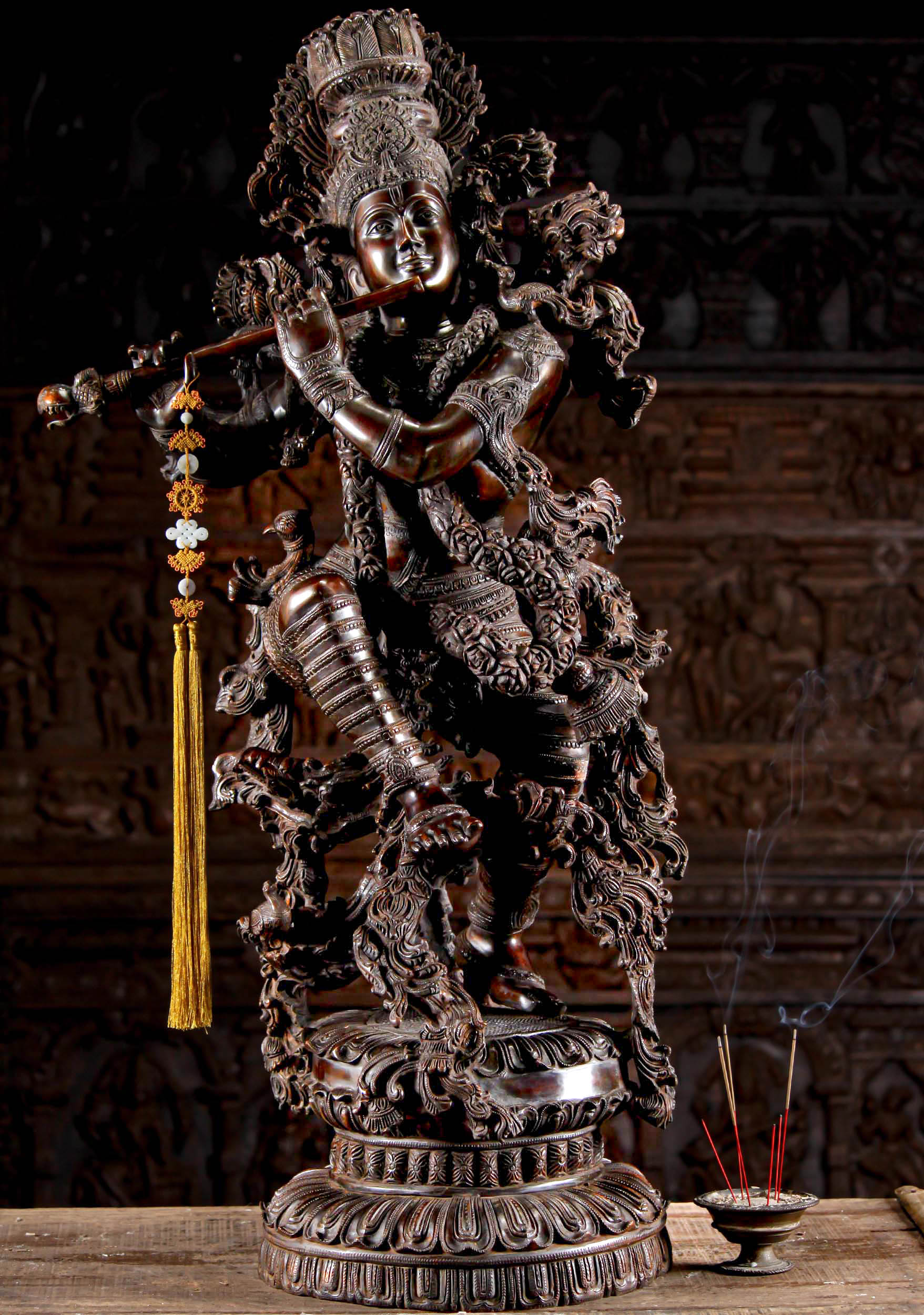
Antique Patina
Chemically treated to create an aged dark brown or black appearance. This finish continues to develop naturally over time.

Polished Brass
Bright golden color. Polish as needed to maintain shine and restore color.

Indonesian Green Patina
Rich green finish achieved by burying statues underground during curing. This patina is the goal—preserve it, don’t remove it.

Brass with Stone Inlay
Some statues have inlayed details. Requires especially gentle cleaning to safely maintain the brass while preserving the stones.
Video Cleaning Guide
Watch our founder demonstrate how to clean and restore a brass statue at home in just a few minutes—covering Indian, Thai, Indonesian, and Nepalese brass.
Avoid Vinegar, Lemon & Salt
These work on raw brass only—they will permanently strip the added patina from Asian brass statues. Use oil only.
What You’ll Need
- Old English furniture oil — the secret weapon; coconut oil or olive oil work as natural alternatives
- Paintbrush — ideal for larger statues; covers broad surfaces quickly
- Toothbrush — for getting into fine details and hard-to-reach crevices
- Soft cotton rag — to wipe away excess oil and buff the surface
The Cleaning Process
- 1 Apply oil with a paintbrush. For larger statues, start with the paintbrush to cover broad areas quickly. Apply a light coat of Old English, coconut oil, or olive oil over the entire surface.
- 2 Work the details with a toothbrush. Follow up with a toothbrush to get oil into crevices, carved details, and any areas with white spots or buildup.
- 3 Buff with a cotton rag. Wipe away the excess oil to remove the greasy sheen. Any remaining oil will gradually absorb into the metal on its own over time.
- 4 For raw brass (Nepalese style), add friction. Uncolored brass responds especially well to a little elbow grease—rubbing with a cloth brings out a more lustrous, gleaming finish.
Understanding the White Spots
White spots are very common and not a sign of damage. They form when residual material from the casting process reacts with moisture in the air. A little oil worked in with a toothbrush removes them easily, and once cleaned they typically do not return.
Cleaning by Brass Type
Indian & Thai Brass
These statues are chemically treated to achieve their finish color—dark antique, bright gold, or other tones. The coloration is durable and will not come off with oil or a brush. The goal is simply to revive the existing color, not change it. Use oil only.
Indonesian Brass
Indonesian statues have a distinctive rich green antique patina, achieved by burying the statue underground during finishing. You want to preserve this patina, not remove it. Use oil only—no acids, no bases. The oil will make the green pop and restore depth without stripping the color.
Nepalese Brass
Nepalese brass is left in its raw, uncolored state—a natural golden brass tone. These statues respond well to friction polishing with a cloth in addition to oil, which brings out extra luster and gleam.
How Often Should You Clean?
Cleaning is on an as-needed basis—not a weekly or monthly requirement. Dust and dirt will not harm brass. Clean when you want the statue to look its best: before a puja, when hosting guests, or whenever the luster has faded. Sometimes a simple wipe-down with a dry cloth is all that is needed.
Brass Will Always Come Back
No matter how neglected—left outside for months, covered in dust, or spotted with white residue—brass statues will not rust or disintegrate. With a little oil and a brush, you can always restore them to looking exactly as they did on the first day of casting.
Daily Care
Safely maintaining brass statues at home requires very little effort day to day. A consistent routine of light dusting and mindful display will keep your statue looking its best between deeper cleanings.

Handling
- Handle with clean, dry hands
- Natural oils from skin contribute to patina—this is completely normal
- Always lift from the base, not from delicate parts
Dusting
- Dust weekly with a soft, dry cloth
- Microfiber or cotton cloths work well
- Use a soft paintbrush for intricate details and crevices
- Avoid abrasive materials of any kind
Display Location
- Indoor brass can be displayed in any location
- Avoid extreme humidity, which accelerates tarnishing
- Keep away from salt air if possible
- Direct sunlight will not harm brass but may cause uneven patina over time
Humidity Tip
If you live in a very humid climate, a small silica gel packet near your brass display can help slow tarnishing and preserve the finish longer. Check and replace it every few months.
Deep Cleaning
To restore a brass statue at home, you do not need expensive products or professional help. The right technique depends on your statue’s finish—but in all cases, the goal is to restore color and shine without stripping the original patina.


For Antique Patina & Polished Brass
- 1Mix warm water with a small amount of mild dish soap.
- 2Dip a soft cloth in the solution and wring out well—the cloth should be damp, not wet.
- 3Gently wipe down the statue.
- 4Use a soft toothbrush for detailed or recessed areas.
- 5Rinse with a clean, lightly dampened cloth.
- 6Dry immediately and thoroughly with a soft cloth.
- 7Allow to air dry completely before returning to display.
To Polish & Restore Color and Shine
Natural Method:
- 1Apply Old English, coconut oil, or olive oil with a paintbrush over the entire surface.
- 2Work into details and crevices with a toothbrush.
- 3Buff with a clean cotton rag to remove excess oil and bring up the shine.
Commercial Method (polished brass only):
- 1Use a quality antique brass polish such as Brasso or Wright’s Brass Polish.
- 2Apply a small amount to a soft cloth and rub gently in circular motions.
- 3Buff off completely with a clean cloth.
Never Soak
Never soak a brass statue in water, even briefly. Water trapped inside hollow statues or in crevices can cause internal corrosion and leave difficult-to-remove mineral deposits. To safely clean brass statues at home, always use a damp cloth rather than submerging.
What NOT to Do
When restoring brass statues at home, the most common mistakes involve using the wrong cleaning agents. These are the things to avoid to safely maintain your brass and preserve its finish long-term.
Never soak brass statues in water
Don’t use harsh chemicals or ammonia
Avoid vinegar, lemon, and salt—they strip added patina from Asian brass statues
Avoid abrasive scrubbers or steel wool
Don’t put in the dishwasher
Never use metal files or sandpaper
Don’t use polish on painted surfaces
Avoid oil-based products other than natural oils—they attract dust
Understanding Tarnish & Patina
Knowing what you are seeing on your brass helps you decide whether to clean it, leave it, or take steps to restore its color and shine. Understanding tarnish is key to safely maintaining antique brass statues at home without accidentally damaging the finish.
| Appearance | What It Is | Action |
|---|---|---|
| Dark brown / black | Natural oxidation. Normal aging and protective. | Leave as character, or restore color with oil if preferred. |
| Green spots (verdigris) | Copper oxidation. More common in humid environments. | Remove with oil and a brush, or leave as character—it is harmless. |
| Pink / reddish tones | Natural copper showing through the brass alloy. | Normal and adds character. No action needed. |
| White powder | Zinc oxide or residue from the casting process reacting with air. | Brush off with oil and a toothbrush. If it keeps returning, consult a conservator. |
| Uneven shine | Areas touched frequently polish naturally from handling. | Completely normal and beautiful. No action needed. |
Tarnish Is Protective
The dark oxidation layer that forms on brass is not damage—it is the metal protecting itself. You can restore shine and color with oil at any time, or choose to let the antique patina develop naturally.
Polished vs. Patina: Choosing Your Look
Both approaches are equally valid when maintaining brass statues at home. It comes down to personal preference and how much time you want to spend on upkeep.


✨ Keep It Polished
- Use antique brass polish every 2–4 weeks to restore shine
- Buff with a soft cloth after each polishing
- More maintenance, but a bright golden look
🌴 Let It Patina
- Clean only with oil or mild soap and water
- Never use commercial brass polish
- Enjoy natural darkening over time
- Less maintenance, rich antique character
You Can Change Your Mind
Start with patina and polish later to restore color and shine if you change your mind. Or polish for years, then let it age naturally. Both paths are reversible—it’s entirely personal preference.
Special Considerations
Painted Brass
- Clean only with a dry or barely damp cloth
- Never use polish on painted areas
- Touch-ups require matching paint—contact us for guidance
Outdoor Brass

- Brass can go outside but will tarnish more quickly
- Develops dark brown or black patina with outdoor exposure
- Can turn green in coastal or high-humidity areas
- Clean and restore brass statues 2–4 times per year with oil or soap and water
- Consider bringing indoors in winter to preserve the finish and slow weathering
Hollow Cast Brass
- Never fill with water or pour water inside
- Use a separate bowl for water offerings
- If water gets inside, drain and dry completely right away
Brass with Inlay Work

- Clean gently around inlaid areas
- Do not scrub inlay directly
- Use a soft brush for crevices near inlay
Ritual Cleaning & Offerings

Water Offerings
Always use a separate bowl. Never pour water directly on the statue or inside hollow brass statues. This prevents water from becoming trapped and causing internal corrosion.
Oil Anointing
A small amount of oil on the outside is fine for ritual purposes. Wipe off excess promptly to prevent dust attraction. Avoid getting oil inside hollow statues where it can become rancid.
Incense
Safe for brass. Light residue from incense smoke can be gently dusted off with a soft cloth during regular cleaning.
Flowers
Keep flowers in a separate vase. Remove wilted flowers promptly—decaying organic matter can accelerate tarnishing on nearby metal surfaces.
Kumkum / Sindoor (Red Powder)
Can be applied for rituals. Remove gently with a dry cloth afterward. May leave a slight staining on the patina, which is normal and considered auspicious by many traditions.
After Ritual Use
If offerings have been placed directly on a brass statue, gently clean the surface with a lightly dampened cloth after the ritual and dry thoroughly. This prevents residue from etching the surface and helps preserve the finish over time.
Long-Term Preservation
Properly preserved brass statues can last for generations without professional restoration. These simple habits will help you maintain your brass statue at home and keep it looking its best year after year.
Storage
- Wrap in acid-free tissue or soft cotton cloth
- Store in a cool, dry place
- Avoid plastic bags, which trap moisture and accelerate tarnishing
- Check periodically for corrosion or moisture during storage
Seasonal Care
- In humid summer months, check more frequently for tarnishing
- In dry winter conditions, handle gently—brass can become slightly brittle when very dry
- Maintain a consistent environment where possible to preserve the finish
Professional Restoration
For valuable pieces, extensive corrosion, or damage you are unsure about, consult a professional metal conservator. They can safely restore brass statues without risking further damage.
Common Questions
Tarnishing is natural and cannot be fully stopped. To restore color and shine at home, apply a light coat of Old English or coconut oil with a paintbrush, work it into details with a toothbrush, then buff with a cotton rag. For a brighter finish, use a commercial antique brass polish every 2–4 weeks. Many people prefer the darkened patina look—it actually protects the metal.
Not on Asian brass statues. Vinegar, lemon juice, salt, and similar acidic cleaners will permanently strip the added patina and finish from Indian, Thai, Indonesian, and Nepalese statues. These methods only work safely on raw, unfinished brass. Stick to oil—it cleans, restores, and protects without any risk.
No. The green color is copper oxidation (verdigris)—completely harmless and very common in humid environments. On Indonesian statues it is the intentional antique finish. On other brass, you can remove it with oil and a toothbrush or simply leave it as character. It will not spread or cause damage.
Yes. Leaving the statue in a humid environment will speed up natural tarnishing. However, naturally developed patina is generally the most beautiful and even result—patience is rewarded. Do not use vinegar or acidic methods on Asian brass statues as they will strip the finish rather than simply aging it.
White spots are very common and not a sign of damage. They form when residual material from the casting process reacts with moisture in the air. A little oil worked in with a toothbrush removes them easily, and once cleaned they typically do not return. If spots keep returning persistently, consult a metal conservator.
The country of origin is your best guide. Indian and Thai brass statues are chemically treated to a specific color. Indonesian statues have a distinctive rich green antique patina from being buried underground. Nepalese brass is left in its natural raw golden state. If you’re unsure, send us a photo and we’ll help identify it.
Quick Reference Card
Brass Care Quick Reference
Print this card and keep it with your brass collection
Weekly
Dust with a soft dry cloth to maintain brass statue at home
Monthly
Check for tarnish or moisture; restore color with oil if needed
As Needed
Clean brass statue with oil and a soft brush; buff with cotton rag to restore shine
Quarterly
Deep clean with mild soap and warm water; dry thoroughly to preserve finish
🚫 Never
- Soak in water or put in the dishwasher
- Use vinegar, lemon, salt, or acidic cleaners on Asian brass
- Use harsh chemicals, bleach, or ammonia
- Scrub with abrasive pads or steel wool
- Pour water inside hollow statues
- Use polish on painted surfaces
Need Help With Your Brass?
Whether you need help identifying a finish, want advice on how to restore color and shine, or have questions about safely cleaning your brass statue at home—send us a photo and our team will help. No purchase necessary.
Contact Us for Advice