My Cart: 0 item(s)

Product Search
FREE UPS GROUND SHIPPING - or 35% OFF FREIGHT SHIPPING ON LARGE STATUES - FROM CALIFORNIA FREE UPS GROUND SHIPPING*
Product Search
    Product Search
      Questions? Call 760-994-4455

      Secure Checkout

      Hindu Gods and Goddesses: How Many There Are and Who They Are


      1 extra code hindu gods · TXT

      A guide to the Hindu pantheon

      Hindu Gods and Goddesses: How Many There Are and Who They Are

      Shiva, Vishnu, Ganesha, Lakshmi, Durga and hundreds more: what each deity represents, how they relate to one another, and why Hindus see them all as faces of one reality, Brahman.

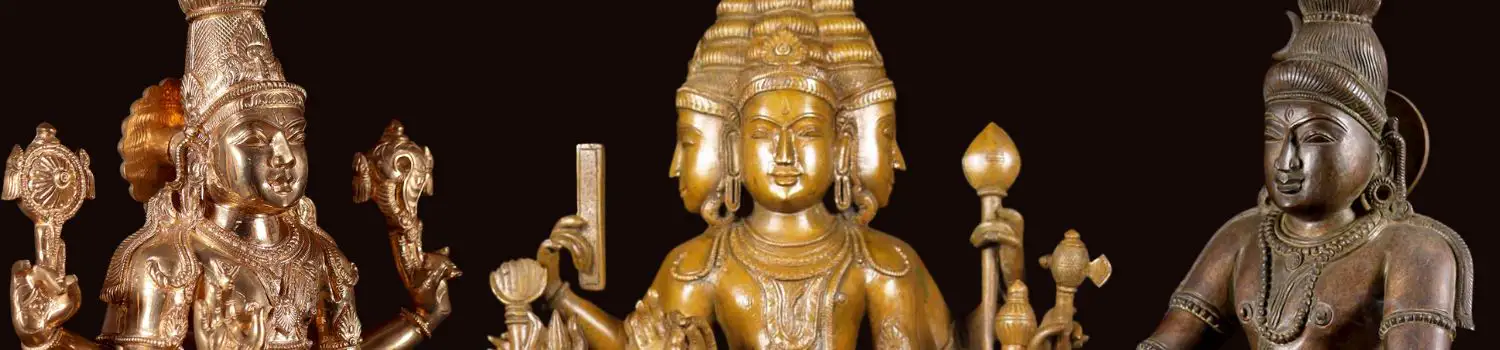
      Statues of Brahma, Vishnu and Shiva, the Hindu Trimurti
      Brahma, Vishnu and Shiva: the Hindu Trimurti.

      Quick answer: how many Hindu gods are there?

      The Vedas name 33 deities, and popular tradition speaks of 33 crore (330 million), a number meant to say the divine is countless. Yet Hinduism holds there is only one ultimate reality, Brahman. Every god and goddess is a form of Brahman that devotees can see, approach and worship.

      Vedic deities
      33
      Popular count
      330M
      Supreme reality
      1
      The Trimurti
      3

      Brahman: the one reality behind every Hindu god

      The pantheon of Hindu gods is vast, yet Hinduism is at heart devoted to one Supreme Being, Brahman. Brahman permeates everything in the universe. It is impersonal and beyond description, transcending every form and attribute. Everything is part of Brahman, but Brahman is more than the sum of its parts.

      Shiva, Vishnu, Brahma and the other deities are accessible manifestations of this unknowable Brahman. They give devotees forms to see, touch and feel, so they can connect with the divine on a personal level. Each represents one aspect of Brahman, making the infinite comprehensible to the human mind.

      “There can really be as many Hindu Gods as there are devotees to suit the moods, feelings, emotions and social background of the devotees.”

      SRI RAMAKRISHNA

      The Trimurti: Brahma, Vishnu and Shiva

      Among the Hindu gods, the Trimurti embodies the three core functions of the universe: creation, preservation and transformation.

      Brahma

      The Creator

      Brings all things into existence. His consort is Saraswati.

      Vishnu

      The Preserver

      Upholds dharma, the cosmic order. His consort is Lakshmi.

      Shiva

      The Destroyer

      Drives transformation and the cycle of birth and rebirth. His consort is Parvati.

      The Hindu goddesses: Devi and Shakti
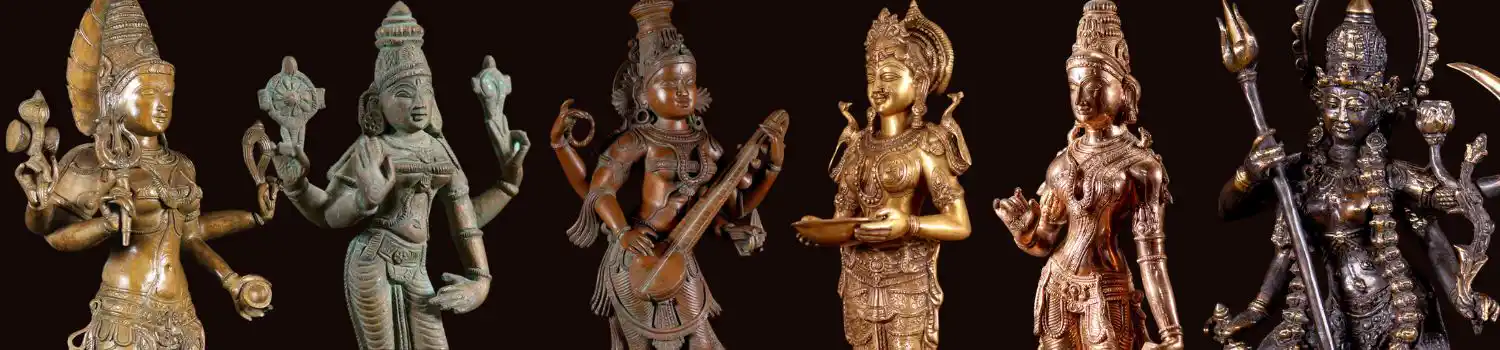
      Statues of Hindu goddesses Shakti, Durga, Saraswati, Lakshmi, Parvati and Kali
      Shakti, Durga, Saraswati, Lakshmi, Parvati and Kali.

      The goddesses represent the feminine divine energy, Shakti, essential to the balance of the universe. Parvati, consort of Shiva, symbolizes love, devotion and fertility. Lakshmi, consort of Vishnu, brings wealth and well-being. Saraswati inspires knowledge, music and the arts. Kali embodies time and change, and Shakti is worshipped as the mother goddess, both nurturing and fierce.

      These goddesses are not merely consorts. They are powerful deities in their own right, revered for the energies they hold, and their place in the pantheon reflects the Hindu belief in a balance of masculine and feminine within the divine.

      A guide to 15 major Hindu deities

      Each guide covers that deity’s meaning, symbolism and iconography, with our hand-made statues of them.

      Statue of Hindu god Shiva, the Destroyer

      The Destroyer

      Shiva

      The most widely worshipped Hindu deity, Shiva governs the cycle of existence, its beginning and its end, clearing the way for renewal.

      Statue of elephant-headed Hindu god Ganesha

      Remover of Obstacles

      Ganesha

      The elephant-headed god of wisdom and success, invoked before any new venture to clear the path of difficulties.

      Statue of Hindu god Vishnu, the Preserver

      The Preserver

      Vishnu

      Member of the Trimurti who upholds dharma, the moral order of the universe, descending to earth as avatars such as Rama and Krishna.

      Bronze Nataraja statue of Shiva dancing in a ring of fire

      Dancing Shiva

      Nataraja

      Shiva as Lord of the Dance. His cosmic dance destroys a weary world so new life can begin, the cycle of death and rebirth.

      Statue of Hindu god Krishna playing the flute

      Divine Cowherd

      Krishna

      One of the most beloved Indian divinities, worshipped as the eighth avatar of Vishnu and the teacher of the Bhagavad Gita.

      Statue of Hindu goddess Parvati

      Gentle Form of Devi

      Parvati

      The benevolent aspect of the Mother Goddess and consort of Shiva, known as the daughter of the mountain.

      Statue of Hindu monkey god Hanuman

      Monkey God

      Hanuman

      Celebrated for courage, strength and selfless devotion, Hanuman is the faithful companion of Lord Rama.

      Statue of Hindu goddess Lakshmi seated on a lotus

      Goddess of Wealth

      Lakshmi

      Also called Laxmi, goddess of fortune, prosperity, beauty and auspiciousness, and consort of Vishnu.

      Statue of Hindu goddess Saraswati playing the veena

      Goddess of Wisdom

      Saraswati

      Goddess of knowledge, music and the arts, the river of consciousness that enlivens creation. Consort of Brahma.

      Statue of Hindu goddess Durga riding a lion

      The Unconquerable

      Durga

      The most splendid manifestation of Devi, holding within her the combined power of all the gods.

      Statue of four-faced Hindu god Brahma, the Creator

      God of Creation

      Brahma

      The creator in the Trimurti alongside Vishnu and Shiva, usually shown with four faces. His consort is Saraswati.

      Statue of Hindu goddess Kali

      Goddess of Time

      Kali

      The fierce form Parvati took on the cosmic battlefield to destroy the demon Raktabija. Dark as death, she embodies time and change.

      Statue of Hindu god Murugan holding his spear

      God of War

      Murugan

      Also known as Skanda or Kartikeya, son of Shiva and Parvati and especially beloved in South India.

      Statue of Hindu goddess Shakti

      Feminine Energy

      Shakti

      In the Shakta tradition, the World Mother and consort of Shiva: the energy behind all creation.

      Statue of the sage Patanjali, father of yoga

      Father of Yoga

      Patanjali

      The revered sage who compiled the Yoga Sutras, traditionally also credited with a work on Ayurveda.

      Hindu gods chart: roles, consorts, mounts and symbols

      Use this chart to recognize a deity in a statue or painting.

      DeityKnown asConsortMount (vahana)How to recognize
      BrahmaThe CreatorSaraswatiSwan (hamsa)Four faces, holds the Vedas
      VishnuThe PreserverLakshmiGaruda (eagle)Blue skin, conch and discus
      ShivaThe DestroyerParvatiNandi (bull)Trident, third eye, crescent moon
      GaneshaRemover of ObstaclesRiddhi and SiddhiMouse (Mushika)Elephant head, broken tusk, modak sweet
      LakshmiGoddess of WealthVishnuOwlSeated on a lotus, gold coins
      SaraswatiGoddess of WisdomBrahmaSwanWhite sari, plays the veena
      DurgaThe UnconquerableShivaLion or tigerMany arms holding weapons
      KrishnaAvatar of VishnuRadhaNoneBlue skin, flute, peacock feather
      MuruganGod of WarValli and DevasenaPeacockHolds the vel (spear)

      Frequently asked questions about Hindu gods

      How many Hindu gods are there?

      The Vedas name 33 deities, and tradition speaks of 33 crore (330 million), meaning the divine is countless. Hinduism nonetheless holds that all of them are forms of one ultimate reality, Brahman.

      Who is the supreme god in Hinduism?

      Brahman is the supreme, formless reality. Devotees often worship one deity as the highest personal form of Brahman: Vishnu for Vaishnavas, Shiva for Shaivas and Devi for Shaktas.

      Who are the three main Hindu gods?

      The Trimurti: Brahma the Creator, Vishnu the Preserver and Shiva the Destroyer, who together carry out the creation, preservation and transformation of the universe.

      Is Hinduism monotheistic or polytheistic?

      Both views are found. Many Hindus see the many gods as expressions of a single Brahman, which scholars sometimes describe as henotheism: devotion to one god without denying the others.

      Who are the most popular Hindu gods?

      Shiva, Vishnu and his avatars Krishna and Rama, Ganesha, Hanuman, Lakshmi and Durga are among the most widely worshipped deities in India and around the world.

      Which Hindu god statue should I place at my home entrance?

      Ganesha is traditionally placed near the entrance to welcome guests and remove obstacles. Lakshmi is a common choice for prosperity and Saraswati for a study or music room.

      From the artisans we know by name

      Bring a Hindu deity into your home

      Every statue is made by hand by artisan families we know and work with personally, keeping alive the sacred iconography described in this guide.

      SHOP HINDU GOD STATUES
      My Cart: 0 item(s)

      Product Search
      FREE UPS GROUND SHIPPING - or 35% OFF FREIGHT SHIPPING ON LARGE STATUES - FROM CALIFORNIA FREE UPS GROUND SHIPPING*
      Product Search
        Product Search
          Questions? Call 760-994-4455

          Secure Checkout

          Hindu Gods and Goddesses: How Many There Are and Who They Are


          1 extra code hindu gods · TXT

          A guide to the Hindu pantheon

          Hindu Gods and Goddesses: How Many There Are and Who They Are

          Shiva, Vishnu, Ganesha, Lakshmi, Durga and hundreds more: what each deity represents, how they relate to one another, and why Hindus see them all as faces of one reality, Brahman.

          Statues of Brahma, Vishnu and Shiva, the Hindu Trimurti
          Brahma, Vishnu and Shiva: the Hindu Trimurti.

          Quick answer: how many Hindu gods are there?

          The Vedas name 33 deities, and popular tradition speaks of 33 crore (330 million), a number meant to say the divine is countless. Yet Hinduism holds there is only one ultimate reality, Brahman. Every god and goddess is a form of Brahman that devotees can see, approach and worship.

          Vedic deities
          33
          Popular count
          330M
          Supreme reality
          1
          The Trimurti
          3

          Brahman: the one reality behind every Hindu god

          The pantheon of Hindu gods is vast, yet Hinduism is at heart devoted to one Supreme Being, Brahman. Brahman permeates everything in the universe. It is impersonal and beyond description, transcending every form and attribute. Everything is part of Brahman, but Brahman is more than the sum of its parts.

          Shiva, Vishnu, Brahma and the other deities are accessible manifestations of this unknowable Brahman. They give devotees forms to see, touch and feel, so they can connect with the divine on a personal level. Each represents one aspect of Brahman, making the infinite comprehensible to the human mind.

          “There can really be as many Hindu Gods as there are devotees to suit the moods, feelings, emotions and social background of the devotees.”

          SRI RAMAKRISHNA

          The Trimurti: Brahma, Vishnu and Shiva

          Among the Hindu gods, the Trimurti embodies the three core functions of the universe: creation, preservation and transformation.

          Brahma

          The Creator

          Brings all things into existence. His consort is Saraswati.

          Vishnu

          The Preserver

          Upholds dharma, the cosmic order. His consort is Lakshmi.

          Shiva

          The Destroyer

          Drives transformation and the cycle of birth and rebirth. His consort is Parvati.

          The Hindu goddesses: Devi and Shakti

          Statues of Hindu goddesses Shakti, Durga, Saraswati, Lakshmi, Parvati and Kali
          Shakti, Durga, Saraswati, Lakshmi, Parvati and Kali.

          The goddesses represent the feminine divine energy, Shakti, essential to the balance of the universe. Parvati, consort of Shiva, symbolizes love, devotion and fertility. Lakshmi, consort of Vishnu, brings wealth and well-being. Saraswati inspires knowledge, music and the arts. Kali embodies time and change, and Shakti is worshipped as the mother goddess, both nurturing and fierce.

          These goddesses are not merely consorts. They are powerful deities in their own right, revered for the energies they hold, and their place in the pantheon reflects the Hindu belief in a balance of masculine and feminine within the divine.

          A guide to 15 major Hindu deities

          Each guide covers that deity’s meaning, symbolism and iconography, with our hand-made statues of them.

          Statue of Hindu god Shiva, the Destroyer

          The Destroyer

          Shiva

          The most widely worshipped Hindu deity, Shiva governs the cycle of existence, its beginning and its end, clearing the way for renewal.

          Statue of elephant-headed Hindu god Ganesha

          Remover of Obstacles

          Ganesha

          The elephant-headed god of wisdom and success, invoked before any new venture to clear the path of difficulties.

          Statue of Hindu god Vishnu, the Preserver

          The Preserver

          Vishnu

          Member of the Trimurti who upholds dharma, the moral order of the universe, descending to earth as avatars such as Rama and Krishna.

          Bronze Nataraja statue of Shiva dancing in a ring of fire

          Dancing Shiva

          Nataraja

          Shiva as Lord of the Dance. His cosmic dance destroys a weary world so new life can begin, the cycle of death and rebirth.

          Statue of Hindu god Krishna playing the flute

          Divine Cowherd

          Krishna

          One of the most beloved Indian divinities, worshipped as the eighth avatar of Vishnu and the teacher of the Bhagavad Gita.

          Statue of Hindu goddess Parvati

          Gentle Form of Devi

          Parvati

          The benevolent aspect of the Mother Goddess and consort of Shiva, known as the daughter of the mountain.

          Statue of Hindu monkey god Hanuman

          Monkey God

          Hanuman

          Celebrated for courage, strength and selfless devotion, Hanuman is the faithful companion of Lord Rama.

          Statue of Hindu goddess Lakshmi seated on a lotus

          Goddess of Wealth

          Lakshmi

          Also called Laxmi, goddess of fortune, prosperity, beauty and auspiciousness, and consort of Vishnu.

          Statue of Hindu goddess Saraswati playing the veena

          Goddess of Wisdom

          Saraswati

          Goddess of knowledge, music and the arts, the river of consciousness that enlivens creation. Consort of Brahma.

          Statue of Hindu goddess Durga riding a lion

          The Unconquerable

          Durga

          The most splendid manifestation of Devi, holding within her the combined power of all the gods.

          Statue of four-faced Hindu god Brahma, the Creator

          God of Creation

          Brahma

          The creator in the Trimurti alongside Vishnu and Shiva, usually shown with four faces. His consort is Saraswati.

          Statue of Hindu goddess Kali

          Goddess of Time

          Kali

          The fierce form Parvati took on the cosmic battlefield to destroy the demon Raktabija. Dark as death, she embodies time and change.

          Statue of Hindu god Murugan holding his spear

          God of War

          Murugan

          Also known as Skanda or Kartikeya, son of Shiva and Parvati and especially beloved in South India.

          Statue of Hindu goddess Shakti

          Feminine Energy

          Shakti

          In the Shakta tradition, the World Mother and consort of Shiva: the energy behind all creation.

          Statue of the sage Patanjali, father of yoga

          Father of Yoga

          Patanjali

          The revered sage who compiled the Yoga Sutras, traditionally also credited with a work on Ayurveda.

          Hindu gods chart: roles, consorts, mounts and symbols

          Use this chart to recognize a deity in a statue or painting.

          DeityKnown asConsortMount (vahana)How to recognize
          BrahmaThe CreatorSaraswatiSwan (hamsa)Four faces, holds the Vedas
          VishnuThe PreserverLakshmiGaruda (eagle)Blue skin, conch and discus
          ShivaThe DestroyerParvatiNandi (bull)Trident, third eye, crescent moon
          GaneshaRemover of ObstaclesRiddhi and SiddhiMouse (Mushika)Elephant head, broken tusk, modak sweet
          LakshmiGoddess of WealthVishnuOwlSeated on a lotus, gold coins
          SaraswatiGoddess of WisdomBrahmaSwanWhite sari, plays the veena
          DurgaThe UnconquerableShivaLion or tigerMany arms holding weapons
          KrishnaAvatar of VishnuRadhaNoneBlue skin, flute, peacock feather
          MuruganGod of WarValli and DevasenaPeacockHolds the vel (spear)

          Frequently asked questions about Hindu gods

          How many Hindu gods are there?

          The Vedas name 33 deities, and tradition speaks of 33 crore (330 million), meaning the divine is countless. Hinduism nonetheless holds that all of them are forms of one ultimate reality, Brahman.

          Who is the supreme god in Hinduism?

          Brahman is the supreme, formless reality. Devotees often worship one deity as the highest personal form of Brahman: Vishnu for Vaishnavas, Shiva for Shaivas and Devi for Shaktas.

          Who are the three main Hindu gods?

          The Trimurti: Brahma the Creator, Vishnu the Preserver and Shiva the Destroyer, who together carry out the creation, preservation and transformation of the universe.

          Is Hinduism monotheistic or polytheistic?

          Both views are found. Many Hindus see the many gods as expressions of a single Brahman, which scholars sometimes describe as henotheism: devotion to one god without denying the others.

          Who are the most popular Hindu gods?

          Shiva, Vishnu and his avatars Krishna and Rama, Ganesha, Hanuman, Lakshmi and Durga are among the most widely worshipped deities in India and around the world.

          Which Hindu god statue should I place at my home entrance?

          Ganesha is traditionally placed near the entrance to welcome guests and remove obstacles. Lakshmi is a common choice for prosperity and Saraswati for a study or music room.

          From the artisans we know by name

          Bring a Hindu deity into your home

          Every statue is made by hand by artisan families we know and work with personally, keeping alive the sacred iconography described in this guide.

          SHOP HINDU GOD STATUES