
Vastu Tips for Placing Ganesh Idols

ganesh, puja ceremony

When you’re inviting harmony and good fortune into your home, few symbols are as powerful or as beloved as Lord Ganesha. With his position as remover of obstacles and god of new beginnings, having a Ganesh statue in your home is not merely decorative but also an intentional spiritual decision.

Although, do you have any idea where and how you place your Ganesh statue that has the power to control the flow of wealth, peace, and protection?

In case you’re designing a meditation room, home altar, or choosing a Ganesh idol for open space, Vastu Shastra—the ancient Indian science of architecture—offers some helpful tips on where to place it in unison with the direction of energy flow and intention.

In this blog, we will be highlighting extremely crucial Vastu guidance while positioning Ganesh idols in your home or in your spiritual area, including the most appropriate direction, place, and material to utilize.

brass ganesh statue
Brass Ganesh Statues

Ideal Directions to Place Ganesh Statues (According to Vastu)

When putting a Ganesh sculpture within the home, direction does play a role. In Vastu Shastra, not every positioning of gods is standard — it is said to directly affect energy flow, balance, and wealth within the property.

Optimal Directions:

  • North: The Lord Kubera (god of wealth) direction is named after this. Placing Ganesh sculptures here is said to spell economic success.
  • Northeast (Ishanya corner): This spiritual direction is perfect for setting up a Ganesh statue for altars or your meditation zone.
  • West: Supports wisdom and clarity. Ideal if you’re placing Ganesh idols in a study or office.

For outdoor décor, a large ganesh statue for zen garden near your entrance brings calm and symbolic protection.

Which Materials Are Best for Ganesh Statues (As per Vastu)?

In Vastu Shastra, the material your Ganesh statue is fashioned from determines the type of energy it infuses in your home. It’s not just about how pretty it looks — every material has a vibration.

Recommended Best Materials in Vastu:

  • Marble Ganesh Statues: Perfect for meditation rooms or pooja rooms. Marble represents tranquility, stillness, and purity — ideal for spiritual growth.
  • Wood Ganesh Statues: Grounding and earthy. Wood is auspicious, particularly in the home where you need to bring in warmth and harmony.
  • Stone Ganesh Statues: Preferably for the garden or entrance space. They are long-lasting and will remind you of strength, hence should be as Ganesh garden statues or massive outdoor installations.
  • Clay or Mud Statues: Usually used during the time of Ganesh Chaturthi, they represent grounding energy and are eco-friendly.

Select a material that resonates with both your environment and with your intention — spiritual evolution, prosperity, or protection.

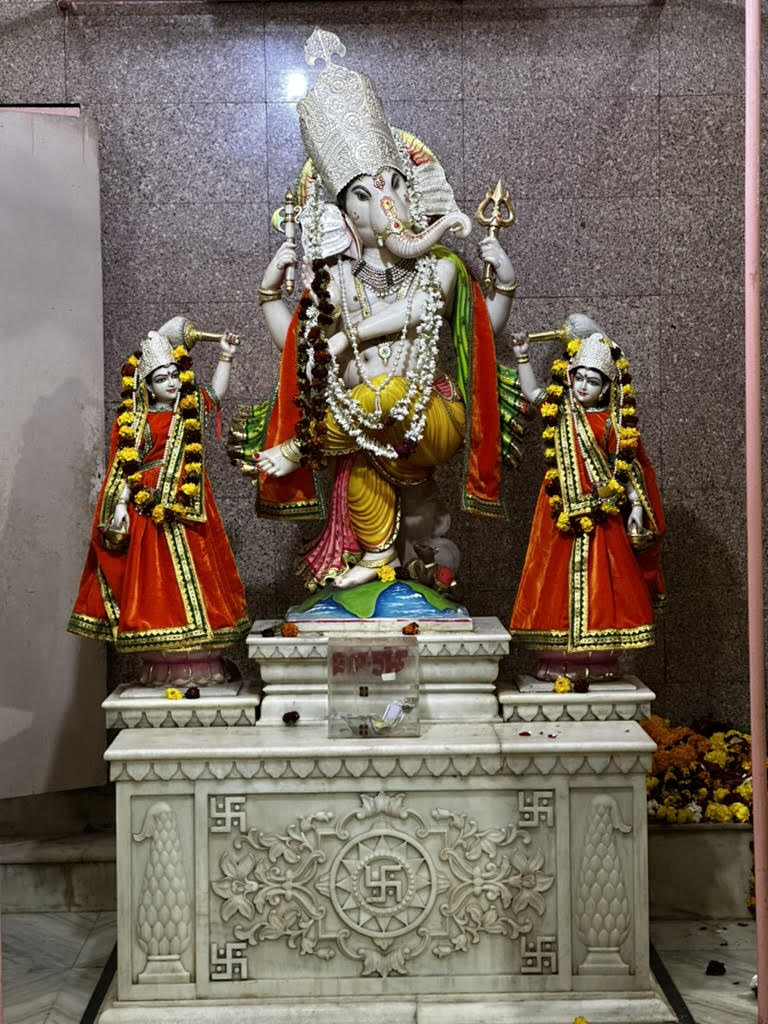
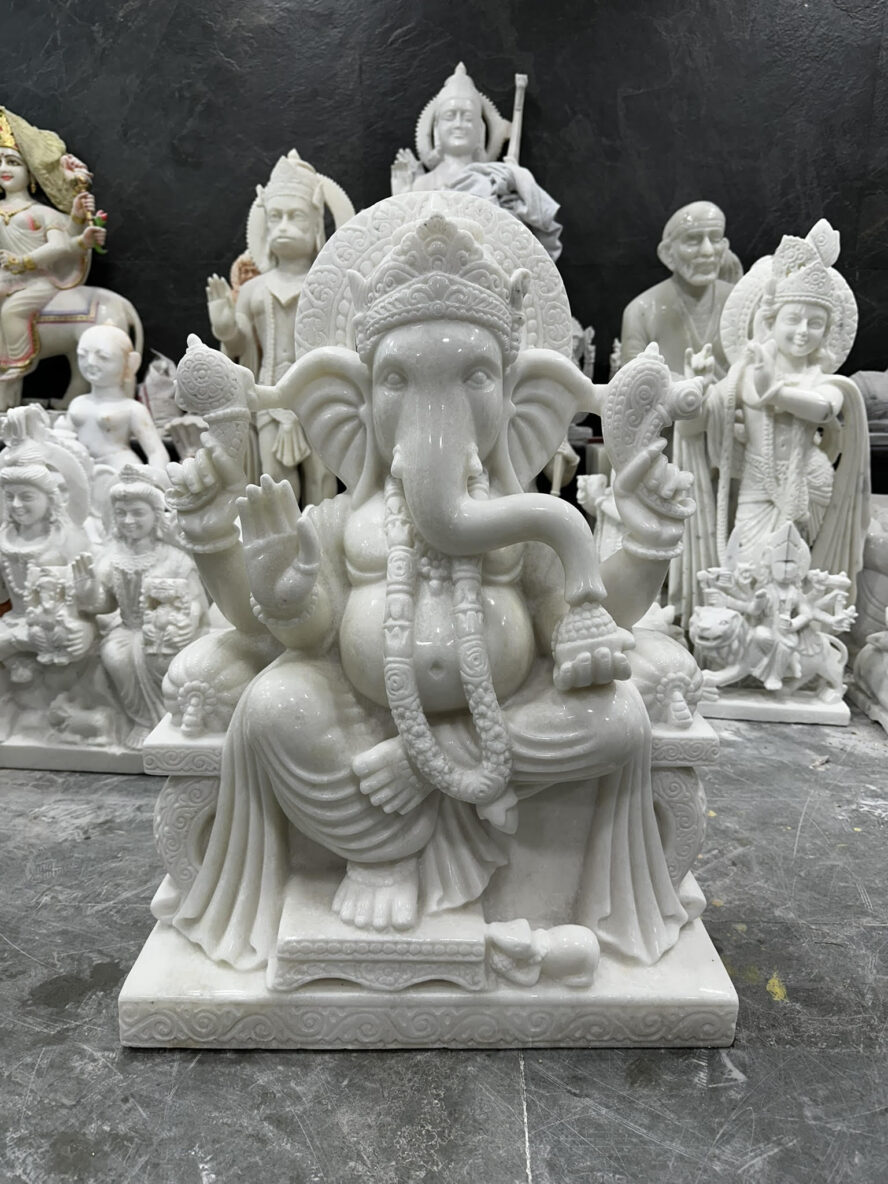
marble ganesh statue
Marble Ganesh Statues

Looking for handcrafted Ganesh sculptures in these materials? Explore our full Ganesh collection.

How Many Ganesh Statues Should You Have at Home?

This is one question that is asked very frequently — and Vastu has a clear answer. Though it may feel lucky to have more than one symbol of Lord Ganesh, Vastu suggests having just one Ganesh idol in your home’s sacred space.

Why? Because too much of a good thing can be detrimental. Too many idols create spiritual imbalance. Each type of Hindu god Ganesh has its own symbolism and vibration. Too many may produce opposing vibrations rather than bringing peace and prosperity.

If you have collected different Ganesh statue for home decoration -such as Wood Ganesh idols in the living room or a marble Ganesh statue for the worship room – it’s best to ensure that it is only a central focus for worship or spiritual intention.

Tip: Choose a main idol for daily prayers and let others play a pure decorative role, especially in areas such as the hallways or courtyards.

Where Not to Place Ganesh Statues (Vastu Don’ts)

While placing a Ganesh statue will confer wisdom, good fortune, and security — placing it improperly might disrupt the positive energy cycle in your environment. Vastu Shastra has some significant “don’ts” to keep in mind:

Avoid These Placements:

  • Directly on Floor: Never put your Ganesh statue directly on the floor. Put it on an elevated platform, chowki, or altar. Putting it on the floor is disrespectful in Vastu traditions.
  • Near Washrooms or Utility Areas: Places connected to drainage, disposal, or clutter (such as near toilets or laundry facilities) are not ideal. These areas have tamasic energy, the reverse of sattvic (pure) energy that Ganesh exudes.
  • Bedrooms: Placing Hindu god Ganesh statues in bedrooms is usually not recommended unless you have a pooja area in the room that is kept clean and undisturbed.
  • South-facing: South-facing Ganesh installations are usually misinterpreted, but Vastu does not recommend south-facing Ganesh idols unless expertly planned. North, northeast, and east directions are traditionally preferred.

Tip: Do not throw away old, shattered, or redundant Ganesh idols. Vastu recommends giving them a dignified burial under a holy tree or in water.


Ready to place your perfect Ganesh with confidence? Shop our range of Ganesh statues for home decor, from handcrafted in marble, wood, and stone.

stone ganesh statue
Stone Ganesh Statues

Conclusion

Now that we’ve explored the Vastu tips for placing a Ganesh statue, it’s clear that bringing him into your home is more than just a design choice — it’s a spiritual one. When placed with intention and in alignment with Vastu principles, Lord Ganesh doesn’t just enhance your space — he welcomes peace, prosperity, and protection into your life.

Whether building a home altar, designing your meditation area, or laying out your garden retreat, honoring the direction, material, and quantity of Ganesh statues does count. Even subtle modifications — like placing the statue in the northeast or choosing the correct material such as stone or wood — will serve to generate a more balanced and spiritually healthy environment.

In quest for the ultimate Ganesh idol? Browse our curated collection of Ganesh statues in the USA including wooden Ganesh statues, marble Ganesh statues, and stone Ganesh statues. They each are lovingly hand-carved and designed to evoke devotion in any space.

2024 Buying Trip – North India

Every January, I embark on my journey to curate the stunning statues you’ll see on Lotus Sculpture throughout the year. This year’s journey takes me through the heart of India and Nepal, and yes, those are the majestic Himalayas I’m glimpsing from my window. The sight of these towering mountains is incredibly humbling!

I invite you to stay connected for weekly updates on my journey! I’ll be sending out newsletters, to sum up my adventures, and you can also follow along daily on Instagram for a more up-close and personal experience of my travels.
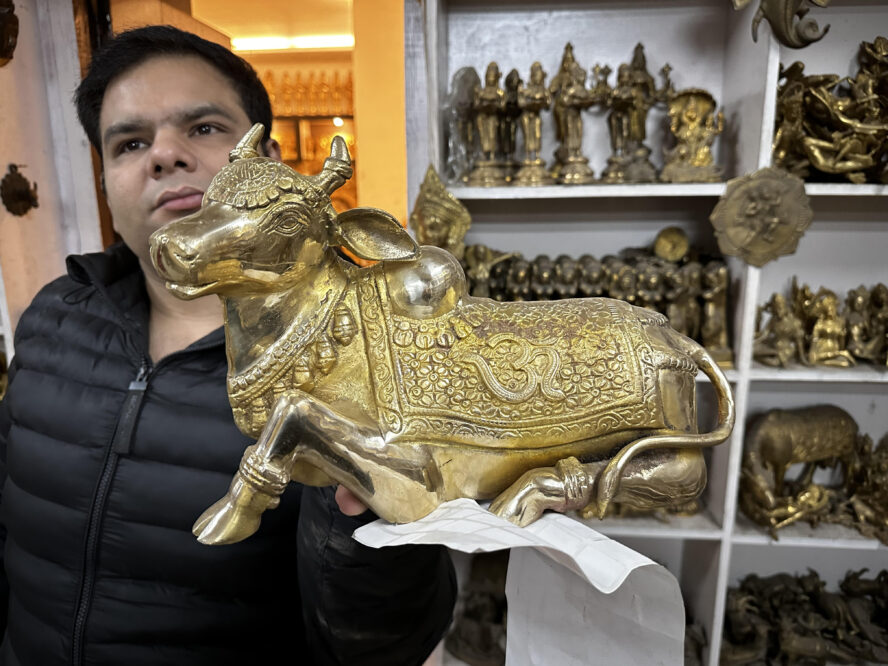
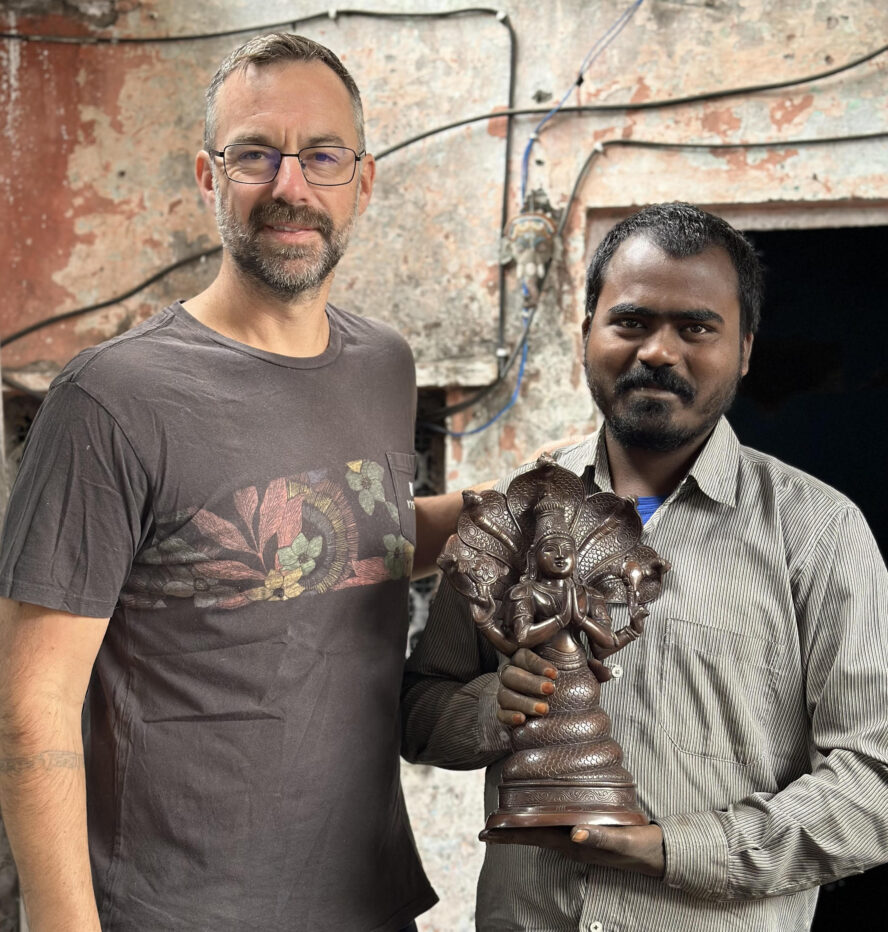
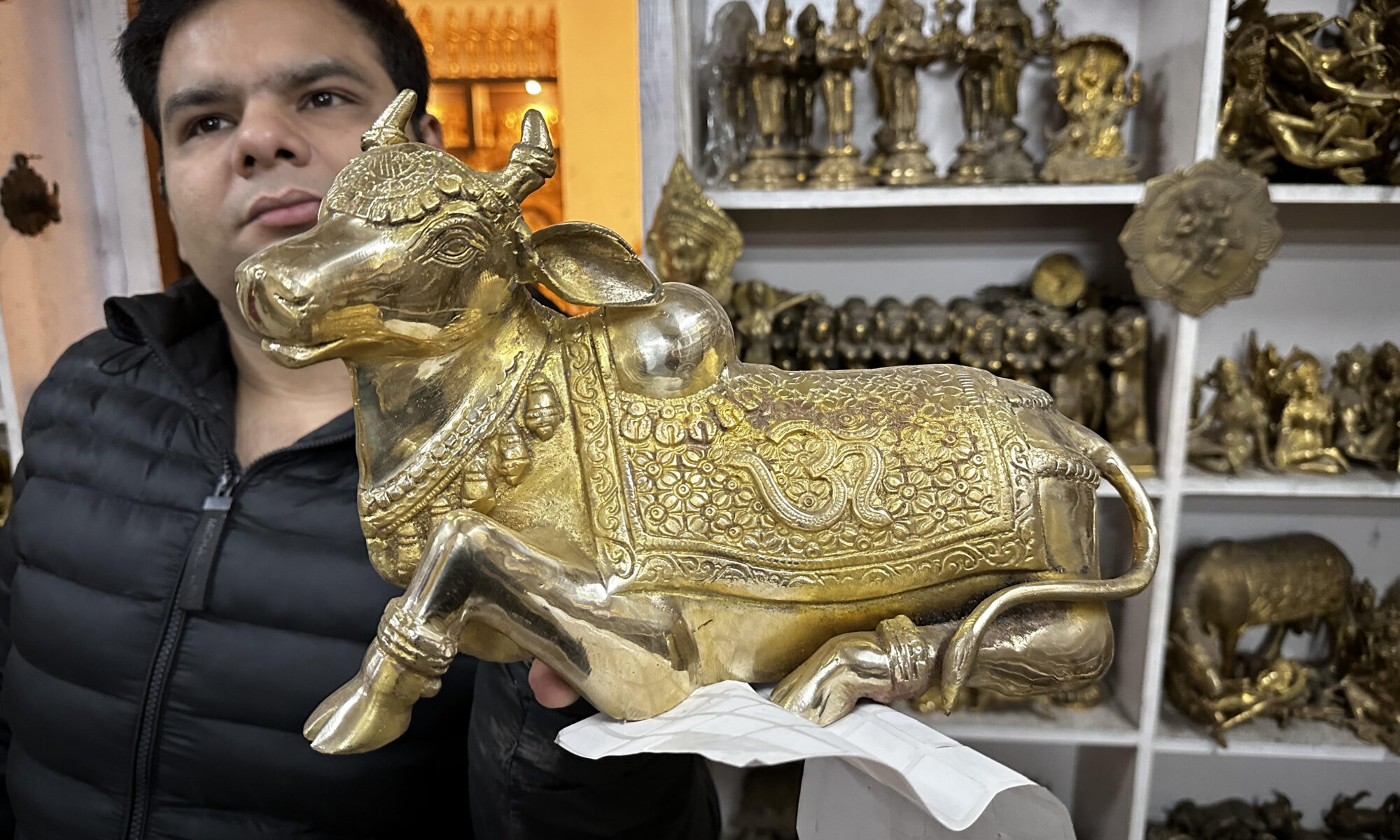
My trip began in Delhi, with my good friend Piyush, and I’ve already picked out some amazing new designs, like this Nandi, to add to our collection soon.
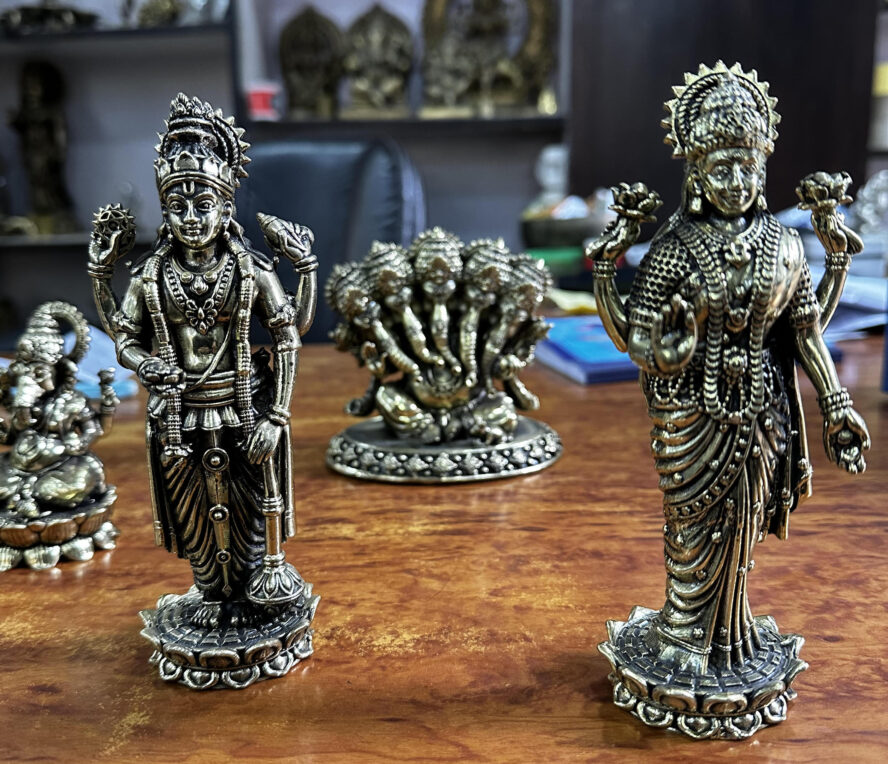
You have spoken and I have listened!
I’m very excited to share something new with you all! After hearing your requests for smaller murtis for home altars, I’ve found a fantastic range of brass and copper murtis, all 6 inches or smaller. It’s great to know I can bring exactly what you’ve been looking for to your sacred spaces. Your feedback is invaluable, and I’m thrilled to respond to your needs! 



I had the chance to learn extensively about the coloring process of our brass murtis. Vijay, who manages the coloring, guided me through the entire procedure, giving me an insightful look into this intricate art form.

Check out the video below for a closer look at the process:


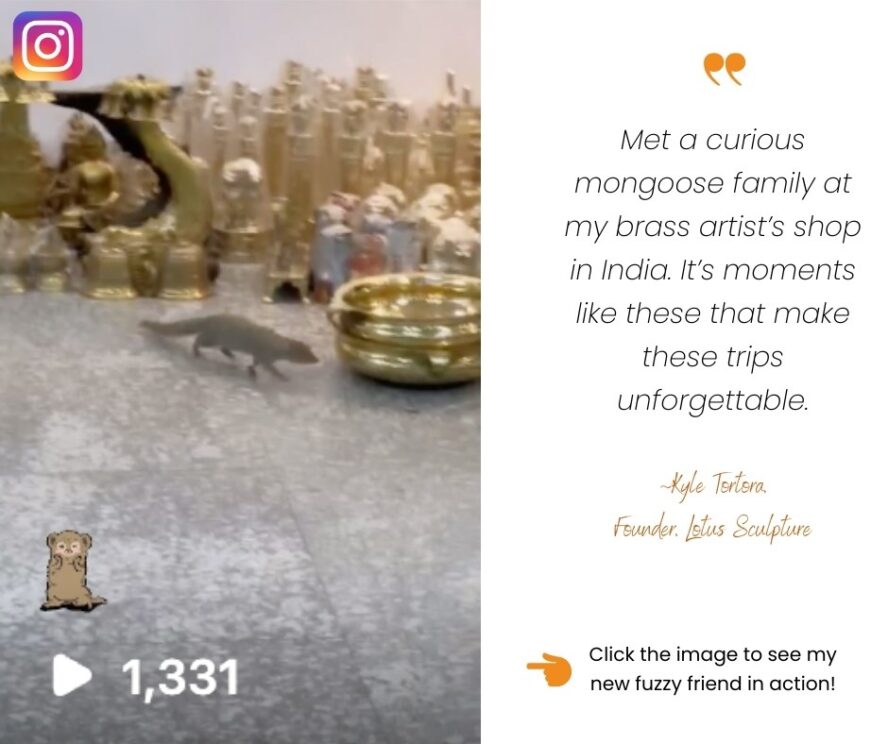
My visit to the showroom had a charming local twist when a mongoose curiously sniffed me, revealing that a mongoose family calls this place home. I was told by Carol on Instagram that “At least you’ll be safe from cobras!” 
Thank you Carol but I am more worried about Delhi Belly than cobras at this point.

Check out the Instagram post below to meet my new mongoose friend:

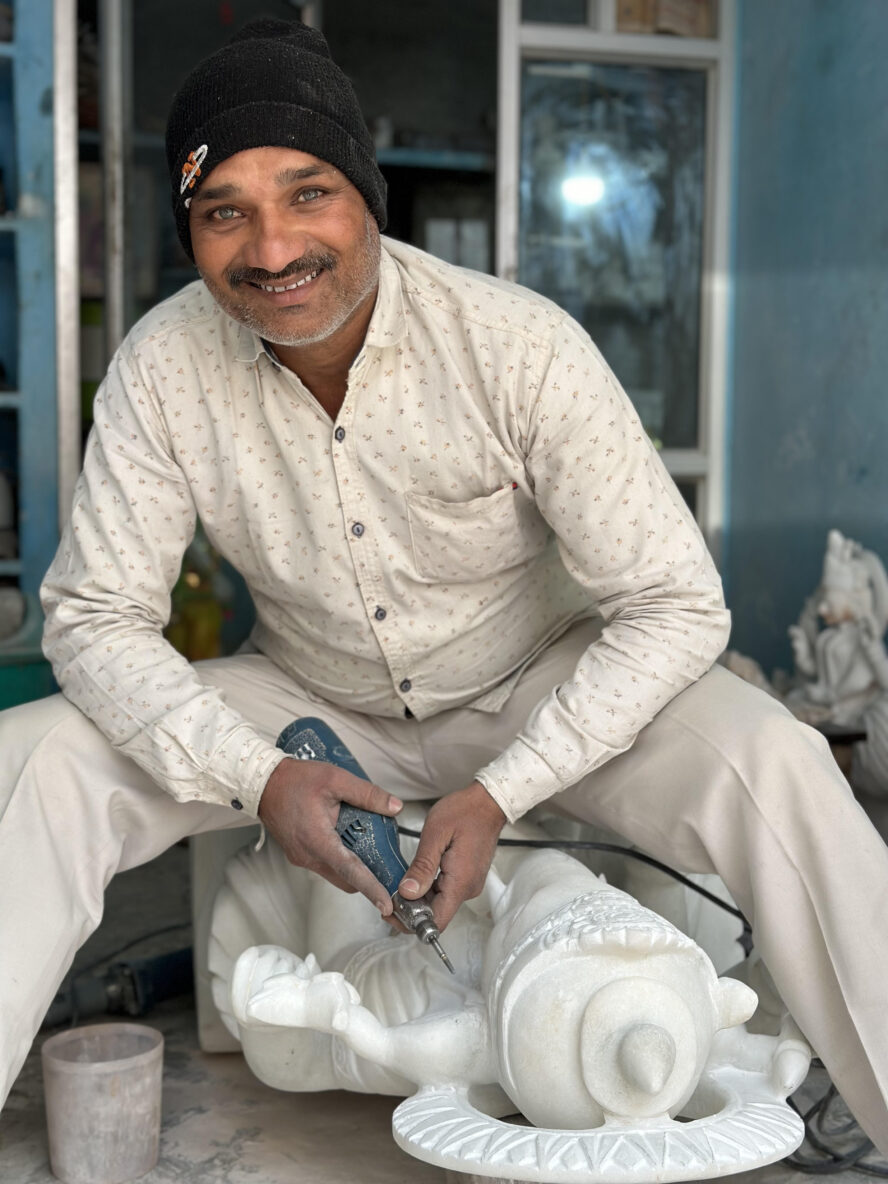
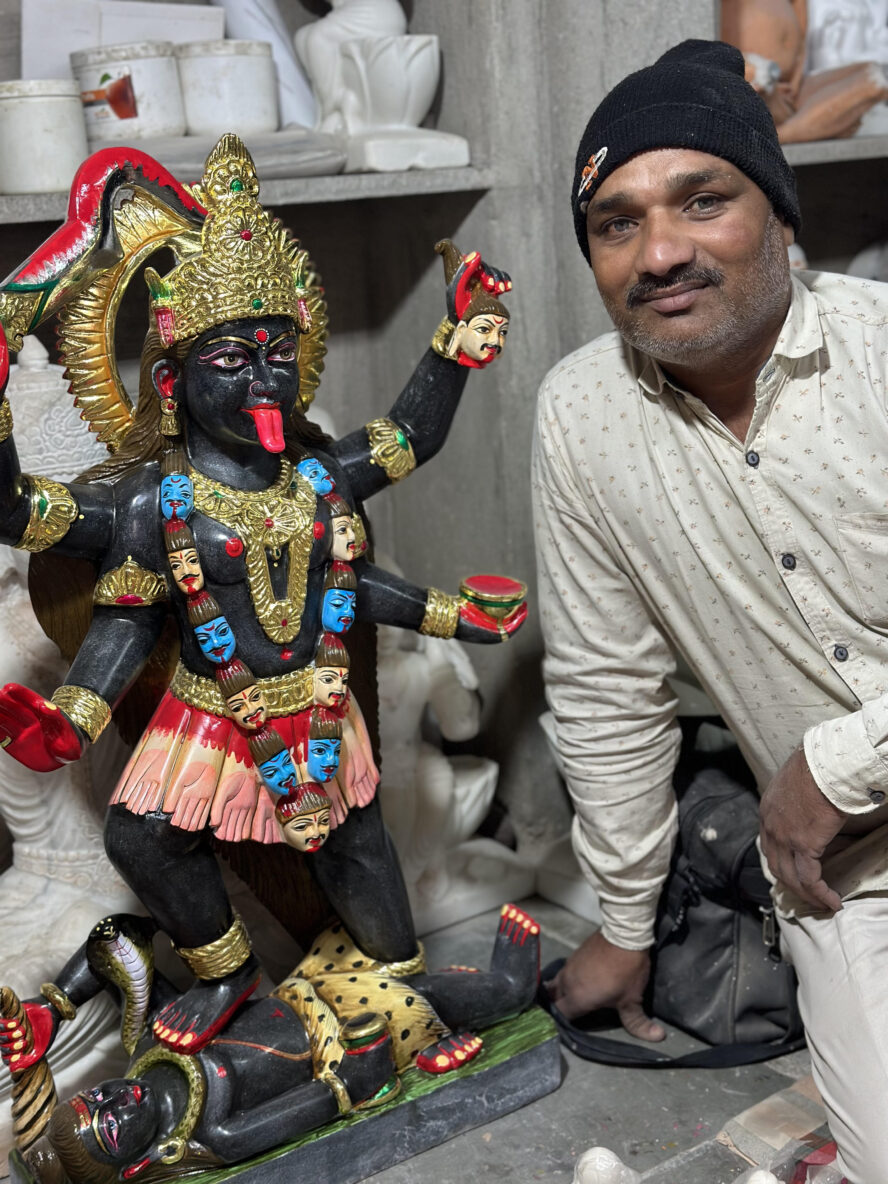
Next, my journey took me to Jaipur, the heartland of India’s white marble craftsmanship. Here, I had the pleasure of meeting Ajaysharma and his brother, Vijay, in their quaint studio. Ajay is a master at carving intricate white marble statues, while Vijay brings them to life with his skillful painting. It’s a perfect blend of creativity and brotherly collaboration, truly capturing the essence of Jaipur’s artistic spirit.

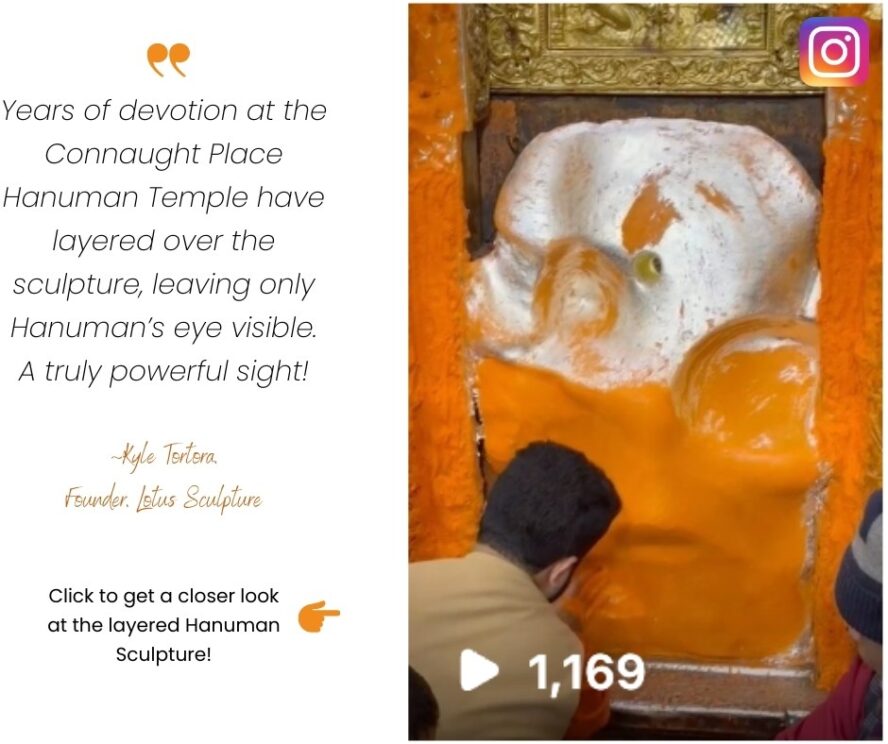
I have managed to visit quite a few temples since I arrived. I just can’t get enough of the unique sights and sounds each one has to offer. It’s so cool to soak up all that energy – It really makes you feel part of something bigger.

I have just arrived in Nepal and am looking forward to exploring the narrow streets of Patan in search of more statues!

New Brass Statues of Hindu Gods

Brass Statue of Hindu God Ganesh
Click here to view all our brass statues of Hindu Gods including this seated Ganesh statue

Lotus Sculpture has received a new shipment from North India of brass statues of Hindu Gods. The brass statues are a completely new addition to Lotus Sculpture’s offerings.  The Hindu brass statues are made in Delhi, India. Brass sculptures are less expensive than the bronze statues we carry making it possible for everyone to bring home a Hindu statue from Lotus Sculpture without spending hundreds of dollars.

Brass Hindu statues are typically much less expensive than bronze. This makes them very attractive to households looking for a Hindu deity for their home altar for daily puja. Brass statues take less time to make than their bronze counterparts as each design is copied from one master mold. It is possible to find multiple copies of each brass statue. Each statue Lotus Sculpture carries is hand selected by the founder of Lotus Sculpture, Kyle Tortora who regularly visits Asia to choose the statues for the store.

“I take great pride in personally selecting each statue Lotus Sculpture carries and am happy to now offer high quality, brass statues of Hindu gods further making Lotus Sculpture the destination to find the highest quality Hindu sculpture in the world.”

says Tortora

Over the years, the quality of brass statues has risen significantly. It is now possible to find quality brass statues in India which is the reason Lotus Sculpture is now carrying them. The quality will never reach the level of detail and power inherent in lost wax method bronze statues, however, the quality and price of the statues makes them the perfect statues for homes that want a quality Hindu god but cannot quite afford the highest quality bronze statues.

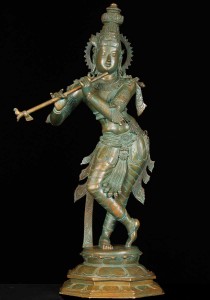
Bronze Hindu God Krishna statue
Click here to view all our Lost Wax Method Hindu Bronze Statues including this Krishna statue

Previously, Lotus Sculpture has exclusively carried one of a kind, lost wax method bronze statues. Bronzes are made in Tamil Nadu in the South of India. Bronze statues are one of a kind statues made by hand. The bronze making art has been passed on from generation to generation unchanged since the Chola dynasty in South India 1100AD. Lost wax bronze statues are used in Hindu temples throughout India and the world. Bronze statues are prized for their fine detail and their connection to the past. Bronze antiques are prized by collectors and are seen in museums around the world. The high quality bronzes take months and sometimes years to produce. Lost wax bronze statues are made from a combination of 5 metals with high amounts of copper which produces a high quality metal alloy; bronze. Only one statue is made at a time. Each step of the lengthy and complicated lost wax process is performed in rural villages using the same techniques passed down for centuries. Lotus Sculpture is pleased to play their part in keeping the lost wax tradition alive in India.

Lotus Sculpture’s addition of Hindu brass statues to our collection of lost wax bronze statues will further reinforce that there is only one place to find the highest quality Hindu sculpture in the world; Lotus Sculpture!