Facts About Foo Dogs Statues

If you ever passed by the entrance of a luxury hotel, a traditional Chinese restaurant, or even a well-styled home, you have probably noticed them: a pair of fierce, looking like lion figures that are standing guard. In the Western world, we refer to them as Foo Dogs, but their past and significance are much more profound than just a label.

Based on the work of architectural historians, the Foo Dogs Statues have represented protection and wealth/social standing for over 2,000 years in various cultures within West/South East Asia. Maybe you consider them just a few ornaments of the garden, but a traditional feng shui master would regard these art pieces as ‘Shishi’ or ‘Lions of the Imperial Guard’, which are the symbols of the protective energy of the house and heavenly guards against evil.

So, what are the characteristics that differentiate these figures, and how far do they matter? Are they believers, collectors, or the general public? We should get down to the basics that everyone ought to know.

Understanding the Symbolism and History of Guardian Lions

Learning the significance of the guardian dog statues makes it easier to see why they hold meaning and value. If you have a brass Foo Dog statue or a marble Fu Dog statue, knowing what they represent will help give your home some character and depth beyond just looks.

Foo Dog statues
Browse our Foo Dog statues

1. They aren’t actually dogs

Even though these figures are commonly referred to as Fu Dog statues or Foo Dog sculptures, they are in fact lions. With the spread of Buddhism to China, tales of the lion were also transmitted. Since lions did not exist in the area, the artists of Ancient China hadn’t had the chance to see a real one, and thus they created their art based on a combination of local dogs (like the Chow Chow or Tibetan Mastiff) and the descriptions they were given. The term “Foo” (meaning “Buddha” or “Prosperity”) was eventually combined with “Dog”, and the Western nickname has remained ever since.

2. The power of the pair: Yin and Yang

It’s quite rare to find a single Foo Dog statue for home decor. Traditionally, they are not separated; they are two, one male and one female. The latter is not only for compositional balance; it represents the balance of Yin and Yang.

  • The Male: Generally, he is on the right side (when you are looking at the entrance). Under his paw, he has a globe or ball, which stands for the “Flower of Life” and his rule over the world and the home’s external structure.
  • The Female: The left side is her place. Under her paw, she has a lion cub, signifying the protection of the people who live in the house and the nurturing of the family spirit.
fu dog statues
explore our Foo dog statues For Gardens

3. Which paw is it? Identifying the guardians

Should you be planning to purchase a set, be sure to inspect the paws closely. The most common mistake is getting two sets of the same gender. A real Foo Dog Shishi Lion Fu Dog Statues set will demonstrate the male with a firm ball (symbolizing the “Flower of Life”) and the female with a small, cheerful cub beneath her paw.

4. Placement is the key to protection

In the realm of interior design and feng shui, the placement of your Foo Dog statues, whether they are for garden or indoor use, is as important as the statues themselves. To get the maximum “protective” effect, they should always be turned outward.

  • Outside: Essentially, they are located on the two sides of a main door or a gate to prevent “sha chi” (bad energy) from coming in.
  • Inside: When you put them inside the house, they should still be facing the door or the entrance of the room. It is considered that Foo Dogs facing a wall or stuck in a corner are losing their power to protect.
foo dog statues
Check Our Wood Foo Dog Statues

5. They were once a symbol of the elite

A long time ago, these were not available to everybody. They were only the ones in imperial palaces, government offices, and the mansions of the super-rich that had them. The dimension and the substance, be it a marble Fu Dog statue or a brass Foo Dog statue, were usually the factors that showed the rank of the person living inside. Now, although they are open to everyone, they still have that feeling of royal command and “first-class home security” in them.

6. The “Missing” Pearl

In numerous Foo Dog sculptures, there is a small ball visible in the mouth of the lion. What is more, in quite a few hand-carved stone versions, this ball is actually free-carved in such a manner that it can move around but cannot be taken out. This signifies the “pearl of wisdom” or the “breath of the lion. ” It is a statement of the amazing skills of the craftsmen who make these from the same single blocks of stone.

7. Why your home needs them today

Besides the myth, Foo Dogs are still very useful and practical in the modern home decor. They give a feeling of being real and having “weight” in the presence of an entryway. Be it a pair of bronze, marble, or wooden Foo Dogs that you’ve selected, they are the first to be noticed and talked about, and also a symbol that your house is a place of safety.

Bringing the Guardians Home

In essence, Foo Dogs are no less than an investment to the “feel” and energy of your home, apart from being just a decorative choice. Whatever the case may be, a stone Foo Dog statue for your entryway or a pair of porcelain Fu Dogs for your bookshelf, these statues are the ones that separate the disorder of the outer world from the calm that is your inner world.

By knowing the meaning of the male and female pair and making sure that their placement is correct, you are not just going with the flow of the trend, you are recognizing a tradition of awareness and protection which has been there for ages. If you are inclined to a style that also provides you with a sense of security, then you can choose from a large range of genuine Fu Dog statues to get the right guardians for your place.

Types of Buddha Statues & Their Meanings.

Stone Buddha Statue

The Buddha statues not only stand as an object of art but are also very symbolic and spiritually meaningful which are thus a mirror reflection of the different philosophies of the Buddha. Peace, Harmony, and Mindfulness are the learnings of Buddha to always keep in mind.

This article shares a guide for you to understand the various Buddha statutes that hold various resemblances and how different statutes hold different meanings.

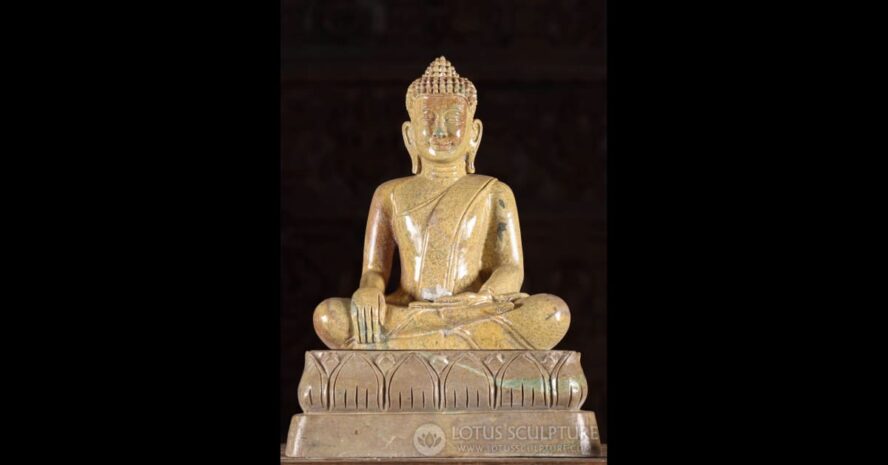
Meditating Buddha (Dhyana Mudra)

Meditating Buddha with his posture sitting in the lotus position, with the legs crossed. The hands rest on the thighs, palms facing upward. This pose represents calm concentration and meditation.

It is also used in the Dhyana Mudra position, which is a sign for spiritual enlightenment, and often a symbol for the practice contained within the places of worship and prayer, Мeditation. Such statues should be placed in calm and peaceful places to create bliss.
View Our Marble & Stone Buddha Statues

Teaching Buddha (Dharmachakra Mudra)

Buddha is seated upright in this posture, both hands at chest level, with a circle formed between the thumb and the index finger. This is Buddha’s first sermon after he attained enlightenment. The role is to symbolize an uninterrupted stream of energy of the wheels of Dharma.

Such statues should ideally be kept in study areas, libraries, or any space for learning and wisdom.

Reclining Buddha

Reclining Buddha is the Buddha lying on the right side with the head supported by the right hand representing his last days as he transcended to Nirvana.

The status symbolizes the last moment of Buddha conveying his peach, detachment, and the transcendence of the worldly sufferings of the world. 

The ideal placements of such statues are inside the living rooms or at places that you visit mostly to chill. 
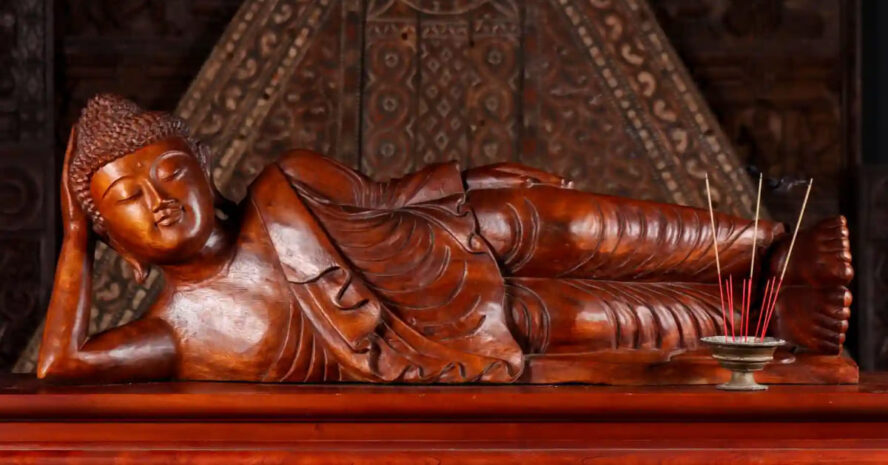
View Our Wooden Buddha Statues

Protection Buddha (Abhaya Mudra)

Abhaya Mudra is the position of Buddha facing forward with the palm outward, and the right hand raised This position signifies the art of courage, fearlessness, and protection. This is often used by the elderly to get off of negative energy and provide them and their families with a sense of security. 

This status should be carefully placed on the entrance gates and doors to safeguard homes and offices from negativity and boost morale and courage.

Laughing Buddha (Hotei)

Laughing Buddha is the most popular statue which is significant for spreading abundance and prosperity, joy and happiness. With a plumpy, happy face with a large belly, this status is often believed to carry good luck and wealth to families. 

Such statues should be placed ideally in places like living rooms, office desks, or cash registers to attract positive energy throughout and financial success.
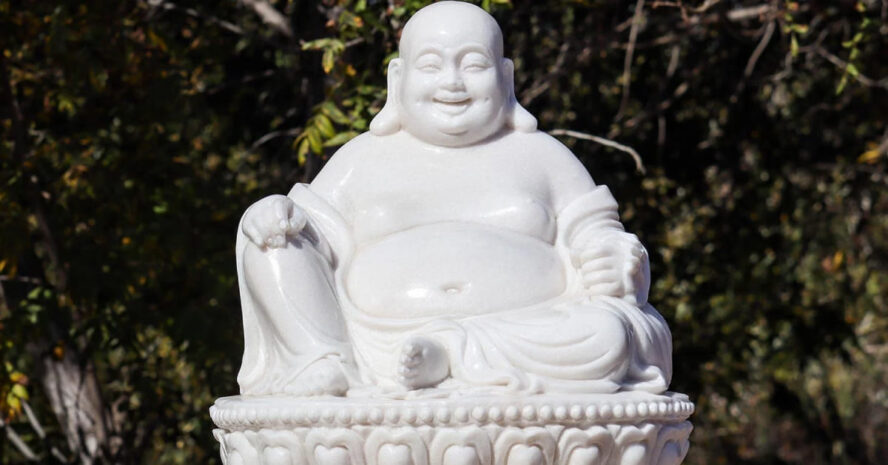
View Our Laughing Buddha Statues

Earth-Touching Buddha (Bhumisparsha Mudra)

The posture of the statue with the left hand resting on the lap and the right hand touching the ground in a Bhumisprsha Mudra holds a very profound spiritual resemblance. The statue symbolizes the moment of the Buddha’s enlightenment, the statue is a proud example of Buddha’s unmoved determination and how you overcome your differences by facing obstacles. 

Such statues are to be placed in places like offices and areas where you need focus and need to resolve.

Walking Buddha

The walking Buddha is the statue of Buddha in a mid-stride where he raises his one hand onto the position such that he grants reassurance to his followers. The true meaning of these statues is to represent grace and movement and the spreading of Dharma. The statue represents the symbol of true spiritual progress.

The ideal way to position such a statue is in the hallways or the entryways to encourage personal growth and movement around the house.

Praying Buddha (Anjali Mudra)

The statue is seated with the palms pressed together in a prayer gesture. The true meaning depicted in this statue is the devotion and the significant gratitude of the one towards the other, the statue is meant for spreading respect and humility among individuals.

Such models are meant to be kept at altars and areas dedicated specially for worship and meditation.

Laughing Buddha with Children

The laughing Buddha with children is the statue where the plumpy Buddha is surrounded by children often resembling fertility and joy. The true meaning of the statue is to bring blessings, family harmony, and joyfulness of good fortune.

The ideal placement of such statues should be kept in rooms or areas where togetherness is celebrated. 
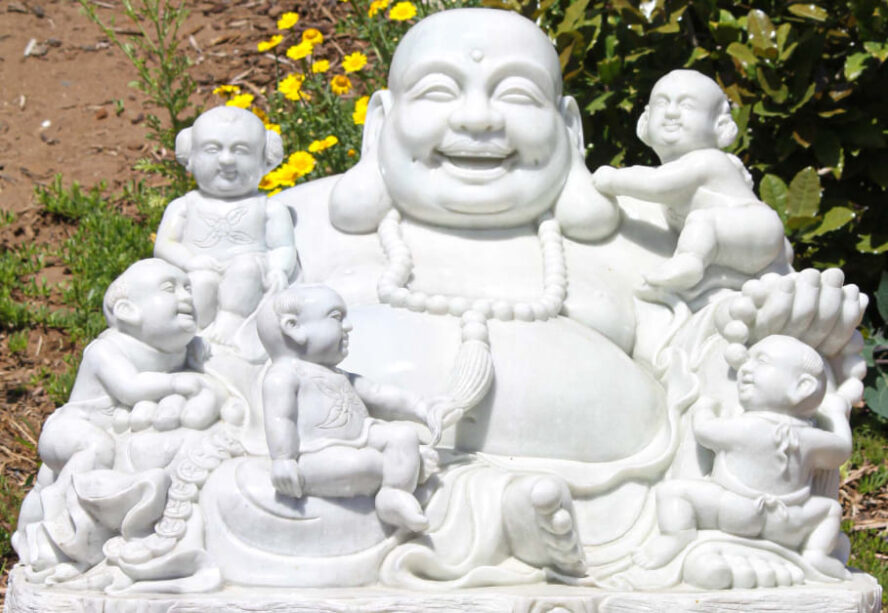
View Our Other Buddha Statues

Buddha Head Statue

The statue of the Buddha’s head with tight curls and a meditative expression is a resemblance of true wisdom, knowledge, and the essence of the teachings. The statue holds great spiritual value and is known to be kept in places where you need good focus and positive energy to keep going. 

The statue is placed mostly in places like shelves and study rooms as a symbol of great introspection.

Choosing the Right Buddha Statue

When you choose the right statue, the most important thing to keep in consideration is the symbol and the energy you wish to carry with the statue. Different Buddha statues holds different energies; you choose the one you like for your space. Every statue has its meaning. Make sure you align those meanings with the right intention to prosper in tranquillity.

Tips to consider when you have purchased the Buddha statue 

  • Always make sure that the statue faces inward this should be kept in mind as the statue facing inward spreads positive energy.
  • Always keep the area clean and clustered with good energy
  • Keep the lighting good and healthy to set in those positive energy

Conclusion

Buddha statues hold great value when it comes to inspiring and bringing in positive energy anywhere you carry it. Whether you seek peace or you want to enhance prosperity and wisdom. When you purchase, choose wisely and each Buddha symbolizes each with its intention and allows you to connect with your profound skill. 
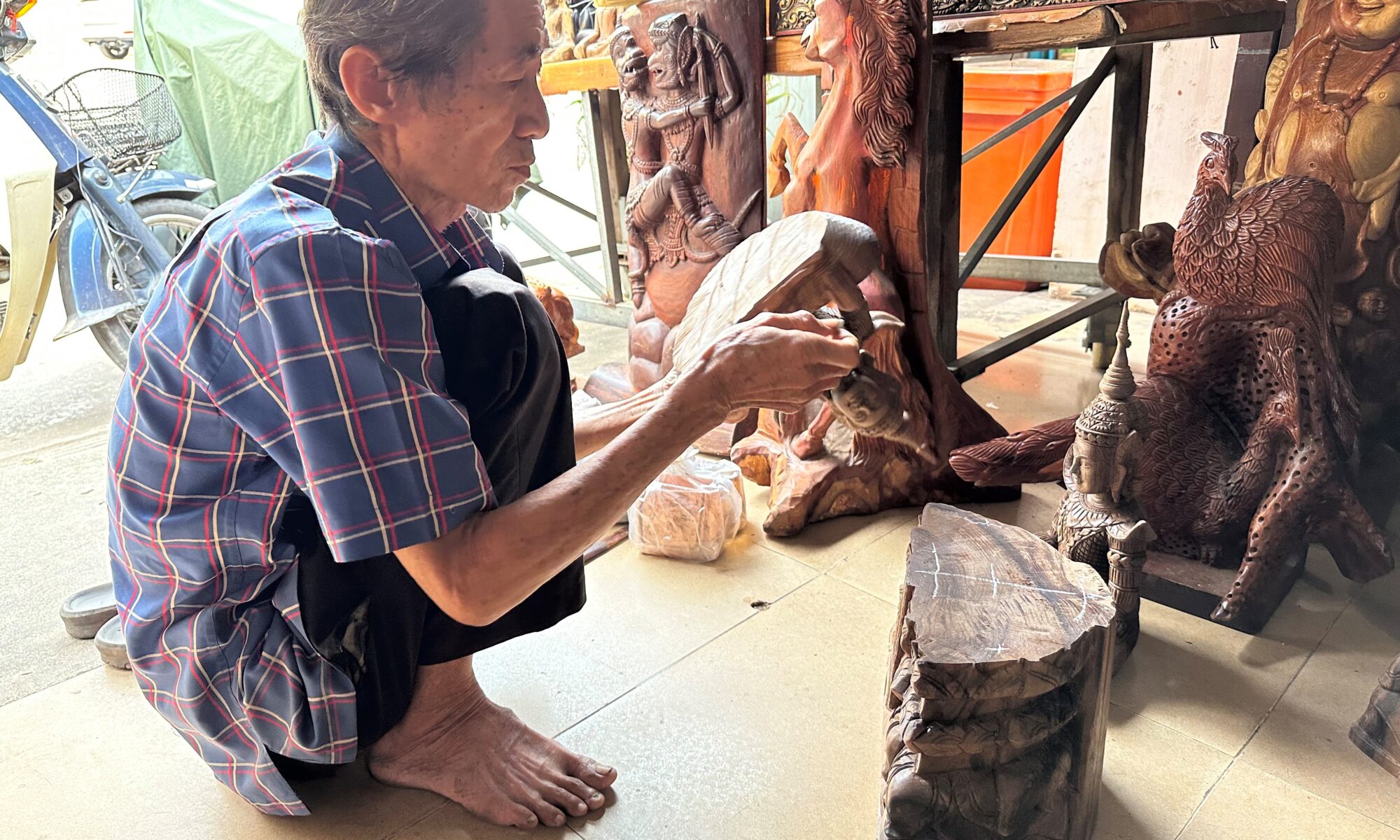
Wood Artists of Cambodia

January 26th, 2023

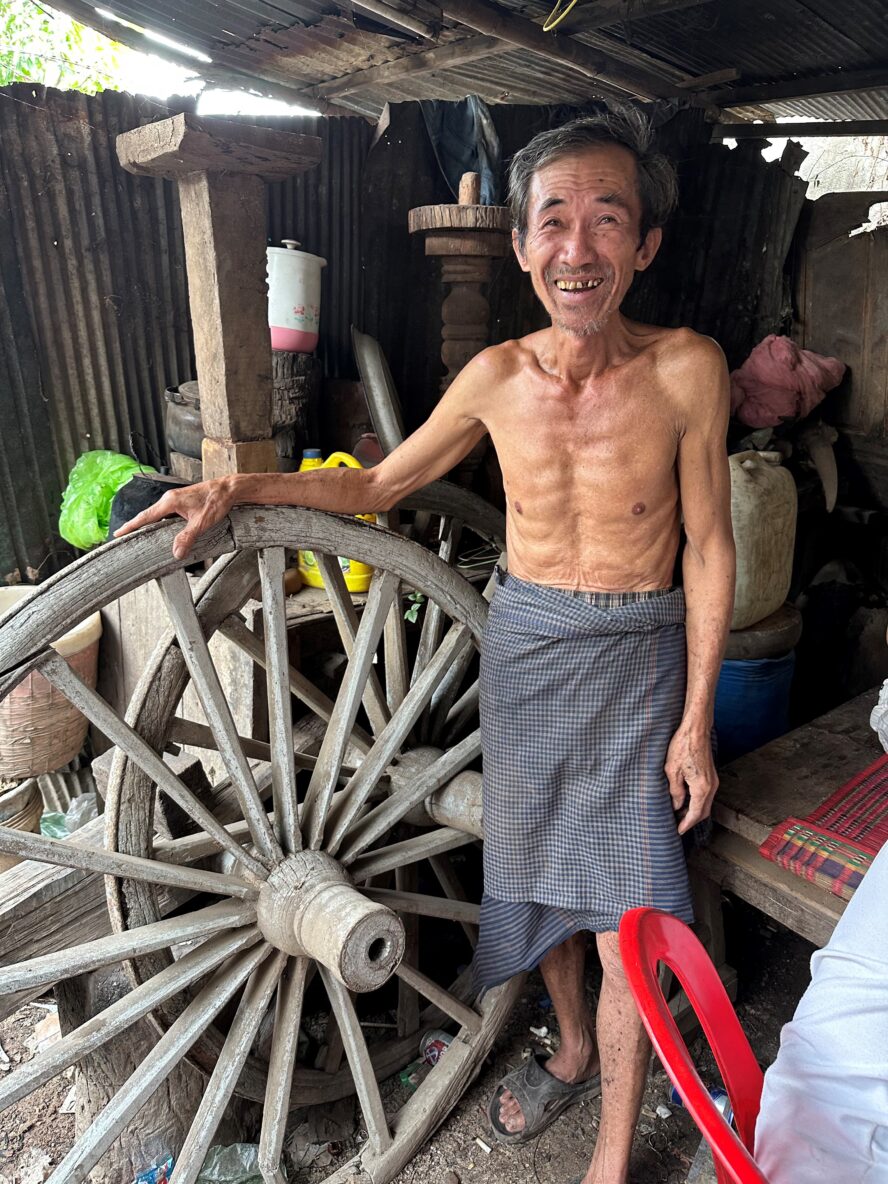
I first met Chandreas 18 years ago.  He was a 12-year-old boy helping his mother in their wood statue business, struggling with English.  Upon arriving in Cambodia and having him greet me after a 5-year hiatus I was amazed at the man he has become.  His mother has passed away and now it is just Chandreas, his sister, and his father, Prou Kea running the business. 

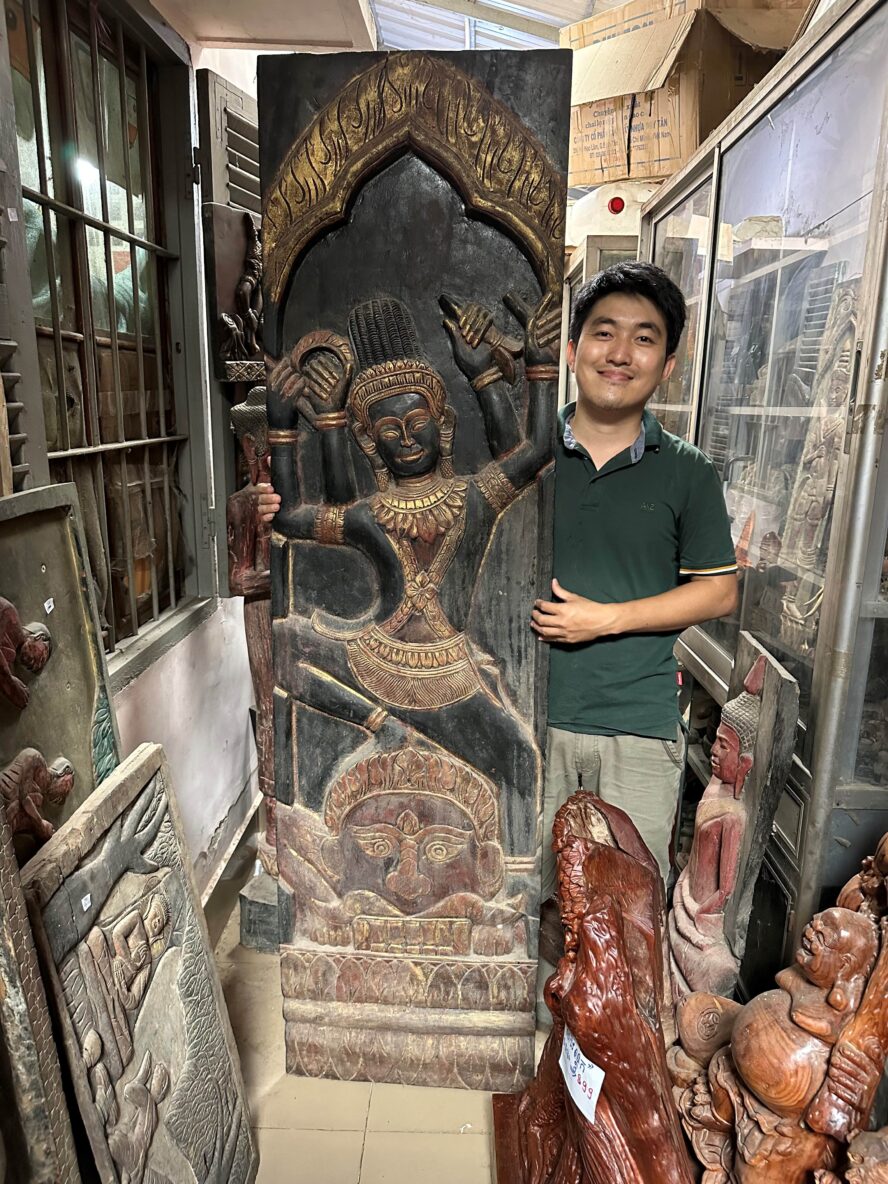
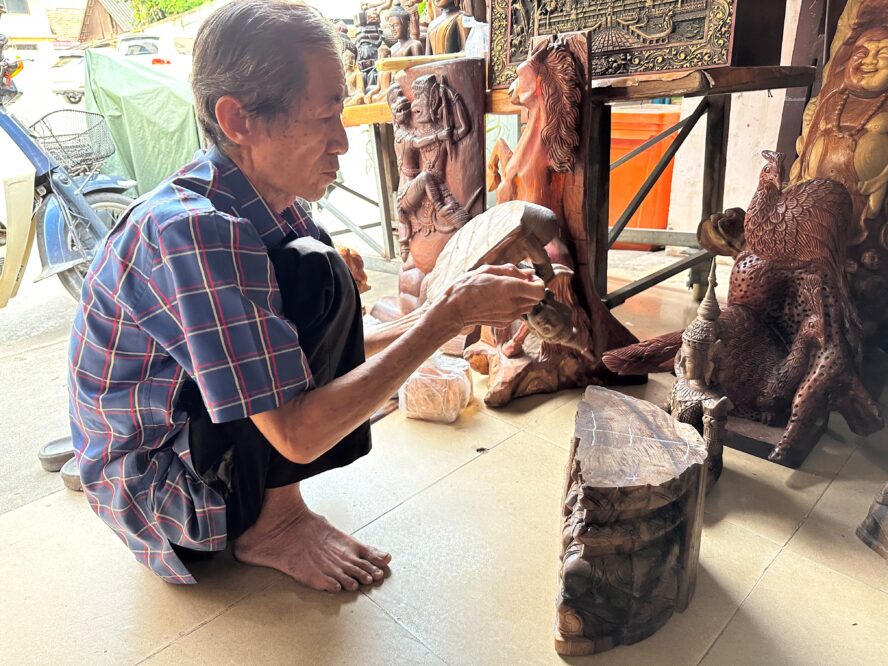
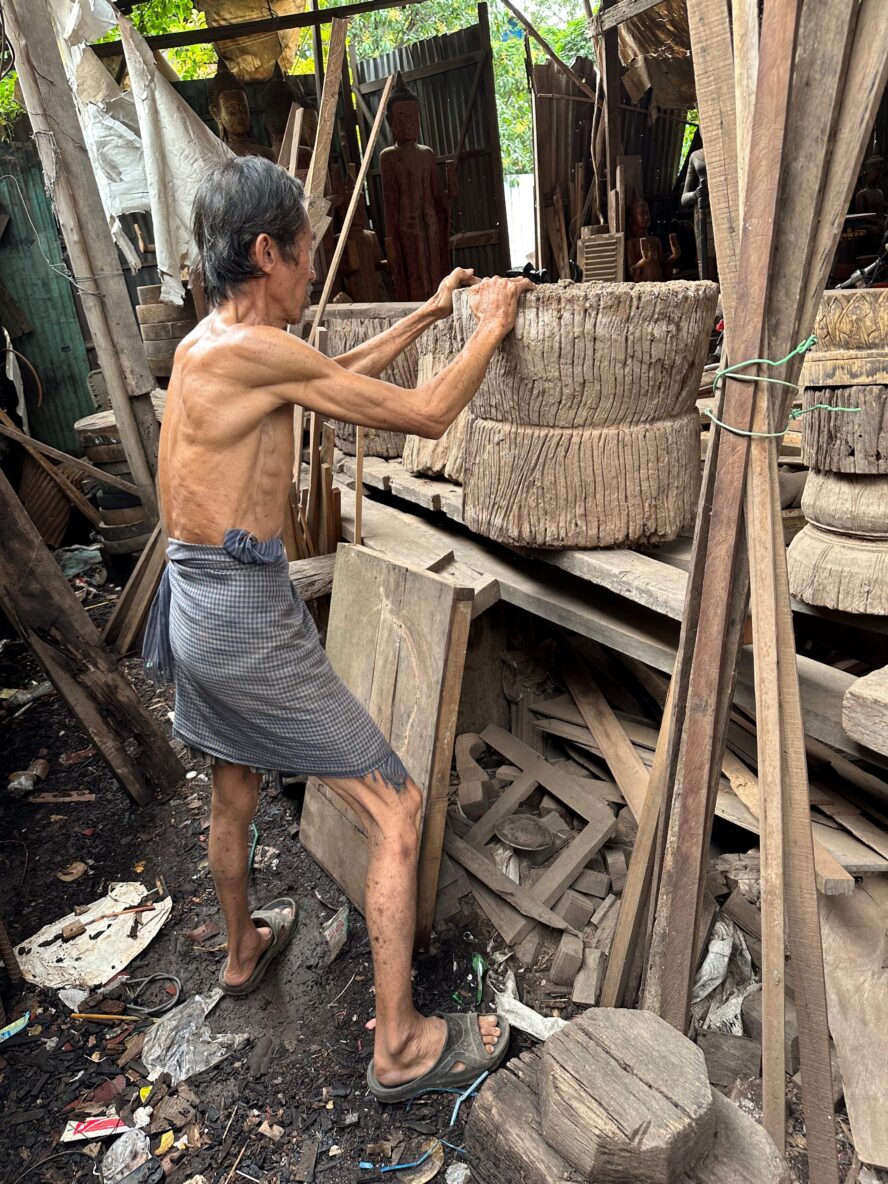
Chandreas sells wood statues and panels of Hindu and Buddhist motifs carved from recycled wood.  The wood is from old houses, beds, and even pagodas.  The wood panels are made from wood planks that are used for beds and the larger statues are carved into the thick old pillars of houses.  The wood is an old, slow-growing, dense wood that is illegal to cut down anymore in Cambodia.  You can feel the weight of the statue when you pick them up.  They feel dense.  

I love nothing more than looking through his shop, searching in the corners for the old pieces that have a good layer of dust on them, and listening to Chandreas tell tales about what the story is behind the statue or where the wood is from. 

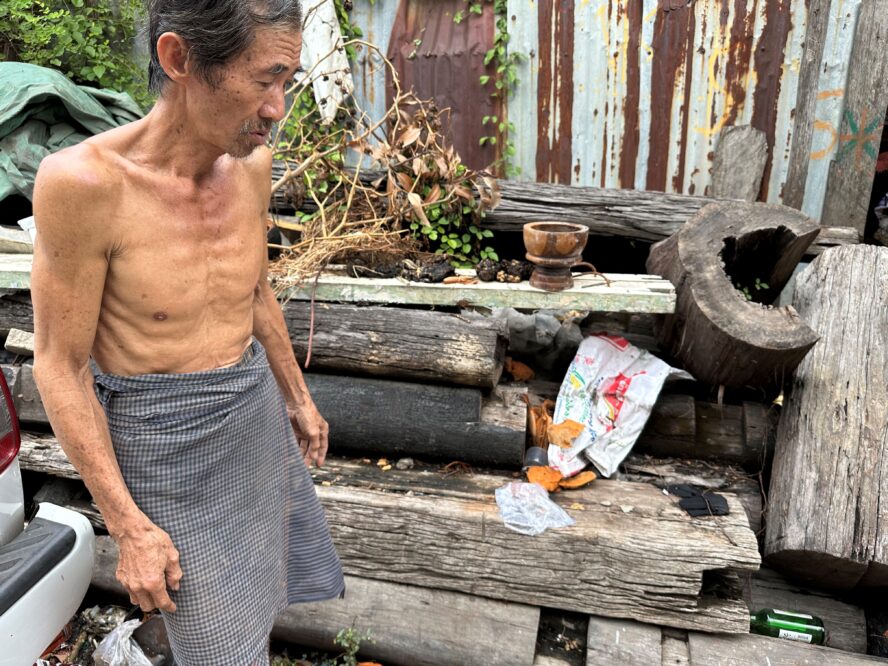
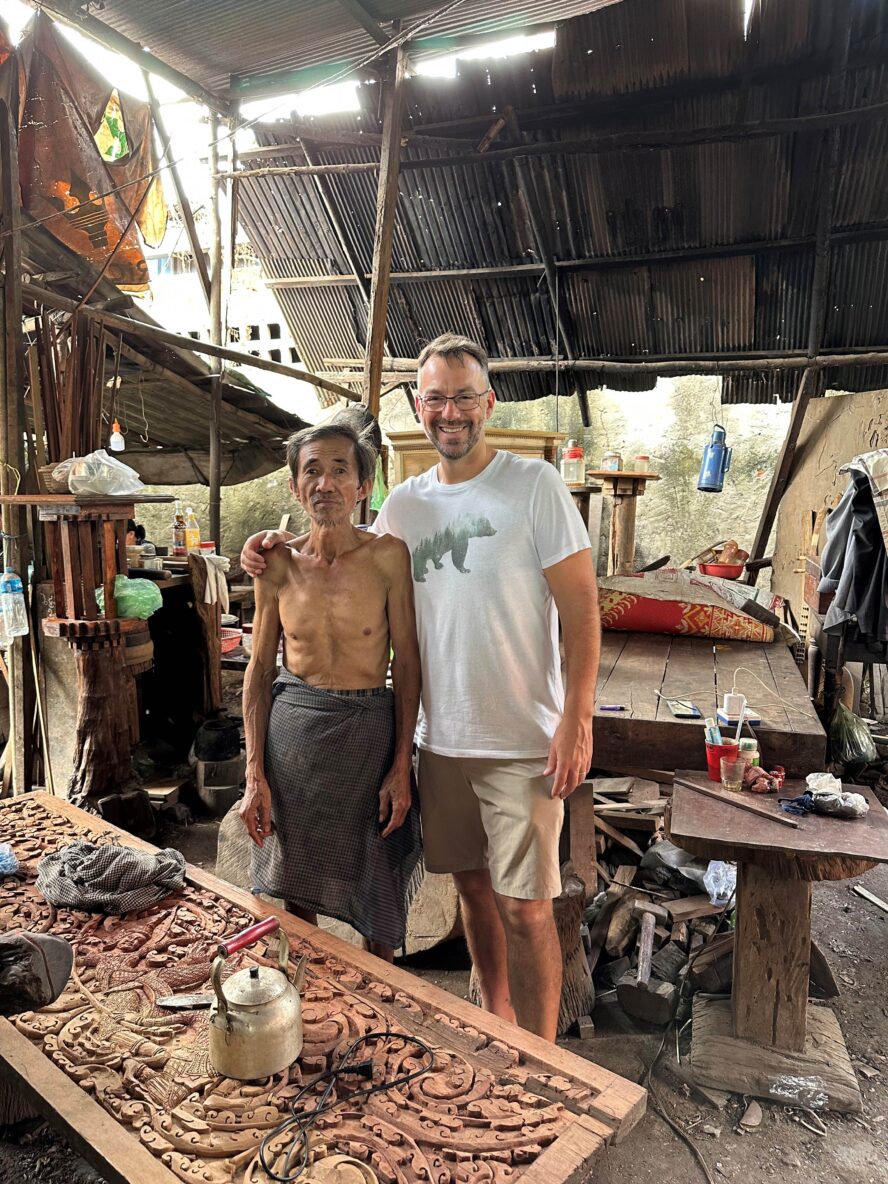
We took a trip out to where the statues are made on the outskirts of Phnom Penh.  It is a big, open area just littered with sawdust and half-carved statues. The 68-year-old Prou Kea greeted me.  We spent the next two hours together climbing through his shop digging in corners to find some hidden gems even he forgot about.  He showed me the raw pillars that the statues are carved from and the wood planks used for the panels from old beds.  A great find was 4 antique ox cart wheels that are from French colonial times and an antique rice mortar used for pounding the husk off of rice.  


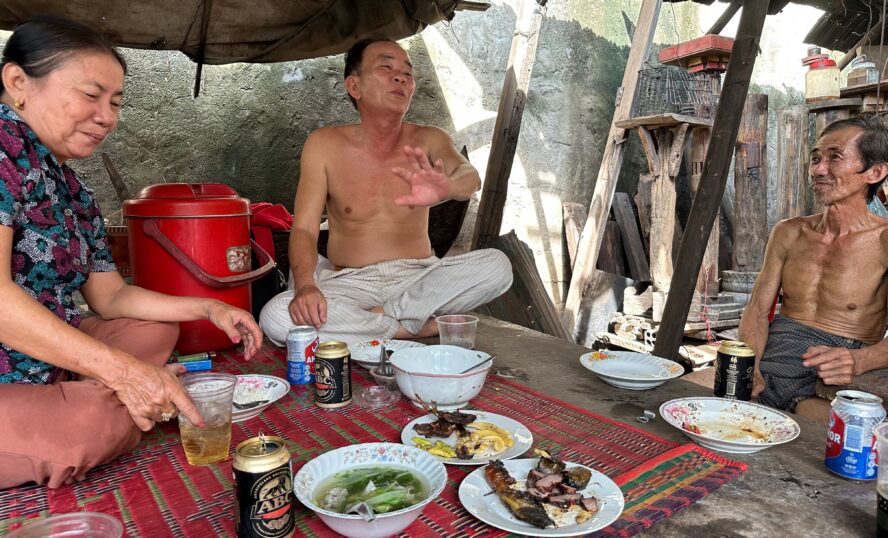
After we finished looking through the workshop, Chandreas’s uncle and some of his father’s friends were enjoying the afternoon next to a smokey fire, so I decided to join them.  

We spent the afternoon eating salty, dried fish, and dried buffalo with ginger and stir-fried duck while drinking a fair amount of beer. On each sip of beer, everyone put their glasses together saying “Some Chul muy!” which is a respectful way of saying, cheers. The whole time I am grinning ear to ear thinking how fortunate I am to be here at that moment.

While writing this, I am watching Prou’s video where he is talking about the old wood and he is just a wonderful man.  They have a wonderful family.  I am honored to be associated with people like this.