Which Ganesha Statue Is Right for You? Pose, Material & Placement Guide for Home & Office

ganesh statue

So you have decided to bring a Ganesha statue home, or into your office. Good choice. Hindus worship Ganesha as their most commonly revered deity because he serves as the obstacle remover who bestows new beginnings, wisdom and prosperity to his devotees. But walk into any collection of Ganesha statues, and you will quickly realize there are a lot of options. The available positions include sitting, standing and dancing. The materials used include brass, marble, and stone. The trunk can be positioned on the left or right side. 

Does it make any difference which one you use? It does, and this guide will direct you to what to look for based on the destination of the plant and what you are intending to have come into that space.
 

Pose – What Each Form of Ganesha Represents

Each pose carries a distinct energy; choose one based on how you want that space to feel.
 

Sitting Ganesha

The seated pose, Ganesha in a relaxed, cross-legged or royal ease position, is the most traditional and widely used form for home worship and puja rooms. The source achieves its purpose through delivering stillness and stable energy, and grounded energy. If you are putting Ganesha on a home altar for worship in the house, or in a special dedicated place, then for most people, the seated form is the best to begin with. It is meditative, still and appropriate for a place of everyday devotion.

Ganesh statue
Explore our Ganesh Statue Collection


Standing Ganesha

When Ganesha stands, it shows that he is prepared to bless people through his active presence. The standing position of the deity functioned as an effective choice for spaces that included entrance points and business reception areas, and any areas that experienced foot traffic and visitor interactions. If you are looking for the best Ganesha statue for an office entrance or lobby, a standing form carries that energy well.

Ganesh Statue
Browse Our Standing Ganesh Statue


Dancing Ganesha (Nritya Ganapati)

The dancing form of Ganesha in motion shows multiple arms, which create a joyful and artistic celebration of life. The creative workspace of a studio or an art expression space needs this particular item, which is not a typical choice for puja rooms. The office works best with a dancing Ganesha statue because it functions as a design agency, music studio or other creative space.

Stone Hindu God Ganesh Statue
Dancing Ganesh Stone Statue


Trunk Direction – Left vs. Right

This is the question that comes up most often, and it actually matters.
 

Left-trunk Ganesha (trunk curving to the left) 

Home worship most commonly uses this form because it connects with lunar energy, which supports devotional and material goal achievements. For daily worship, Ganesha statues, with a left-trunk Ganesha, serve as the more accessible option, which people prefer to use in their homes. Ganesha statue for home, choose the left-trunk Ganesha as the traditional option.

ganesh statue
Ganesh Statues


Right-trunk Ganesha (trunk curving to the right) 

It is associated with Surya, the solar energy, more intense and more demanding in terms of worship protocols. Right-trunk Ganesha is more commonly found in public temples than in private homes. If you are drawn to this form, be aware that tradition recommends more rigorous and regular daily worship to honour this energy correctly.

Ganesh Sculptures
Ganesh Sculptures


Material – Which One Is Right for Your Space?

The material shapes both the look and the devotional quality of the statue. Here is how each one differs.
 

Brass Ganesha Statues

Brass has traditionally been one of the best and most popular materials to cast Hindu devotional statuettes for centuries. It details beautifully, gains a nice warming patina over time and is also a very auspicious repurposed item for Puja. On brass and daily puja practice, a brass Ganesha statue is best placed in a puja room or puja centre in the home and benefits greatly from daily infusions of respect (abhishek) and puja. For traditional homes, brass is ideal for devotion.
 

Stone Ganesha Statues

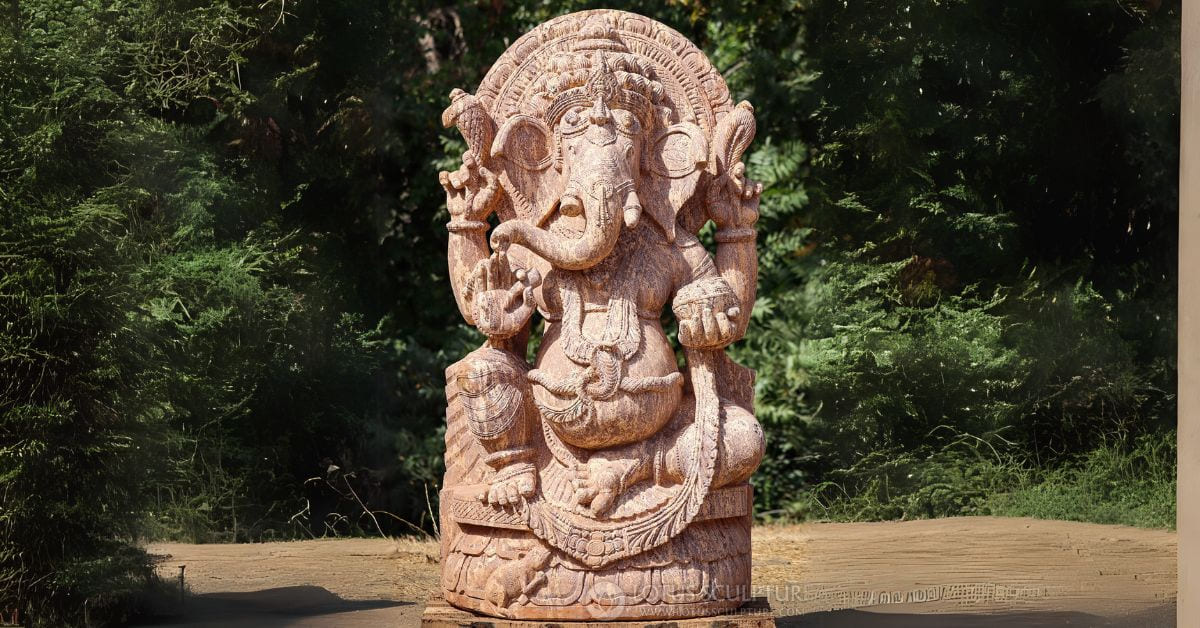
Stone, particularly black granite, sandstone, and green chlorite, conveys permanence and weight. Stone Ganesha statues are well-suited to garden spaces, outdoor shrines, entrance courtyards, or larger indoor spaces where the material’s natural presence can be properly appreciated. Outdoor areas require less upkeep for stone, which maintains its beauty through time. The most effective material for outdoor Ganesha statues and large indoor display pieces is stone.
 

Marble Ganesha Statues

Marble brings an elegance and luminosity that no other material quite replicates. The white marble Ganesha statues show pure properties, which make them appropriate for formal worship spaces, living rooms and any place where the statue serves as both an art piece and a devotional item. Marble needs more maintenance than brass and stone because it requires protection from extreme outdoor conditions while displaying its exceptional beauty in indoor environments.
 

Wood Ganesha Statues

Carved wood Ganesha statues create natural warmth through their organic design, which matches bohemian, natural, and eclectic interior styles. The spaces function best when used as personal areas for creative work. Wood requires protection from moisture and direct sunlight over time, but adds a character that cast or carved stone cannot replicate.
 

Placement – Where Should Your Ganesha Go?

Placement is not just about aesthetics; in Vastu tradition, where you put Ganesha shapes what energy enters that space.
 

Home Entrance

The entrance shows Ganesha, who protects the home from negative energy and establishes its positive energy, which begins when you enter the house. The statue should ideally face inward, welcoming what enters rather than turning away from the home. A Ganesha statue that stands or sits can be made from brass or stone materials to suit this location. The visual impact of size requires you to select a statue that fits your doorway because small statues will disappear in front of large entrances.
 

Puja Room or Home Altar

The puja room serves as the appropriate location for a traditional seated Ganesha statue, which depicts him with his left trunk and is made of either brass or marble. The space needs to provide materials and design elements that help people carry out their daily worship activities. Ganesha needs to be positioned at a height that allows the deity to be visible at eye level for people who sit down to pray. 
 

Office Desk

Your desk should have a small to medium-sized seated Ganesha statue, which brings three essential benefits needed to create a workspace that people desire. The desk requires either brass materials or carved stone materials, which will suit its dimensions. The area surrounding the object needs to remain clean because a cluttered workspace will reduce the purposefulness of its contents.
 

Office Entrance or Reception

A larger standing Ganesha near the entrance of a business sets a tone of welcome, wisdom, and auspicious beginnings for every client and colleague who walks in. A statement piece becomes most effective at this location through the use of marble or large stone materials or detailed brass elements.
 

Quick Reference Guide

 If you want… Choose…
 Daily home worship Seated, left-trunk, brass or marble
 Home or office entrance Standing, brass or stone
 Creative or studio space Dancing Ganesha, any material
 Outdoor garden or courtyard Stone, any pose
 Formal living room display Marble, seated
 Office desk Small seated, brass or stone


Finding the Right Ganesha Statue

The correct Ganesha statue needs to match the dimensions of its installation area and fulfil its designated function while complementing the existing design of the surrounding home or office space. When selecting the correct option, most people find an appropriate answer through selecting specific attributes because they need to identify particular elements that will help them make their choice. 

Lotus Sculpture’s collection of Ganesha statues covers the full range, sitting, standing, and dancing forms across brass, stone, marble, and wood, handcrafted to the detail level that devotional statues deserve. The collection offers you every option because you can select items for daily puja, choose meaningful gifts, or find impressive display items that match your requirements.

Top 5 Ganesh Chaturthi 2025 Celebrations Across the USA

Have you ever wondered why one of India’s biggest festivals has grown so gigantic as a phenomenon in the United States’ cultural scene? The beating of drums, the vibrant colors, and the aroma of sweet modaks—the arrival of Ganesh Chaturthi is a celebration that unites individuals. Although this is an Indian celebration, there is a vast space for it in the United States, where people come together to celebrate Lord Ganesha. It is a day to pray, to learn about heritage, and to indulge in abundance. Consider yourself blessed if you are looking for some element of this incredible tradition in North America. Ganesh Chaturthi USA festivals have become wonderful, can-not-miss celebrations with gorgeous Ganesh statues at the center.

This festival is marked on the birth anniversary of Lord Ganesha, a very sacred Hindu deity known as the remover of obstacles, patron of the arts, and the lord of new beginnings. The devotees welcome beautiful Ganesh statues into their lives and homes for ten days, praying and doing rituals. A very austere phase of the year brings people close to religion and themselves.

The Spirit of Ganesh Chaturthi in the USA

The manner in which Ganesh Chaturthi is celebrated here in the US is slightly different from India, but no less vibrant. Here, it’s all about attempting to build community, getting families and friends together from near and far. The celebration has expanded from small-scale back-home affairs into large-scale public events with fancy finery, music, and food. These are public areas where everybody and anybody is welcome to go and enjoy the celebration of the various traditions of the festival. Ganesh Chaturthi during 2025 begins on Friday, August 28th, and lasts for ten days, ending on Monday, September 8th, with the procession of immersion of the idol. The period of ten days is a time of overwhelming energy and happiness for Hindu people all over the world.

These big Ganesh Chaturthi celebrations 2025 will be a valuable learning experience for newer generations about their heritage and for others to experience the prettiness of Hindu festivities in the USA.

Explore our Ganesh Statues Collection

The Top 5 Ganesh Chaturthi Celebrations in the USA

These five cities host some of the nation’s most famous and biggest Ganesh Chaturthi celebrations.

1. The Bay Area, California

The Bay Area, with its huge Indian-American community, is one place where Hindu culture runs deep in the United States. California Ganesh Chaturthi festival celebrations here are the stuff of legend. The festival is celebrated here with grand events hosted by organizations such as the Bay Area Telugu Association (BATA), Maharashtra Mandal, and Hindu Swayamsevak Sangh (HSS), each organizing their own vibrant programs.. These communities often construct huge public celebrations with a huge Ganesh idol that acts as the focal point. There is a charged atmosphere with classical music, dance routines, and a communal atmosphere. The big pandals get thousands of visitors, giving them an experience of a small part of Mumbai in the middle of Silicon Valley.

2. New York, New York

No wonder a city as multicultural as New York’s has a fantastic Ganesh Chaturthi festival. In New York, Ganesh Chaturthi is celebrated with great enthusiasm in temples and community centers, especially in Queens and parts of Manhattan, where devotees gather to chant, sing, and participate in processions. It is something one can’t help recalling to catch sight of the beautifully trimmed Ganesh statue parading down Queens’ or Manhattan’s streets. The holidays are a lovely combination of traditions past and community celebrations anew.

Why are New York celebrations so different from those in other cities, then? The very diversity of the city guarantees that the celebrations here turn into a confluence of several different cultures, with everybody ranging across every strata of life coming to celebrate the festival together. It is an extension of Lord Ganesha’s very open and welcoming nature.

3. Houston, Texas

There is nothing too significant in Texas, which certainly holds true with the Ganesh Chaturthi Houston celebrations. The massive Indian population of the city joins to witness some of the richest Ganesh Chaturthi festivities in the country. The festival is defined by elaborate rituals, bhajans, and indiscriminate food. The festivities are a reflection of the way the community is capable of keeping its traditions alive and passing on to the world.

4. Chicago, Illinois

The Ganesh Chaturthi festival in Chicago is proof of the local population’s spirit. During this festival, emphasis is placed on bringing people together and making it a friendly atmosphere to welcome the family. USA Chicago pandals Ganesh Chaturthi are popular for their celebratory ambiance, where people are invited to participate in the prayers, witness cultural events, and share meals. The rituals are conducted over a few days, and all the members are offered the opportunity to participate and enjoy the celebratory ambiance.

5. Washington D.C. Metropolitan Area

D.C.’s people, consisting of a substantial Indian population, already possess a pre-existing and developing culture to celebrate Ganesh Chaturthi.Temples and cultural societies across Maryland and Virginia suburbs, such as the Sri Siva Vishnu Temple in Lanham, organize the celebrations. They are more reserved than California’s or New York’s, focusing on community and family participation. The ceremonies are a lovely witness to how a religious tradition is passed down to new generations.

The Heart of the Festival: Art and Tradition

Regardless of where you live in the USA, the Ganesh idols are a key element of the festival. From small, modest statues for the home to the huge, very detailed statues for the giant pandals, each is a piece of art. These exquisite Lord Ganesha statues are tokens of hope and prosperity. They remind us that the biggest celebrations are art, tradition, and coming together. That they go so far as to make these lovely works of art indicates this festival’s importance to them. 

The Ganesh statues for home decor or specialty altar can be made specifically and personalized. Even if you have a conventional Ganesh marble statue, brass, bronze, or wood, they all have unique qualities. A Ganesh statue may be a beautiful addition to a home, garden space, or personal altar. As you browse for the perfect piece to take home, you can discover a stunning array of statues that reveal the beauty and reverence of the festival.

Discover our Ganesh Statues here.

Conclusion

Regardless of whether one is looking for the grand energy of a city festival or the quiet spirituality of a neighborhood block party, Ganesh Chaturthi is a celebration that has truly become at home here in the United States. These top five celebrations attest to how the holiday’s feeling of oneness and spirituality are thriving. It is a powerful reminder that tradition can thrive anywhere. The idol remains central to all parties, symbolizing wisdom and renewal.

If you are looking for a beautiful and symbolic statue to adorn your house or community fair, you are invited to come look through our collection of hand-finished Ganesh statues.

How to Choose Your Perfect Ganesh Statue for Home Decor, Garden & Altar?

ganesh stone sculpture

Thinking of placing a Ganesh statue in your home or garden, but not sure which one is right for your space?

So, you’re not alone. Many people are drawn to the calm, grounding presence of the Hindu god Ganesh — whether it’s for spiritual reasons, decorative value, or simply to create a peaceful atmosphere. But with so many options out there — from stone and marble to wood and metal, seated or dancing forms, large or small — it can be hard to know where to start.

Should it go in your entranceway, on your altar, or maybe under a tree in your backyard? And does material or stance really count?

In this blog, we will guide you through what to remember while selecting a Ganesh statue, whether it is for your living room, meditation area, or for the outdoors. Simple, intentional decisions can make all the difference — and we are here to assist you in making the correct one.

Ganesh for home decor
Ganesh Statues Collection

Begin with the Location: Home, Garden, or Altar?

Before taking the Ganesh statue, you can take a moment to think where it will be placed. This decision shapes everything else – size, material, posture, even the level of extension you want. Different spaces have different meanings, and your choice should reflect the energy you expect to invite the place.

For your home decor:

Placing Ganesh in your living space, perhaps on the front door or large flat area, is one of the top popular choices. Seated Ganesh with one hand held out in blessing (Abhaya mudra) is perfect here — representing protection, peace, and clearing of obstacles. This form instills a peaceful, welcoming environment for all visitors to your home.

Don’t put the statue on the floor. Rather, set it to a streamlined, raised place – a small platform, shelf or niche that looks deliberate and respectful. Most people like to keep it close to the front door because it is said to safeguard the house and bless the new beginning.

ganesh statue
Ganesh statue for home decor & interior

For a personal altar or prayer space:

If the statue is to be your puja room or spiritual niche dweller, symbolism comes more important. Seek out a serene, focused look and cross-legged or meditation pose. Such a Ganesh statue for altars will encourage reflection, prayer, and spiritual grounding.

It is also good to scale the size of the idol in the room – very large overwhelmed, while out of very small space. Keep the area around the idol clean, clutter-free, and calm.

For gardens and outdoor spaces:

In an outside environment such as a garden, patio, or near a water source, Ganesh statue becomes integrated into the landscape — and both visually, and spiritually. Ganesh garden statues, particularly if they are carved from stone or weatherproof material, are suited for such environments.

Placing a big stone ganesh garden statue under a tree, surrounded by flower plants, or near the garden entrance will bring peace and grounding vibrations. Just put it on a solid base, not kept closed in, and not even on the earth. If you have to protect and lift it, put it on a stone platform or wooden one.

stone ganesh statue for garden
Stone Ganesh Statues for Zen garden

Picking the Right Pose: What Ganesh’s Posture Says

All statues of Ganesh are not created equal — and we’re not even discussing size or substance. The stance or “mudra” of Ganesh is important. Selecting the proper pose can balance the energy of the statue with the intention or mood you wish to have in your space.

Seated Ganesh (Lalitasana or Padmasana)

This is one of the most ancient and most popular representations of Lord Ganesh. Cross-legged, with one leg folded and the other bent down resting, it radiates peacefulness, earthiness, and inner concentration. Seated Ganesh is also often placed in home altars, meditation rooms, or study rooms — wherever you’d like to establish peace and centeredness.

brass ganesh statue
Brass Seated Ganesh Statue

Dancing Ganesh (Nritya Ganapati)

This image of Ganesh captures the energy of movement and playful nature of god. Frequently illustrated in mid-step dance, it signifies creativity, vigor, and zest for life. Dancing Ganesh is particularly strong in areas where you would desire to introduce inspiration, celebration, or artistic energy. A Ganesh garden statue in this guise can provide a light but sanctified ambiance to your garden.

Standing Ganesh

Less traditional but highly symbolic, standing Ganesh statues are symbols of strength, preparedness, and protection. They’re wonderful by doors or spaces of transition in your home – symbolising that Ganesh is seeing over your area and keeping difficulties away.

Reclining Ganesh

A unique and more relaxed form, reclining Ganesh statues represent ease, prosperity, and comfort. It’s a wonderful statue for calm, secluded areas in your home where you’d love to add abundance and relaxation.

reclining brass ganesh statue
Reclining Brass Ganesh Sculpture

Final Thoughts

Now, when you are familiar with different types of Ganesh idols, whether it is chunks of carved wood, wide marble Ganesh sculptures or large stone sculptures – so choosing the right becomes a personal decision. This is not just about what looks good, but what looks right in your space.

Simple wooden Ganesh statues can provide a warm ambience to your altar, whereas colored marble ganesh statues can provide a peaceful aura to your drawing room. A large ganesh statue for zen garden can provide a peaceful and grounding energy. Whatever it is, make it convey your intent and the energy you would like to bring into your home.

It’s truly not about how big or how much the statue costs — it’s about your relationship with it. Trust your heart and your surroundings.

God Ganesha Puja / Aarti & Reasons Why Lord Ganesh Is Worshiped First?

God Ganesha Stone Statues

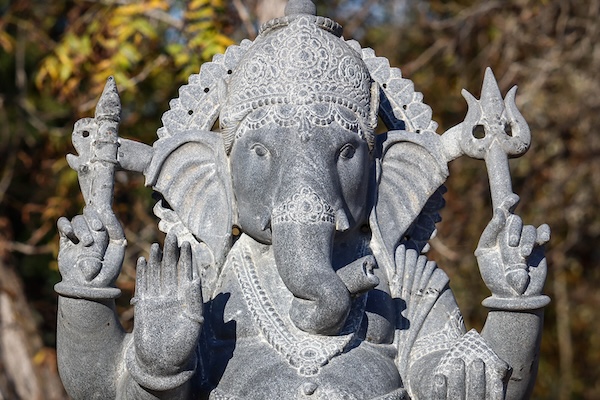
Lord Ganesha, also called Ganapati, Vinayaka, or the Elephant God, is one of the most revered deities in Hinduism. Known as the Remover of Obstacles and the Lord of Beginnings, his worship marks the start of almost every Hindu ritual and ceremony. Let’s explore why Ganesha Puja is so significant and understand why this beloved God Ganesh deity is always worshiped first.

Who Is Lord Ganesha?

Lord Ganesha is the son of Lord Shiva and Goddess Parvati, embodying wisdom, prosperity, and good fortune. His elephant head represents sharp intellect and attentiveness, while his large belly symbolizes the ability to accept both good and bad in life, teaching balance and contentment.

Why Is Ganesha Worshiped First?

  1. Remover of Obstacles: Ganesha clears hurdles to ensure success in all endeavors.
  2. Lord of Beginnings: His blessings are sought to start any ritual or task on an auspicious note.
  3. Divine Decree: Lord Shiva granted Ganesha the honor of being worshiped first in all ceremonies.
  4. Symbol of Wisdom: Ganesha’s presence ensures clarity, unity, and harmony.
Ganesh Aarti Lyrics

Jai Ganesh, Jai Ganesh, Jai Ganesh Deva, (x2) 

Mata Jaaki Parvati Pita Mahadeva. (x2) 

Ek Dant Dayavant, Chaar Bhuja Dhaari ,

Maathe Pe Sindhoor Sohe, Muse Ki Savari. 

Paan Chadhe, Phool Chadhe, Aur Chadhe Meva, 

Ladduan Ka Bhog Lage, Sant Kare Seva .

Jai Ganesh, Jai Ganesh, Jai Ganesh Deva ,

Mata Jaaki Parvati Pita Mahadeva .

Andhe Ko Aankh Det, Kodhin Ko Kaaya ,

Baanjhan Ko Putra Det, Nirdhan Ko Maaya .

Sur Shaam Sharan Aye, Saphal Ki Je Seva ,

Mata Jaaki Parvati Pita Mahadeva .

Jai Ganesh, Jai Ganesh, Jai Ganesh Deva ,

Mata Jaaki Parvati Pita Mahadeva .

Dinan Ki Laaj Rakho Shambhu Suta Kari ,

Kamna Ko Puri Karo Jag Balihaari  .

Jai Ganesh, Jai Ganesh, Jai Ganesh Deva ,

Mata Jaaki Parvati Pita Mahadeva .

How to Perform Ganesha Puja?

  1. Cleanse the Space: Use holy water or incense.
  2. Offerings: Present modaks, flowers, fruits, and light a diya.
  3. Chant Mantras: Recite “Om Gan Ganapataye Namah.”
  4. Perform Aarti: Sing the Ganesh Aarti to conclude the puja.

Teachings from Lord Ganesha

  • Patience and Perseverance: Overcome obstacles with calmness and determination.
  • Wisdom and Humility: Act with intellect and listen before making decisions.
  • Balance: Stay grounded in both success and failure.

Lord Ganesha in Modern Life

In addition to traditional worship, Hindu God Ganesh holds a global appeal for his teachings of patience, perseverance, and positivity. His image is often seen in homes and offices as a symbol of success and harmony.

Celebrate Ganesha with Lotus Sculpture

Bring home divine blessings with a beautifully handcrafted Lord Ganesha statue from Lotus Sculpture. Each piece is designed with care to symbolize wisdom, prosperity, and harmony.

Om Gan Ganapataye Namah!
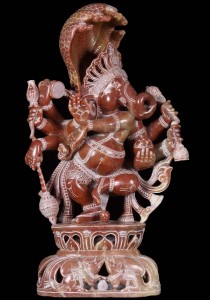
The Spread of Hindu God Ganesh into Buddhism

Many people are unaware that although a renowned Hindu deity, Ganesh is also worshiped by Buddhists.

View all our Hindu God Ganesh Statues

It is said that during the 10th century, merchants traveling from Asia began to worship Lord Ganesh.  As their devotion and teachings spread among the trading community, many other traders began to worship Ganesh as well.  His role as Remover of Obstacles was very much important to their journeys in trade as the hoped for safe voyages and safety from harm while at sea.  Lord Ganesh therefore became the primary deity associated with traders.  They would invoke his image before any other god whenever hardship would arise.

When Hindus began to spread across to the Malay Archipelago in Southeast Asia they took with them not only their culture but their particular fondness for Ganesh.  Statues were erected throughout the region in his honor.  Hindus migration further into Southeast Asia such as in Indochina, brought the practice of worship of Hindu deity’s right alongside Buddhists.  It is here that Buddhists alike began to adopt their fondness for Ganesh as Remover of Obstacles.  Even today in Buddhist Thailand Ganesh is worshiped as God of Success.  Within Mahayana Buddhism Ganesh is appears in the form of the Buddhist god Vinayaka.  His image often appears in Buddhist scriptures shown dancing.