Diwali Gifts: Meaningful Hindu God Idols for Your Home and Loved Ones

Ganesh statue

Let’s be honest—what do you actually want to communicate with your Diwali gift? 

You don’t just want a gift. You want to convey a blessing. Diwali is the culmination of the season, and is about inviting in abundance, setting intention, and honouring our divine beings in our lives. 

That said, trying to find meaningful Hindu God idols in the United States, one that feels like a true, meaningful, and durable work of art, can prove to be difficult. There’s a huge difference between a mass-produced item and a genuine, hand-finished Hindu God statue meant to be a permanent, spiritual fixture in a home.

A properly chosen Hindu God sculpture is a silent, beautiful conversation starter. It’s a piece of eternal philosophy rendered by a master craftsman.

As experts who live in and around this art, we want to move you past the uncertainty. Ultimately, it is not just about finding an idol of the deity you are looking for, it is about the energy surrounding the sculpture from becoming part of the needs and intention of the intended giver. 

Let us break down the three distinctive deities for the festival of lights, Ganesh, Lakshmi and Krisha.

1. Lord Ganesh: The First Step to Success 

Why Ganesh? In the Hindu tradition, you literally don’t start anything without him. He is the original Vighnaharta—the Remover of Obstacles. This is why a Ganesh statue is perhaps the most profound gift you can give as a spiritual “starter kit” for the new year.

What the Gift Actually Says:

“I wish you the wisdom to overcome any problem, and that every new beginning you undertake is blessed with ease.” It’s the perfect, potent blessing for a new job, a new home, or anyone launching a big new chapter.

How to Spot a Quality Ganesh:

  • The Power of the Seated Pose: Look for him seated with one leg folded. This isn’t laziness; it symbolizes stable, calm success—he’s achieved his goal and is resting in that certainty. This is the posture you want in a Ganesh statue for home decor.
  • Where to Place It: Naturally, because he clears the path, a Ganesh idol belongs either near the main entryway or in the place where your work happens—a study or office.
  • The Material Vibe:
  1. Want a piece that feels ancient and permanent? Nothing beats the rich weight and incredible detail of a Bronze Ganesh sculpture. These are investment pieces.
  2. For a pure, clean energy on an altar, a meticulously carved Marble Ganesh statue provides an unmatched sense of serenity and elegance.

Our Favorite: The classic Ganesh statue for altars is always a winner. It gives the recipient a dedicated piece for daily contemplation.

ganesh statues
Ganesh Statues Collection

2. Goddess Lakshmi: The Flow of Grace and Gold 

Diwali’s main event centers on Lakshmi. Why? Because she is the embodiment of all forms of wealth, fortune, and prosperity—and not just cash! We’re talking about spiritual wealth, good health, and material abundance.

What the Gift Actually Says:

You are giving the recipient a wish for the unending flow of life’s best energies—wealth, beauty, health, and dignity. It’s the highest form of auspiciousness for the new year.

How to Identify a Quality Lakshmi: 

  • The Iconography: Look for these non-negotiables: She must be on a lotus (purity); she must have lotus buds and be depicted pouring out coins; also, she is often found with elephants (power) on either side. 
  • The Rule of Placement: Never, ever have a Lakshmi statue for home decor facing outwards. She must face inwards—toward the center of the home or the altar—to symbolize her coming into and staying within the space.
  • The Right Finish: Her image is associated with gold. This is why a traditional Brass Lakshmi statue is such a favorite; the natural warmth and color of the metal is perfect for her energy. Look at the fine detail of her dress, and the sheer calm of the expression on her face. 

Fact: A masterful Lakshmi sculpture doesn’t look hurried or frantic. Her abundance is always calm, dignified, and eternal. That serenity is the marker of a truly quality piece.

lakshmi statues
Lakshmi Statues Collection

3. Lord Krishna: The Melody of Joy and Devotion 

Why include Krishna? While Ganesh and Lakshmi set the direction in finance and structure, Krishna brings the joy, the love, and the bhakti that is the golden thread of the Diwali spirit. He reminds you, the secret of life is to love, and have fun with your wisdom.

What the Gift Actually Says:

“May your life be filled with everlasting happiness, deep spiritual connection and the playful wisdom to live your dharma (purpose). It is the gift of spiritual romance and purpose.” 

Identifying a Quality Krishna: 

  • The Pose: The most popular Krishna idols depict him in the Tribhanga pose (the lovely triple-bend), poised with his flute. This pose is his signnature—it depicts his magnetic power of escorting the soul to devotion. 
  • Aesthetic: Krishna represents value. A quality Krishna idol (often a tall brass Krishna idol) to meet the criteria of a good quality Krishna must express intricate detail in the crown, in the jewels, and position to demonstrate his mesmerizing power. 
  • A Gift of Relationship: Looking for something (gift) for a couple? A sculpture of Krishna and Radha represents a devotee experience of eternal, uncompromising love is a really nice gift for the living room!
krishna statues
Krishna Statues Collection

The Lotus Sculpture Difference: Beyond the Surface

When you buy a Hindu God statue—especially one you would like to last—you are really making an investment in cultural tradition, and you want to be confident that what you are buying is true and not just a flimsy, cheap reproduction.

What We Ask of Our Pieces:

  • Weight of Genuine Material: We collaborate with master artisans who use traditional techniques that go back centuries—like the lost-wax technique for all our brass sculpture and bronze sculpture. This results in a heavy and solid piece that can replicate the finest possible lines in detail. If the metal statue feels light, you should consider leaving.
  • The Carving: For our Marble statues, we only source hand-finished, solid blocks of stone. Elegance comes from the purity of the carved stone, not overly bright, superficial looking paint applications.
  • Durability: If you are looking for an outdoor piece—maybe a large Durga statue for garden or a weatherproof Ganesh statue for an outdoor space—then, we separate the pieces and specify the material (heavy stone or sealed metal) was tested and treated for the US weather to last for generations.

The Bottom Line: A beautiful Hindu God idol is a lifelong piece of devotion. This Diwali, skip the temporary and choose a gift that will serve as a permanent, powerful source of inspiration, abundance, and peace.

Are you ready to hold a piece of everlasting Art with true weight and meaning? Browse our curated collections of Ganesh, Lakshmi, and Krishna sculptures.

Incorporating Hindu God Statues into Modern Home Decor

Have you ever thought about how to introduce the rich, spiritual tradition of Indian art into a clean-lined, modern home? Our homes are our personal canvas, and in today’s world, we gather objects that reflect our story – a story that is usually a fusion of more than one culture and tradition. Here in this personal curation space, the classic brilliance of Hindu God Statues is making a new home.

These are not just things to be put into a room for looks; they are powerful symbols of deep religious meaning. So how do you create a harmonious dialogue between a centuries old statue and modern decor? It begins with discovering the story and energy each god or goddess brings, and then using key design pieces to bind it together.

Beyond the Ordinary: The Deeper Meaning of Each Deity

Each statue you select reflects a unique element of the universe, and in choosing one, you’re committing an individual act of intention. Let’s discuss the specific energy each god can introduce into your home.

ganesh statue
Ganesh Statue for Home Decor
  • Ganesha Statues: A traditional option and a great starting point with sacred art. Ganesha, with his elephant head, is the remover of obstacles, guardian of intelligence, and lord of beginnings. A Ganesha statue is ideal for a front entrance to bless the visitor, or for an office or home office – a contemporary room – to inspire commitment and success. His presence reminds us daily that any obstacle can be overcome by wisdom and a positive outlook.
  • Shiva Statues: Would you prefer to create a serene space for contemplation and concentration? The last yogi and the supreme deity of transformation, Shiva symbolises inner serenity, profound wisdom, and divine awareness. A meditating statue of Shiva is a great thing to place in a room where one may meditate, a reading nook or even the bedroom. It needs a sense of quietness and separation from the world’s problems. For a consumer looking for a more dynamic energy, the style of Nataraja statues—Shiva as cosmic dancer—is a powerful symbol for the universe’s constant creation and destruction, ideal as a living room or decoration room centrepiece.
  • Vishnu Statues: As the preserver and protector of the world, Vishnu is righteousness, order, and stability. Place a Vishnu statue in a central living area where the relatives and friends gather. He is to bring peace to the family by introducing order and stability. His statue is always shown with him holding a conch, discus, mace, and lotus, symbolising his preservative and protective virtues.
  • Krishna Statues: Krishna is the eighth avatara of Vishnu and the god of love, compassion, and joy. Typically depicted in his form as a mischievous youth, playing the flute, a Krishna statue will bring home the virtue of happiness based on humility and spiritual love. This is an excellent selection for a family, music, and art room where his engaging presence will induce bliss and a sense of upper devotion.
  • Hanuman Statues: Hanuman embodies untainted strength, loyalty, and staunch devotion. He is renowned for possessing  immense power and loyalty towards Lord Rama. His statue is a beautiful representation of strength and willpower. Keeping his statue with you could be an inspiration and a defensive factor, and would make a great addition to a study desk, a gym, or wherever you require the inspiration to drive through personal struggle.
  • Murugan Statues: Youth god, war god, and victory god, or Kartikeya, is the inner consciousness symbol of courage who wears his divine lance (Vel) to overcome ignorance and negativism. A Murugan statue is also a powerful symbol of will and collective endeavor, pushing you beyond inner conflict and struggling with external barriers with a calm mind.
  • Brahma Statues: The universe’s creator, Brahma, symbolises new beginnings, creation, and wisdom. Less popular today in homes, yet a Brahma statue, with four heads symbolising the four Vedas, is a fantastic representation of creativity and wisdom. Brahma is a special feature in a home or office where new concepts are constantly being made.
shiva statue
Shiva Statue for Home Decor

Simple Ways to Bring Harmony to Your Modern Space

The secret to integrating these statues in your home is through deliberate styling. It’s about allowing the statue to stand as a work of art without neglecting its spiritual roots.

  • Contrast as a Design Element: This is an effective method. An incredibly elaborate bronze or brass ganesh statue on a highly plain, streamlined console table creates great visual contrast. The extremely elaborate, ancient form of the statue stands out even more against the plain, contemporary background. This contrast makes the statue and the rest of the furniture stand out more.
  • Playing with Size and Texture: Think about the size of your space. In a large room, a large Hindu God Statue can be used as an anchor piece, while a small, delicate one can be used to create a modern art piece on a shelf. The material’s texture is also an issue: an outdoors weathered stone statue is earthy and organic, while a smooth metallic item is sleek and sophisticated.
  • Lighting and Background: How do you make your statue a focal point? With accent lighting, such as an over-the-table light or a corner table light, highlight the sculptural elements. Position the statue before a dull, bland, plain or dark accent wall to provide contrast.
  • Embrace Outdoor Spaces: The majority of statues, especially those that are crafted from stone or long-lasting bronze, are ideal for patio or Ganesh statues for gardens. They are capable of transforming a simple outdoor area into one peaceful refuge of quiet reflection.
krishna statue
Krishna Statue For Home Decor

A Note on Respectful Decor

When you adorn, be reverent with these statues. Always have them on a raised surface, never on the ground, and have tidiness and a clutter-free space around them. The act in itself honors the object as well as the tradition thereof. One key thing to remember: The northeast direction is the most auspicious for holding deities, since it is the realm of divine energy and water.

A Final Word

As we’ve come to the completion of this guide, you may still be left with some questions regarding the ideal location or what statue you’re prepared for. The truth is that there isn’t a right answer. The sincerest option is the one that resonates with you in your heart and aligns with the energy of your home. Your home is your haven, and in a thoughtful selection of a Hindu God Statue that resonates to you, you can design a home that is not just a place to exist, but a space that resonates with your path, full of beauty, meaning, and spirituality.

Hanuman statue
Hanuman Statue for Decor

The Spread of Hindu God Ganesh into Buddhism

Many people are unaware that although a renowned Hindu deity, Ganesh is also worshiped by Buddhists.
View all our Hindu God Ganesh Statues

It is said that during the 10th century, merchants traveling from Asia began to worship Lord Ganesh.  As their devotion and teachings spread among the trading community, many other traders began to worship Ganesh as well.  His role as Remover of Obstacles was very much important to their journeys in trade as the hoped for safe voyages and safety from harm while at sea.  Lord Ganesh therefore became the primary deity associated with traders.  They would invoke his image before any other god whenever hardship would arise.

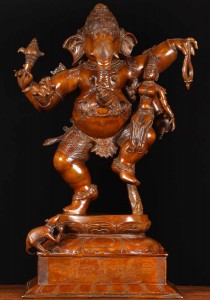
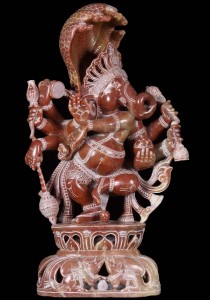
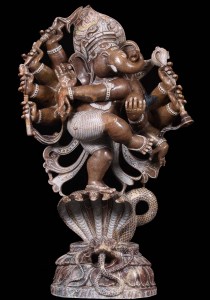
When Hindus began to spread across to the Malay Archipelago in Southeast Asia they took with them not only their culture but their particular fondness for Ganesh.  Statues were erected throughout the region in his honor.  Hindus migration further into Southeast Asia such as in Indochina, brought the practice of worship of Hindu deity’s right alongside Buddhists.  It is here that Buddhists alike began to adopt their fondness for Ganesh as Remover of Obstacles.  Even today in Buddhist Thailand Ganesh is worshiped as God of Success.  Within Mahayana Buddhism Ganesh is appears in the form of the Buddhist god Vinayaka.  His image often appears in Buddhist scriptures shown dancing.
The End of Diwali & Its Significance

We at Lotus Sculpture hope you all had a wonderful Hindu Festival of Lights!  Many non-Hindus around the world have come to know of the religious holiday, but fail to truly understand what it entails or symbolizes for the greater Hindu community.  Diwali is not just a religious holiday, but a spiritual and social holiday as well.  According to the Hindu calendar, Diwali marks the beginning of a new year.  It is a time to be re-acquainted with one’s inner spirituality and set goals and ambitions for the year ahead.  The festival itself honors the Hindu Gods in many ways with both rituals and prayers.

View all Hindu God Ganesh Statues from Lotus Sculpture

The most revered of the deities during are Hindu Goddess Lakshmi, Goddess of Wealth and Prosperity, and God Ganesh, Remover of Obstacles.  It is not hard to see why these are the most important Hindu deities during the festival, as believers wish for prosperity in their lives both financially and spiritually in the coming year as well as help from Lord Ganesh in guiding their path to defeat those obstacles that may have hindered them in the previous year.

It is also a time to honor the return of Lord Ram.  The legend behind the return of Lord Ram from Sri Lanka is one of the most beloved within Hindu mythology.  Legend has it that the evil King of Sri Lanka, Ravana, kidnapped Lord Ram’s wife, Sita.  Ram and his followers proceeded to spend years building a bridge between Sri Lanka and India in order to defeat Ravana and save his beloved wife.  Once the bridge lay complete, Lord Ram was successful in his plans of defeat and rescue.  When Ram returned to India, people welcomed them back by lighting small clay pots and decorating their homes in homage.  These lamps are said to symbolize the triumph of good over evil, just as Lord Ram did over Ravana.  The themes behind this story now define the celebration behind the Diwali Festival to date.

Today, the festival is marked by vast displays of fireworks, devote worship, social gatherings, prayer, and cleaning up one’s life both physically and spiritually.  It is a time of joyous celebration of life itself.  The holiday itself should not be considered only an exclusive holiday for Hindus, as they invite people of all faiths to embrace the meaning behind the festival, shedding stresses, worries, and make goals for the coming year.  If you were not able to participate this last week, join Hindus around the world in celebrating the Festival of Lights next year!

Hindu Lord Ganesh: Remover of Obstacles

Hindu God Ganesh has ascribed to many roles over time.  His most marked role is that of Vighneshvara, or Lord of Obstacles, within the Hindu Religion.  This applies to both material and spiritual aims.  Besides the primary remover of obstacles he is also thought to place obstacles in the way of those in need of guidance.   If one is expressing themselves in less then ideal ways, Ganesh may bring those to light by bringing about hindrances that may enlighten them.

View all our Lord Ganesh Statues

Another such role is that of Lord of letters and learning.  Ganesh is renowned for his divine intellect and wisdom.  He is thought to be a teacher of the divine with his inherent cleverness and vast intelligence.  He is worshiped often by devout Hindus whenever they are embarking on a new endeavor, such as buying a house or starting a new business opportunity.  They pray for his guidance in that their new beginning may be successful.

It would not be a stretch to say that virtually every Hindu home has some sort of statue or montage to Lord Ganesh.  He is worshiped by everyone, whether rich or poor, all over India.  They collectively believe that he is a granter of success, prosperity, and protects against hardships that may arise.  Most beseech upon him at the beginning of every prayer, important events, or religious ritual.  It is even said that musicians, dancers, and artists call upon him at the beginning of every performance, undertaking, or event.  One of the most influential invocations is the following mantra:

‘Om Shri Gaṇeshāya Namah’ translated asOm, salutation to the Illustrious Ganesha’

Most Hindu households give offerings of sweets to their beloved Ganesh which is why he is often depicted holding a basket of delicacies.  Although the birth of Ganesh is the most often celebrated holiday worshiping Ganesh, he is often revered during Diwali, the Hindu festival of lights.  This is mostly due to his everyday influence in the lives of Hindus nationwide.  Diwali is a celebration of the plentiful qualities of life, of which Ganesh is often a largely believed guidance through them all.