Nataraja vs. Meditating Shiva vs. Ardhanarishvara: Which Form to Choose?

nataraja statues

Have you ever experienced walking into a room and suddenly feeling a change in the atmosphere? Possibly the area seemed to you to be so relaxed that everything was under control, or, on the contrary, it was so full of a sudden powerful surge of the highly concentrated, inventive energy. Gifting Mahadeva to your home is no mere matter of decor. Shiva is capable of manifesting himself as the immortal dancer, the silent meditator, as the divine duality of masculine and feminine energies and every incarnation has its own very distinct spiritual and visual essence.

If you are wondering which form to buy, the answer depends entirely on the atmosphere you want to cultivate. Let’s look at how to choose the right form for your lifestyle and goals.

Shiva Statue
Meditating Shiva Statue


The Intersection of Modern Decor and Conscious Spirituality

Before you dive into room layouts and Vastu principles, it helps to understand why the statue’s physical shape matters so much. In sacred art, a masterfully crafted sculpture is more than a display piece; it becomes a kind of visual conduit for a specific energy, almost like it channels something. A dynamic form adds a sense of motion and a sort of revitalisation to a room, while a still form gives it stability, grounds the space, and, yes, serves as an anchor of peace.

Whether a beautiful bronze piece intricately made by the traditional lost wax method, a heavy brass work of art, or a finely hand-carved stone deity, you would like to be sure that its spiritual intent goes hand in hand with your way of living. Here are the main aspects of the three principal manifestations of Lord Shiva that will help you make the right decision for a spiritual retreat in your home.
 

Lord Nataraja: The Cosmic Dancer

In case you find your space to be dull or stagnant, then the form of Nataraja is considered to be able to infuse new energy into the environment.

Nataraja statue
Nataraja statue Collection


The Iconography and Energy

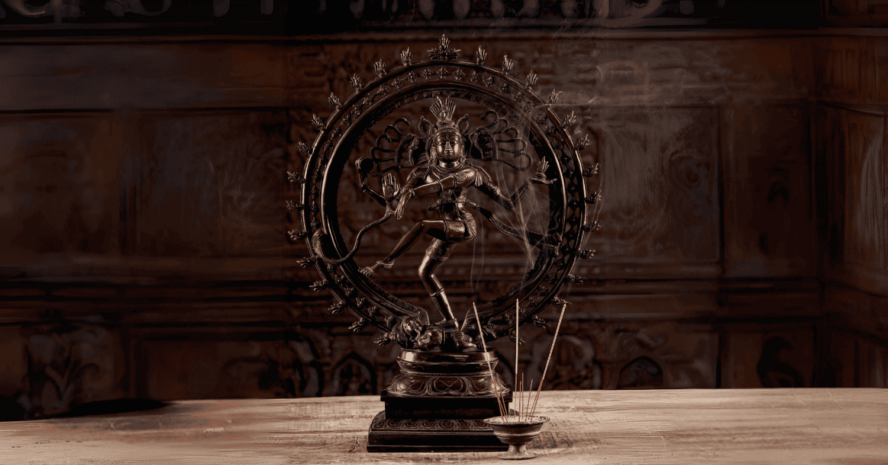
In this magnificent kind of form, Shiva feels like he’s captured mid-dance inside a blazing halo, while he balances on one foot atop a small demon who looks like he shrank down. The Nataraja statue’s meaning turns into a profound lesson about the rhythm of existence, like creation, preservation, destruction, illusion, and liberation all moving together, not in a neat line but kind of in motion. He’s holding a drum (damaru) that drums out the pulse of time, plus fire that stands for change that can not be avoided. The energy here is dynamic, really active, and honestly deeply inspiring, like it keeps pulling you forward even when you’re just looking.
 

Ideal Placement & Material Recommendations

Because Nataraja represents fast momentum and cosmic fire, your Shiva statue placement vastu decisions need to be intentional, not just “wherever it fits :

  • Where to put it: Put it in a main living room, a creative studio, an office, or any space that gets used daily, especially where brainstorming, artistic work, and general activity happen.
  • Where to avoid: Don’t put a Nataraja statue in the bedroom, or in a quiet study corner. That intense, active energy can mess with your sleep, your rest, and that calm kind of focus people want.
  • Material Tip: A rich, heavy bronze or brass Nataraja looks stunning under direct spotlighting, emphasizing the intricate details of the flames and dancing limbs.


Meditating Shiva: The Ultimate Yogi

On the complete opposite end of the spectrum sits the yogic form of Mahadeva. If your everyday life is fast-paced, kind of hectic, and filled with digital noise, this is the anchor your home really needs. 

Shiva Statue
Shiva Statue Collection


The Iconography and Energy

Here, Shiva is seated in a deep lotus posture (Padmasana), his eyes gently closed, his hands resting in his lap, and a quiet kind of smile on his face. He feels completely turned inward, not really bothered by the chaos of the outside world. His trident (trishula) rests quietly near him, like a small sign of steadiness over the mind, ego, and all those restless wants.

The presence of a Shiva statue in meditative pose at home will immediately give you a sense of calmness, as if your nervous system gets a visual cue to slow down, relax, introspect, and find peace within yourself.

Ideal Placement & Material Recommendations

To pull out the maximum calming value from this yogic form, stick to these classic Vastu guidelines:

  • Where to put it: The northeast corner of your home, the Ishanya corner, is considered ideal for meditation, clarity, and spiritual growth. Place your meditating Shiva there, preferably facing north or east. It works really well in a dedicated altar room, a quiet reading corner, or a serene entryway, so visitors step in with peace before they even speak.
  • Material Tip: Hand-carved white marble, dark granite, or natural volcanic stone works really well for this yogic shape. Something about the carved weight of it feels right, like the room can hold calm energy. These natural, earthy materials soak up the quiet vibe, and they also throw out a gentle, grounding halo that invites deeper meditation.


Ardhanarishvara: The Divine Synthesis

If you want to find more harmony in your relationships or maybe mix logic with intuition a bit better, then Ardhanarishvara is worth looking into.

The Iconography and Energy

Ardhanarishvara is this composite form of Shiva split down the middle. The right side is male, and the left is female, as Parvati. This represents non-duality in the universe where masculine and feminine energies are inseparable. It is about harmony and balance mostly. Some parts feel like they emphasize equality and wholeness as well. I am not totally sure how all the details line up, but that is the main idea.

The energy of this form feels centred on harmony, steadiness, equality, and wholeness. It’s also this bold visual nudge that real strength doesn’t only mean power, it means compassion too and somehow logic and intuition have to work together, not fight.

Ideal Placement & Material Recommendations

Because this form directly addresses the balance of relationships, its placement is highly specific:

  • Where to put it: This is a really standout option for a main living room, where the family naturally gathers, because it encourages shared respect and a calmer flow of communication. You can also place it in a main bedroom to help create harmony between partners.
  • Where to avoid: Try not to put it near bathrooms, kitchens or in cluttered storage areas, because it can disturb the careful balance of the divine energies. Sometimes people forget this part, but it matters.
  • Material Tip: Go for top-quality two-tone metals or stones with well-done carvings, so the small differences between the two sides can be noticed up close and in a quiet way.


Making Your Final Decision

Sometimes you can simplify things by just looking at what your life is missing right now. 

  1. Nataraja could be good if you need motivation and creative inspiration. It also gives courage for major life transitions.
  2. Pick Meditating Shiva if you want stress relief, stronger mental clarity, spiritual discipline, and an oasis of calm, you know that quiet steadiness.
  3. Pick Ardhanarishvara if your focus is relationship healing, deeper internal balance, and learning unity in your home in a real, everyday way.


A Note on Mindful Devotion

No matter which form you bring home, remember that a sacred statue is not only a design accent or decor idea. Treat it like it matters. Keep the space clean, uncluttered, bright, and raised off the floor on a dedicated altar, table, or mantel, so it’s given proper respect to the ancient skill and the deity.

Take a look at our authentic, museum-quality collections to discover the right Shiva Nataraja Statues, or just browse the full range of Hindu God Shiva Statues to refresh your home sanctuary today.

The Story Behind Lord Nataraja: The Form of Lord Shiva

dancing shiva- Nataraja

Goddess Parvathi’s consort Lord Shiva is well known in the world of Hinduism and is worshipped in several forms and each form signifies a particular facet of life. Of these, I have selected one of the most graceful and meaningful – Nataraja posturing. The sculpture depicts Nataraja or the “King of Dance”, wherein Shiva in his Cosmic form, represents the cycle of existence, destruction, and recreation, the beat of time and beyond the physical. 
nataraja statues
View Our Dancing Shiva Statues

This article delves into the origins, significance, and deeper symbolism behind Lord Nataraja’s form.

The Origins of Lord Nataraja

However, the depiction of Lord Shiva in dancing posture also has an important cultural and religious value; especially for the southern part of India most associated with Tamil Nadu. The Saivite depiction of dance is called the Dance of Shiva also known as Ananda Tandava, and it has a devoted importance in the Chidambaram temple.

It is significant to note that the concept of Nataraja is stated to have emerged in the course of the Chola dynasty which existed from the 9th to 13th century CE. They now witnessed several bronze sculptures that are mostly focused on the depiction of Shiva.

The Symbolism of the Nataraja Form

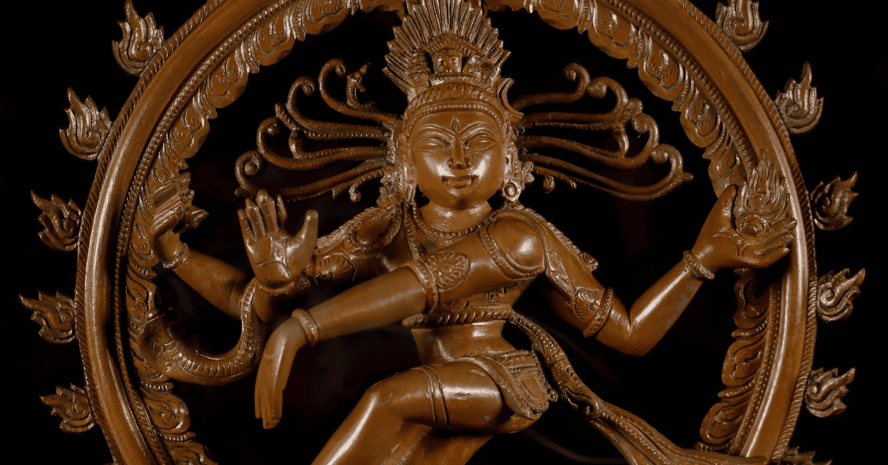
The Nataraja Statue can be considered as one of the greatest achievements both from a spiritual and artistic point of view. Each of the objects depicted in the picture is symbolic of a certain philosophy:

  1. Dancing Posture (Tandava): In the center of the picture there is depicted Shiva dancing within the ring of fire that symbolizes the life-death-rebirth process.
  2. Four Arms: Each of his four arms relates to a different cosmic function:
  • The right upper hand holds a drum (damaru) which denotes the creation and the sound of the universe.
  • The upper left hand has fire or agni which symbolizes destruction or change.
  • In the right hand which is in the lower position, she holds abhaya mudra (protective gesture) and blesses devotees to emerge out of fear.
  • One of the gestures of the legs is pointed downward with his left hand to the raised foot to symbolize freedom and grace from the God almighty.
  1. Dwarf Demon (Apasmara): Covering the feet of Shiva stands a dwarf demon known as Apasmara representing ignorance and ego under Shiva’s feet to represent wisdom.
  2. Crescent Moon and the Ganges: This crescent moon symbolizes time and is included in his hair, and the water that constantly gushes from his hair symbolizes the renewal and purification of the river Ganges.
  3. Encircling Flame: In Encircling Flame or Prabhamandala, the circle around Nataraja represents the other half of the cosmic energy that advices and destroys the universe.
  4. SerenePose: Non-volatile movement – Even though Shiva is dancing vigorously, his facial expression is of peace depicting the dynamic aspect of stillness.

The Cosmic Dance: Ananda Tandava and Rudra Tandava

There are generally two broad categories of Shiva’s dance.

  • Ananda Tandava (Dance of Bliss): This form is the dance that symbolizes the bliss that is created in the universe due to the energy of Shiva.

That is why, for example, there is 

  • Rudra Tandava: The dance of destruction that prepares the ground for creation, a new beginning, and a new life.
nataraja statues
View our brass & bronze Nataraja Statues

Nataraja in Spiritual and Scientific Context

Jain’s research highlights that the Nataraja form of Lord Shiva has been a significant topic in discussions across religion, science, and philosophy. Physicists draw parallels between Shiva’s cosmic dance and the kinetic motion of subatomic particles. This cultural association is further exemplified at CERN (the European Organization for Nuclear Research), where a statue of Nataraja serves as a symbol of this connection.

Worship and Cultural Influence

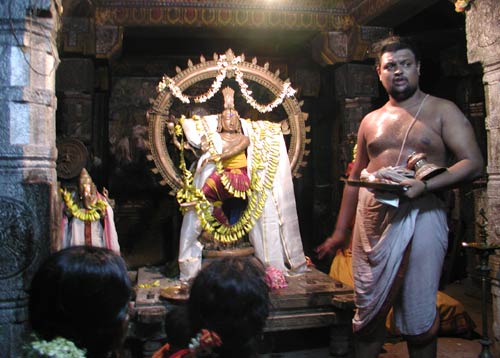
There’s one more element of the picture that is obligatory for devotees across India and maybe across the world which is Lord Nataraja or the dancing Shiva which has its connection with Chidambaram, the cosmic dance hall. His dance is an integral feature of the temple and its music and dance programs such as Natyanjali in tune with his persona. 

In addition, through a well-executed Nataraja, it is also possible to see how this motif was adopted in classical Indian dance such as the Bharatnatyam in which the dancer translates Shiva’s rhythm across the cosmos into the dance movements.
nataraja puja worship
Click to View Our Nataraja Statues

Nataraja’s form of Lord Shiva is not only a beautifully depicted sculpture but holds the cosmic aspect of the universe as well. It also reflects the creative and destructive forces, the light and darkness, the movements and non-movement. Thus, one can learn about the existence of the principles that are timeless when observing Nataraja’s dance, so this form of Shiva is considered one of the most sacred in Hinduism.

Explore the divine artistry of Nataraja and other sacred Hindu Gods idols at Lotus Sculpture, where tradition meets craftsmanship in every masterpiece.