Shravan 2026: The Sacred Month of Lord Shiva, Its Meaning, Rituals & Traditions

shiv lingam

For millions of devotees around the world, Shravan is more than another month on the Hindu calendar. It is a period associated with devotion, reflection, fasting, prayer and worship of Lord Shiva. Temples become especially vibrant, Shiva mantras fill homes, and devotees observe traditions passed down through generations.

But what makes Shravan so significant? Why are Mondays especially important? And what is the meaning behind rituals such as Jalabhishek and offering Bilva leaves?

Let’s explore the traditions and symbolism that make this month so meaningful.

shiva statue

What Is Shravan?


Shravan, also known as Sawan, is a lunar month in the Hindu calendar. It is traditionally associated with Lord Shiva, and devotees often use this period to deepen their spiritual practices through prayer, fasting, meditation and temple worship.

The exact dates of Shravan differ according to regional Hindu calendars and traditions. In 2026, Shravan is observed at different times depending on the calendar used in different parts of India and by Hindu communities around the world.

This regional variation is important when planning religious observances, as a festival or fasting date mentioned in one calendar may not correspond to the same date followed by another community.

Regardless of the calendar, the central focus remains the same: devotion to Lord Shiva, spiritual discipline and reflection.

shiv lingam
Browse Our Shiva Statues & Shiva Lingam Collection

Why Is Shravan Considered Sacred to Lord Shiva?


Shravan is closely connected with Shiva worship in Hindu tradition. Throughout the month, devotees visit temples, perform Abhishek, chant mantras and make offerings as expressions of devotion.

One of the most recognizable practices is bathing the Shiva Lingam with water. This ritual, known as Jalabhishek, is performed regularly during the month and becomes particularly prominent on Mondays.

The month therefore provides an opportunity to move beyond simply celebrating a festival and instead establish a regular rhythm of prayer and reflection.

The Story Behind Shravan and Shiva


One of the most widely known stories associated with Shravan is the Samudra Manthan, or churning of the cosmic ocean.

According to Hindu mythology, devas and asuras churned the cosmic ocean in search of Amrita, the nectar of immortality. During the process, a powerful poison known as Halahala emerged and threatened to destroy creation.

Lord Shiva consumed the poison to protect the universe. His throat became blue, giving rise to the name Neelkanth, meaning “the blue-throated one.”

The story is often interpreted as an example of Shiva’s willingness to absorb suffering for the protection of others. It also contributes to the deep devotional association between the monsoon month of Shravan and Shiva.

shiva statue

What Is Shravan Somwar?


Monday, or Somwar, traditionally has a special association with Lord Shiva. Mondays that fall during Shravan are therefore observed with particular devotion and are commonly called Shravan Somwars or Sawan Somwars.

Devotees may observe a fast, visit a Shiva temple, perform Abhishek, offer Bilva leaves and chant “Om Namah Shivaya.”

What Is Jalabhishek?


Jalabhishek is the ritual offering of water over a Shiva Lingam.

The act is simple: water is poured over the Lingam while devotees pray or recite Shiva mantras. During Shravan, this is one of the most recognizable forms of Shiva worship.

Some devotees use sacred water brought from pilgrimage sites, while others perform the ritual with clean water at home or in a temple.

The emphasis is traditionally placed on devotion and sincerity rather than the quantity or extravagance of the offering.

Why Are Bilva Leaves Offered to Shiva?


Bilva, or Bael, leaves have a special place in Shiva worship.

The distinctive three-part leaf carries layers of symbolism in Hindu tradition and is closely associated with Lord Shiva. Devotees commonly place Bilva leaves on the Shiva Lingam as part of their worship.

Along with water, flowers, fruits and other offerings, Bilva leaves form part of the familiar visual language of a Shiva Puja.

Shravan Fasting and Spiritual Discipline


Fasting is another important Shravan practice.

The exact rules vary between families, regions and traditions. Some devotees fast on every Monday, while others observe a simpler dietary routine throughout the month.

Rather than viewing fasting solely as abstaining from food, many devotees understand it as an opportunity to practise self-control.

A Shravan observance can therefore include:

  • Fasting or eating simple foods
  • Visiting a Shiva temple
  • Performing Puja
  • Offering water to the Shiva Lingam
  • Chanting Shiva mantras
  • Reading or listening to stories associated with Shiva
  • Practising meditation
  • Spending more time in reflection and prayer


The Meaning of “Om Namah Shivaya”


“Om Namah Shivaya” is one of the best-known Shiva mantras.

The phrase is commonly understood as an expression of reverence to Shiva. Devotees may repeat it during meditation, Puja or while performing Abhishek.

Because the mantra is short and easy to repeat, it can become part of a daily spiritual practice during Shravan.

Shravan Is Also a Time for Reflection


The rituals of Shravan can be understood as more than a checklist of religious activities.

Pouring water over a Shiva Lingam can become a moment of stillness. Lighting a lamp can mark the beginning of prayer. Repeating a mantra can help create focus. Fasting can encourage discipline.

In this way, the month provides an opportunity to slow down and reconnect with practices that may otherwise become lost in everyday routines.

How Can You Observe Shravan at Home?


You do not necessarily need to visit a temple every day to create a meaningful practice.

A simple home setup can include a clean prayer space, a Shiva representation or Lingam, a small lamp, water for Abhishek, and traditional offerings such as Bilva leaves.

The important part is consistency and respect for the tradition.

  • You can create a short daily routine:
  • Clean the prayer area.
  • Light a diya.
  • Offer water if appropriate for the object being worshipped.
  • Offer Bilva leaves or flowers.
  • Recite “Om Namah Shivaya.”
  • Sit quietly for a few minutes.
  • End with a personal prayer or moment of gratitude.


Why Shravan Continues to Resonate Today?


Modern life often moves at an extraordinary pace. Shravan offers a natural opportunity to pause.

Its traditions combine mythology, ritual, discipline and contemplation. Whether someone observes every fast, visits a temple or simply spends a few quiet minutes each morning in prayer, the month can become a meaningful period of reconnecting with faith and personal reflection.

For Hindu communities living outside India, Shravan can also provide a meaningful way to maintain cultural and spiritual traditions at home. A dedicated prayer area, a Shiva image or sculpture, and familiar rituals can help bring these traditions into everyday life regardless of where you live.

Conclusion

Shravan is a month filled with layers of symbolism—from Jalabhishek and Bilva leaves to Somwar fasting, mantra recitation and meditation. For those who want to bring that sense of devotion into their surroundings, a thoughtfully chosen Shiva sculpture or Shiva Lingam can become a meaningful focal point for a home shrine, meditation area or sacred space.

Lotus Sculpture offers a selection of Shiva sculptures, Nataraja figures and Shiva Lingams representing different artistic traditions and forms of Shiva. A sculpture can serve not simply as décor, but as a visual reminder of the qualities associated with Shiva—stillness, transformation, consciousness and renewal.

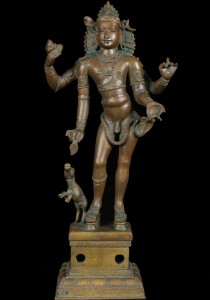
Shiva as Bhairava: Annihilator of Evil

View all our Hindu God Shiva Statues

Hindu God Shiva, The Destroyer, comes in many forms.   One such important form and his most fear invoking is that of Bhairava, the annihilator of evil.   This fierce form is manifested when demons make themselves present and are in need of destruction.  Shiva in this form is often depicted draped in serpents as jewelry, wrapped bare naked in tiger skin, and decorated in a ritual adornment of human bones riding atop his divine vehicle, a dog named Shvan.  His frightful characteristics as banisher of evil are almost indistinguishable from Hindu Goddess of Death Kali.   He is seen with devastatingly angry eyes, sharp teeth, and carrying a noose, trident, and skull within his hands. In this form he is said to embody the very essence of fear itself, often forcing those who come upon him to confront their most terrifying sources of fear

The origination of Shiva as Bhairava is said to have been by Shiva himself in order to chastise Brahma, the great creator of the Universe.   Legend has it that Brahma lusted after his own daughter and created four heads in order to constantly be able to see her. His desires for his daughter caused her shame and she is said to have ascended to the heavens in escape.  Brahma then created a fifth head and insisted on her letting him live with her.  Upon hearing of this, Shiva used his sword to rid Brahma of his new fifth head.  Seeing this as an act of killing, Shiva was punished to walk the earth as a beggar carrying around the fifth head of Brahma until he was forgiven of his sin, in which case the skull of Brahma would finally fall from his hands.  Many did not recognize Shiva in his naked and violent beggars form as he howled and danced in madness.

Finally one day as Shiva enters the holy city of Varanasi, the skull falls from his blackened hands and he is rid of Brahmas curse.
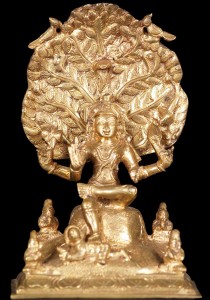
Learn to Quiet Your Anxious Mind with Shiva as Dakshinamurthy

The practice of yoga in the United States has been on a constant rise over the last 30 years since its introduction in the 1980s as a wonderful form of physical health and well being regardless of its original religious context.   As of January 2012 it was estimated that over 20 million Americans regularly practiced yoga as both a form of exercise and spiritual release, up from around 4 million in 2001.

It is no question that given the swelling numbers many have found value in the practice to both their physical and mental health.  Today yoga is even used as cancer treatment to decrease symptoms of depression, insomnia, pain, and fatigue in patients.  Hatha yoga specifically has become very popular in the west for its incorporation of physical exercise, breathing control, and meditation.  If you are looking for a way to reduce stress, symptoms of tiredness, increase general mood, and to get your body in shape, yoga is a great practice for all age groups and gender.

Slowing down and taking the time to become in touch with ones body can be a highly fulfilling practice as we all struggle with the stresses of daily living in our modern fast paced society.   As the Buddha said,

“Meditate. Live Purely.  Be quiet.  Do your work with mastery.  Like the moon, come out from behind the clouds!  Shine.” 

Almost all of us have a special place we hold dear and go to clear our heads and think…a favorite park bench, out for a run, sitting with our toes in the sand.  But what many don’t realize is that it isn’t the destination that is key, but actually the state of mind that place brings to you.  Instead of escaping somewhere external, try yoga and meditation.  Anyone can develop inner peace, without really going anywhere but in.

To help with your practice, add a Dakshinamurthy statue by Lotus Sculpture to your meditation corner.  Shiva in the form of universal teacher, Dakshinamurthy, can help guide you in your path to inner awakening.