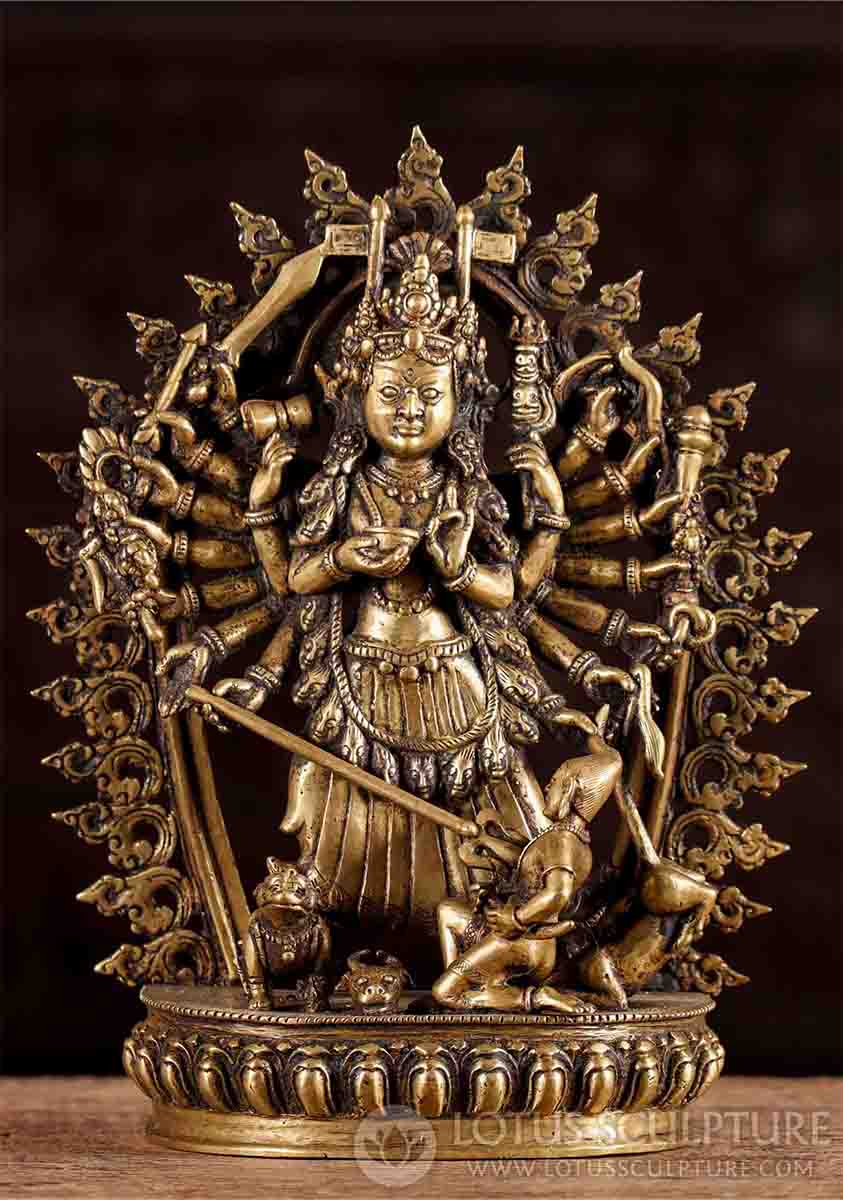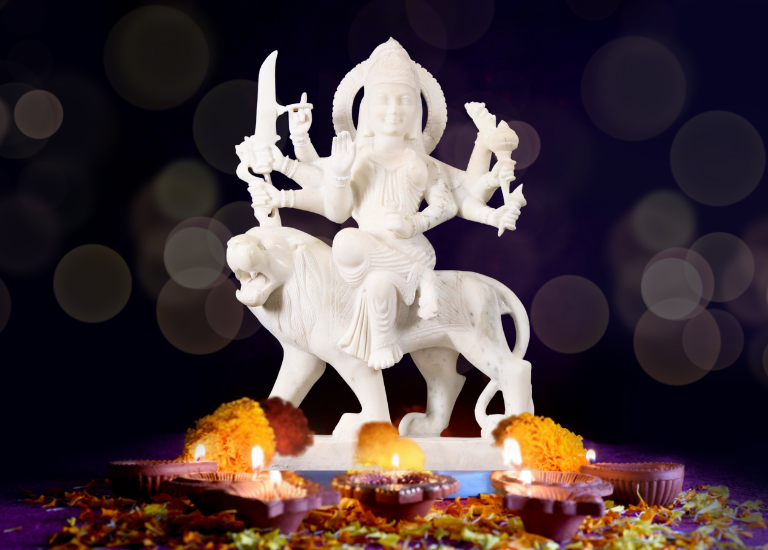
For Hindus, Navratri is considered a vibrant as well as auspicious festival of nine days that is dedicated to worshiping the nine avatars or forms of the goddess Durga with great enthusiasm and devotion. During these sacred nine days, devotees commonly engage in activities like fasting, prayers, as well as various other rituals to seek blessings, strength, and prosperity from goddess Durga. Nevertheless, performing a Navratri puja at your home is not just a religious activity, as it is also considered as one of the best ways to feel more connected with your cultural roots, even if you’re living away from your hometown, like in the USA, Canada, etc.
Thus, whether it’s your first time performing the Navratri puja or you have been practicing it for years, here in this article, we’ll guide you through the step-by-step process of how to perform this puja in the comfort of your home without missing any of the traditions.
What is Navratri?
In Hindi, Navratri means ‘nine nights’ which is one of the many auspicious festivals celebrated across India to worship the nine forms or avatars of goddess Durga in order to seek her blessings. According to the Hindu calendar, the Navratri comes two times in a year, once in the Chaitra month to celebrate the Hindu new year and the other in the Ashwin month to celebrate Dussehra, which signifies the winning of Lord Rama against Ravana.
Nevertheless, each day of the Navratri is dedicated to one form of the goddess, which signifies her specific powers. Thus, Navratri is also considered as a season of spiritual cleansing as well as seeking favors or healings for health, wealth, and peace from the goddess.
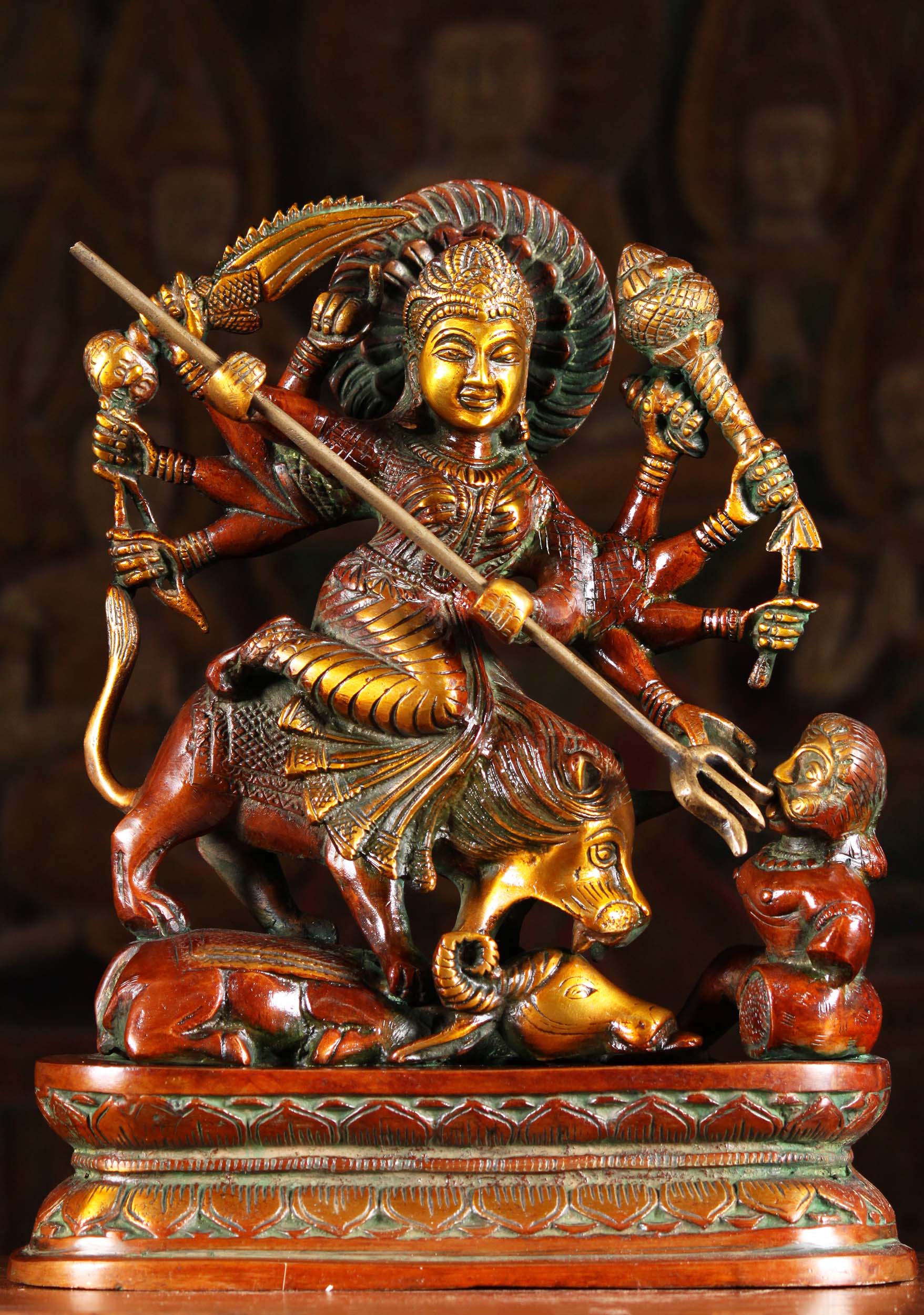
Guide to Perform Navratri Puja at Home
1. Preparation for Navratri Puja
It is considered as very important to prepare your mind, body, as well as home before starting the Navratri puja, as cleanliness and purity are the keys to beginning the rituals.
Clean Your Home:
Before beginning the puja, it is mandatory to thoroughly clean the area where you plan to perform the puja. This space should be free from any potential distractions in order to make you solely focus on your puja. Therefore, it is advised to create a small space or corner where you can place the idols or pictures and all the other necessary items to worship the goddess Durga without any disturbances during these nine days.
Set Up the Puja Altar:
- Firstly, place the pictures of idols of goddess Durga or any of her nine forms on the altar.
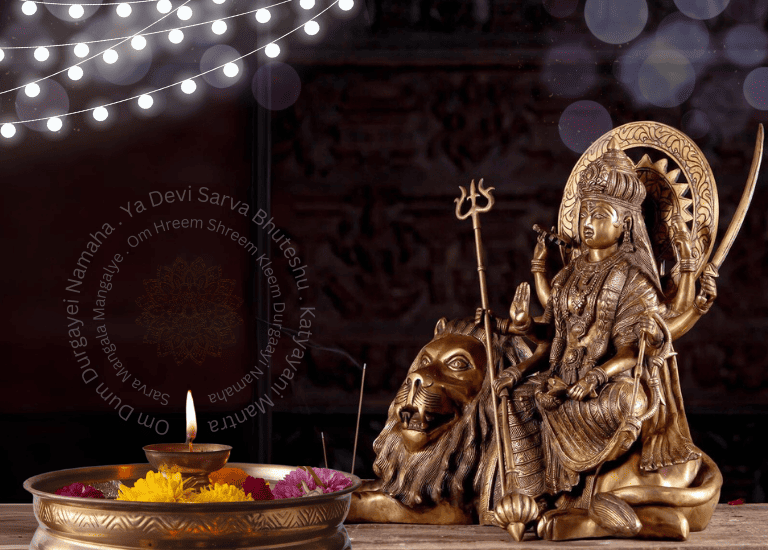
- Now, decorate the altar with beautiful fresh flowers, incense as per your liking and also a lamp that directly faces the direction of goddess Durga idols. You can also leave some space on the altar to offer fruits, sweets, etc. to the goddess during these days.
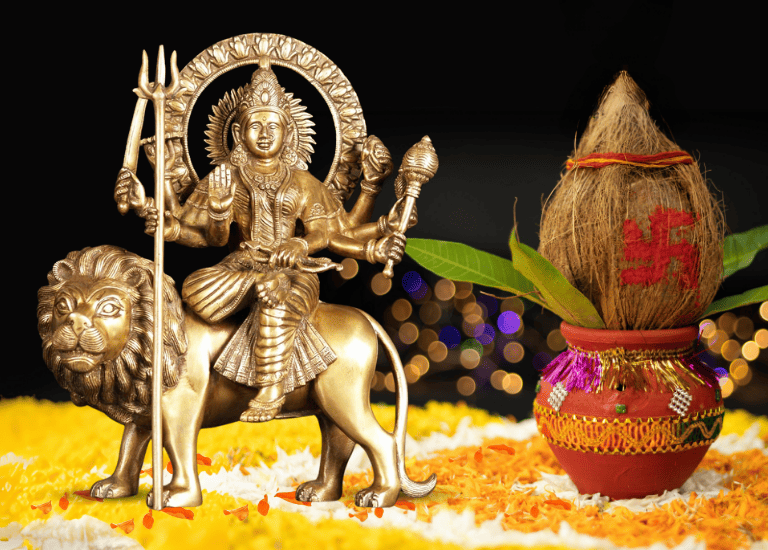
- Now, place a small Kalash (pot) filled with water, add a few drops of Ganga Jal (Ganga water) and place a coin in it. Then, put a coconut on it and decorate the entire pot by partially inserting Ashok leaves (Saraca indica leaves) in it.
2. Sankalpa (Vow)
Once you set up your altar, then sit down with a relaxed mind on the mat to take the Sankalpa (vow or commitment). It is taken to perform the puja wholeheartedly as well as to perform fasting and other rituals with sincerity.
How to Take Sankalpa:
- Face the east or north direction in the space you have created for the puja and join your hands in a prayer position.
- Now, chant the mantra, “Om aim hreem kleem chamundaye vicche.” for as many times as you can.
- Now, meditate on goddess Durga and express your wish to perform the puja wholeheartedly for the nine days with sincerity.
3. Invoke Goddess Durga
Whenever you’re done with the Sankalpa, then it’s time to invite the goddess Durga into your home to stay there during these nine days. This ritual begins with ghata sthapana or kalash sthapna (pot installation) in another pot, which is filled with soil and some barley seeds sprinkled on it.
Kalash Sthapana (Pot Installation):
- Firstly, decorate the coconut, which you have placed upon the kalash (pot) previously, with turmeric and kumkum powder and then place it in the pot of soil.
- Now, light the ghee lamp and some incense sticks to invoke the presence of goddess Durga into your home. You can also offer fresh flowers, fruits, sweets, etc. to the deity and chant the durga mantras with full concentration, like “om dum durgayei namaha….” for 108 times if possible.
4. Chanting Mantras and Reciting Durga Saptashati
Chanting the mantras of goddess Durga and reciting scriptures like Durga saptashati or Devi mahatmya are considered as a very important part of the Navratri puja in order to get the blessings of the goddess Durga. Therefore, it is highly advised that you should recite at least a few chapters every day or you can also play the recorded chants if you don’t know the verses. You can chant mantras like “Ya Devi Sarva bhuteshu…” to offer your prayers to the goddess in order to seek protection as well as blessings from her.
5. Offer Bhog (Food Offering)
It is considered as very important to offer bhog during the Navratri to the goddess Durga. You can also offer different foods on each day of the Navratri according to the specific preferences of the goddess for that particular day. For example, you can offer pure milk-based products such as kheer (rice pudding) to goddess Shailputri on day-1, sugar and fruits like apples and bananas to goddess Brahmacharini on day-2 and so on. Once you offer the food to the goddess, then you can share it with your family members as a prasad in order to share the blessings of the goddess among them too.
6. Aarti and Devotional Songs
Performing the aartis, which are often called as devotional songs, are considered as one of the most blissful parts of the Navratri puja and they are performed two times a day, usually once in the morning and once in the evening.
To perform the aarti, you should light a camphor in a vessel and move it in a circular motion in front of the deity while signing the aarti, like “ambe tu jagdambe kali, jai durge khappar vali…” which is also considered as a very popular aarti among the devotees to seek the blessings of goddess Durga.
7. Navratri Fasting
Taking a fast during the Navratri is considered as one of the most important parts of the entire festival, as it is believed to cleanse both your body as well as your soul. This practice also represents your devotion as well as self-discipline to the goddess Durga, which can be a way to enhance your spiritual connection with the divine. There are various ways in which the devotees can choose to fast, like:
- Full Fast: In this practice, the devotees avoid consuming any type of food throughout the day. Some devotees may only consume water, while others allow for light liquids like coconut water or fresh fruit juices according to their likings as well as keeping their health in mind.
- Partial Fast: This fasting involves eating certain foods that are often called as ‘vrat-friendly’ and don’t break your fast, like fruits, dairy products, and special grains like kuttu ka atta (buckwheat flour), singhare ka atta (water chestnut flour), or sabudana khichdi (tapioca). This practice is very common among devotees, as it makes the nine days of the fasting quite manageable without compromising on their health.
8. Kanya Pujan (Worshiping of Young Girls)
It is considered as a mandatory tradition to perform Kanya pujan, in which worship of nine young girls, usually below the age of 11-12 years, is performed. This ritual represents the nine forms or avatars of goddess Durga worshiped on the Astami (eighth day) or Navami (ninth day of the Navratri).
How to Perform Kanya Pujan:
- Firstly, wash the feet of the young girls, then serve them a meal that usually contains halwa, puri, and chana. You can also give them fresh clothes or gifts as per your liking to welcome them into your home on the auspicious day.
- This Kanya pujan is also considered as a symbol of worshiping the goddess Durga in her young forms, as it is believed to bring blessings of both health and prosperity into your home.
9. Visarjan (Concluding the Puja)
The Navratri puja ends with the final rituals of visarjan (immersion) of the idols of goddess Durga in the ponds or any other suitable place in order to offer her a farewell. It is also performed to thank the goddess for her blessings as well as to pray to her to return next year with the same joy and prosperity. Then, you can either water the plants with the kalash water or sprinkle it into your home in order to retain a positive vibe throughout the day.
The Navratri puja is considered as an auspicious journey of spirituality, self-discipline, as well as devotion to the goddess to show us the right path and also to seek blessings of great health and prosperity from her. Nevertheless, now you may be able to perform these rituals without any hindrances in the comfort of your home by following the above steps in order to stay connected to your cultural roots as well as to seek the blessings of goddess Durga.
Are you also looking for the best-handcrafted goddess Durga idols to enhance your Navratri puja experience? Then, visit Lotus Sculpture today to get the best-handcrafted sculptures of goddess Durga to invoke her divine presence into your home.