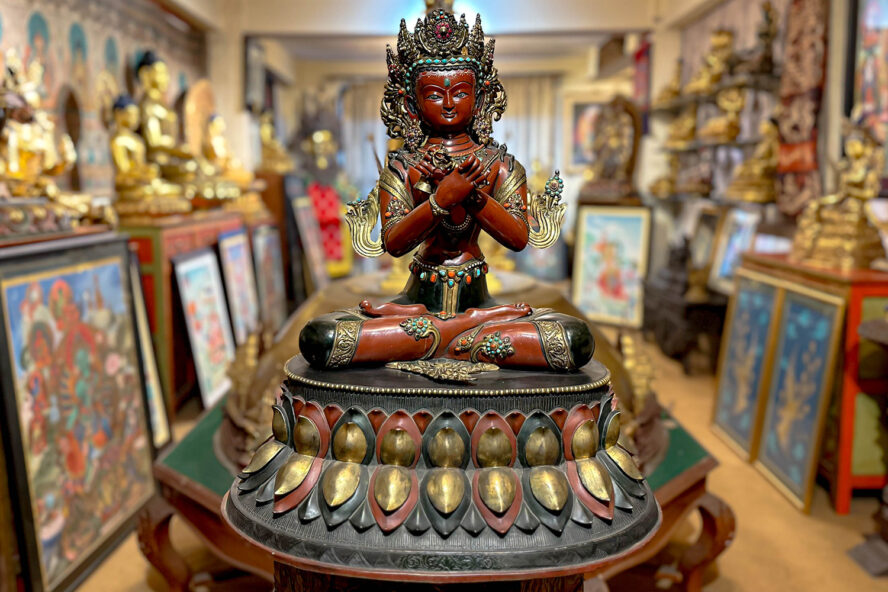
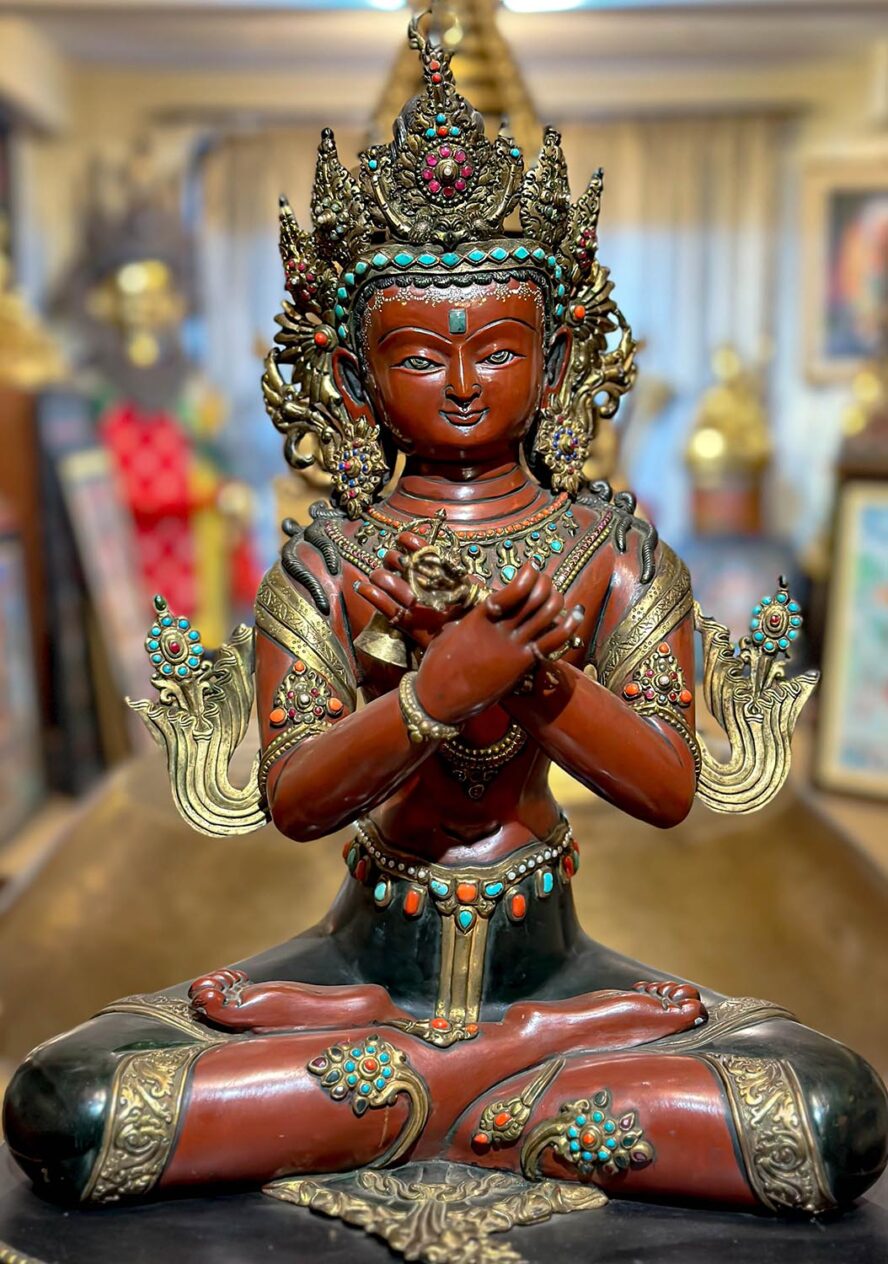
The Bodhisattva of Compassion-Avalokiteshvara

Avalokiteshvara statues

The Bodhisattva of Compassion, more commonly known as Avalokiteshvara, is one of the most honored characters in Mahayana Buddhism. He is seen as the embodiment of someone who gives out endless kindness and gives never-ending love to people. Therefore, helping people attain enlightenment and relieving their suffering. His name can be loosely translated as “The Lord Who Looks Down with Compassion,”. His name further represents his continued focus on helping those suffering. In this blog, we will be looking at how Avalokiteshvara is perceived in different cultures and what his origins and teachings are. 

Origins and Buddhist Teachings

The origin of Avalokiteshvara is closely related to Buddhist philosophies. According to most beliefs, he swore to remain in the cycle of birth and death until and unless all human beings are freed from their suffering. Because of his immeasurable compassion, he hears the cries of the world and answers them with compassion and wisdom. He is also normally shown with multiple arms and heads. These arms and heads then tend to symbolize his capacity to touch many beings simultaneously. The Dalai Lamas are also believed to be the incarnations of Avalokiteshvara. Plus, he is also referred to as Chenrezig in Tibetan Buddhism and is linked with Guanyin in China. Guanyin is essentially the female incarnation of mercy.

Wood Avalokiteshvara statue
Vietnamese Wood Statue of Avalokiteshvara

Different Forms of Avalokiteshvara

Various traditions and civilizations tend to generally depict Avalokiteshvara differently. One of the most well-known is Padmapani. In this incarnation, he represents enlightenment and purity by carrying a lotus flower. On the contrary, in his Sahasrabhuja incarnation, he is depicted with a thousand arms. Thus represents his boundless capacity to save millions of beings simultaneously. Furthermore, he represents his capacity to feel pain throughout the world in his eleven-headed Ekadasamukha incarnation. Lastly, Cundi Avalokiteshvara represents knowledge and the capacity to grant desires. Avalokiteshvara is one of the most versatile gods in Buddhism. Therefore, it represents many things and qualities like kindness, defense, and guidance.

The Power of the Avalokiteshvara Mantra

Avalokiteshvara is linked to one of the most well-known Buddhist mantras: “Om Mani Padme Hum.” Peace, compassion, and enlightenment are said to be brought about by this mantra. It is believed that reciting it can develop a compassionate heart and cleanse bad karma. This mantra is chanted every day by many Buddhists as a kind of devotion and meditation.

Bronze Avalokiteshvara statue
Bronze Bodhitsattva Avalokiteshvara Statue

Symbolism in Avalokiteshvara’s Iconography

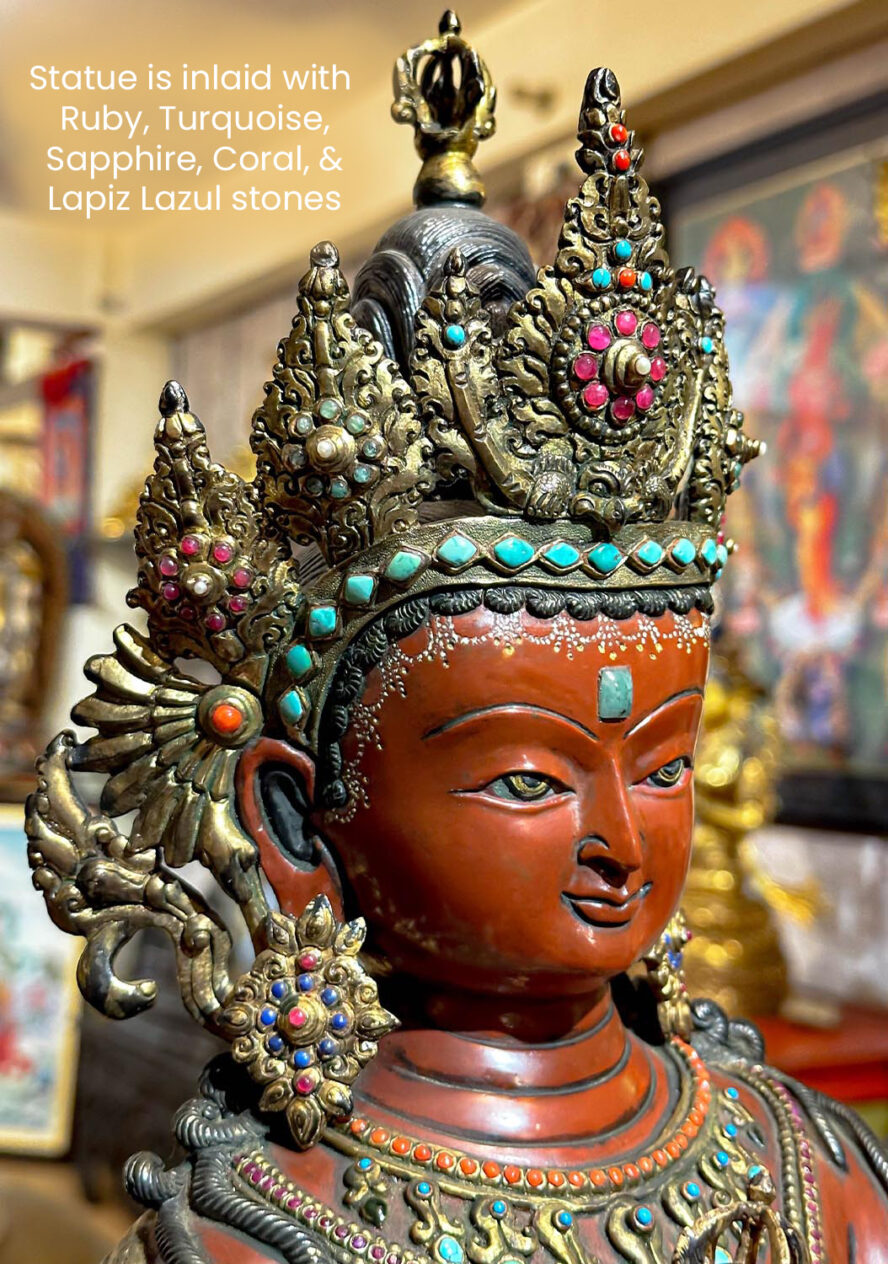
The symbolism of Avalokiteshvara Statue is very rich in significance. His many arms represent his ability to help multiple beings simultaneously. The lotus bloom that he is holding tends to represent purity and enlightenment. He is also commonly spotted with a mala, which is a string of beads that is used for chanting and meditation. A third eye on his forehead stands for wisdom and understanding. In other depictions, a deer skin draped over his shoulder symbolizes his kind and non-violent nature. These emblems tend to highlight his role as the savior and guardian of all sentient beings.

Avalokiteshvara in Various Cultural Contexts

In Tibetan Buddhism, Avalokiteshvara Statue is a highly revered figure who is seen to be humanized by the Dalai Lama. He is revered in many Tibetan prayers and rituals. Thereby emphasizing his role as the guardian of the general population. In China, Avalokiteshvara was transformed into Guanyin, the Goddess of Mercy. She is often seen in a flowing white robe blessing followers. Her fame extends beyond Buddhism, and she is also highly regarded in Taoist traditions. In Japan, Avalokiteshvara is called Kannon. Statues of Kannon, who is adored by many for her blessings, protection, and healing, are commonly found in temples.

Lokeshwor Bodhisattva Avalokiteshvara Statue

Spiritual Benefits of Devotion

Avalokiteshvara devotion has various spiritual advantages. His disciples experience inner serenity as a result of his teachings, which foster love and patience. People often believe he will protect them from pain, many turn to him for counsel during trying times. Following his example inspires practitioners to live compassionate lives by promoting generosity and kindness. As a means of meditation and inspiration, many people keep Boddhisattva statues of Avalokiteshvara in their homes and places of worship.

Bring Avalokiteshvara’s Compassion into Your Home

Avalokiteshvara’s benevolent aura can be brought into your house with a variety of handcrafted statues from Lotus Sculpture. Avalokiteshvara in a variety of shapes is created by expert artisans from stone, wood, and bronze and is part of our special collection. Every piece embodies the spirit of Buddhist devotion and is an artistic creation. To locate the ideal Avalokiteshvara statue for your spiritual path, check out the Lotus Sculpture website right now and bring the insight and kindness of Avalokiteshvara into your day-to-day activities.

A Classic Source of Motivation

Millions of people worldwide are still inspired by Avalokiteshvara’s presence. His lessons of compassion and love are timeless, whether they are learned by devotion, meditation, or mantra chanting. I hope his unending kindness leads you to enlightenment!

Is It Good to Have a Buddha Statue at Home?

Yes, it is a good idea to have a Buddha statue at home. People all over the world keep Buddha statues to bring peace, balance, and a calm feeling to their space. These statues are not just decorations. They carry deep meaning and can make your home feel more peaceful.

At Lotus Sculpture, we offer many types of Buddha statues. Each one is handmade by skilled artists. Every statue tells a story and brings a special energy into your home.

Let’s look at why having a Buddha statue at home is a good choice.

Buddha Statues for Meditation

If you enjoy meditation or want to start, a Buddha statue can help. It creates a peaceful space for your practice. When you sit near a Buddha sculpture, you feel more focused and calm. It reminds you to breathe slowly and stay present.

A meditating Buddha statue is perfect for this. It usually shows Buddha sitting with his hands resting on his lap. This pose is called the Dhyana Mudra, and it stands for deep meditation.

Many people place this statue in a quiet room, on a small altar, or near a yoga mat. You don’t need a big space. Just a clean and calm corner is enough.

We offer many Buddha statues for meditation in bronze, wood, and stone. Each one is unique and made with love. Explore meditation Buddha statues here.

Buddha Statues For Meditation

Buddha Statues as a Gift

A Buddha statue makes a beautiful and meaningful gift. It is a symbol of peace, kindness, and spiritual growth. You can give it for birthdays, housewarmings, or any special event.

Giving a Buddha sculpture shows that you care. It’s not just a gift—it’s a blessing. It brings good energy into the home and reminds the person to stay calm and balanced.

Some people like to gift a Laughing Buddha. It stands for joy, wealth, and good luck. Others prefer a meditating Buddha or a teaching Buddha to encourage wisdom and growth.

Each piece from Lotus Sculpture is handcrafted by skilled artists. That makes every gift special and full of meaning. Browse Buddha gifts here.

Brass Buddha Statue for Gift

Buddha Statues for Home Décor

Buddha statues also work well as home décor. They look beautiful and add a calm energy to any room. You can place them in the living room, bedroom, or entrance. Many people place a Buddha sculpture near the door to welcome peace and protection.

There are many styles to choose from. A Thai Buddha statue can give your home a graceful and elegant look. A Nepalese Buddha made from bronze adds a traditional and rich feel.

You can place your statue on a shelf, table, or in a small display area. Just make sure the space is clean and respectful. Avoid placing it directly on the floor or in the bathroom.

Our handmade Buddha statues come in many sizes and designs. You can find one that fits your home perfectly. Shop Buddha statues for home décor here.

buddha statue for home decor
Buddha Statue for Home Decor

Buddha Statues for the Garden

A Buddha garden statue adds a different kind of peace and beauty to outdoor spaces. Many people love placing a stone Buddha statue in their backyard, patio, or near a water feature.

These statues blend well with nature. When you see a Buddha sculpture surrounded by flowers or trees, it gives a feeling of peace and balance. It makes your garden a quiet place where you can relax and connect with nature.

You can choose a Reclining Buddha, an Earth-Touching Buddha, or a Laughing Buddha for your garden. All of them are strong and made to last outdoors.

At Lotus Sculpture, we have a wide range of Buddha statues for the garden made from stone, brass, and wood. They are handcrafted and made with care. View our garden Buddha statues here.

marble buddha statues
Marble Buddha Statue For Zen Garden

What Does a Buddha Statue Symbolize?

Each Buddha statue has a special meaning. The pose of the hands and the position of the body tell a story.

  • A meditating Buddha shows focus and calmness.
  • A Laughing Buddha brings joy and wealth.
  • A Reclining Buddha represents peace and rest.
  • A Teaching Buddha reminds us to seek wisdom.
  • An Earth Touching Buddha shows the moment of enlightenment.

By choosing the right statue, you invite that energy into your home.

How to Place a Buddha Statue at Home?

To maximize your positivity, placement is essential, so choose your Buddha statue’s position wisely. Keep your Buddha statue in a clean and serene environment, elevated above the ground, such as on a table or shelf.

If you want your statue to spread peace throughout the home, then try to face it towards the main room or entry. If the goal is meditation, place it directly in front of where you sit down to meditate each day.

To the best of your ability, do not place it on the floor, near shoes, or in a messy place; and please be respectful of your statue’s space. You don’t need incense or flowers, but many people like to place a small offering or candle near the statue.  

stone buddha statues
Browse Our Stone Statues For Garden

Final Thoughts

So, is it good to have a Buddha statue at home? Yes, it is. A Buddha statue will promote peace, beauty, and positive energy. It should allow you to be mindful of your actions, feel balanced, and live with calmness.

Whether you want to meditate, decorate your home, or give a beautiful gift, a Buddha sculpture is an excellent choice. Each statue is handmade by experienced artists with love at Lotus Sculpture. We strive to create real art that touches the soul.

Are you ready to bring peace into your house? Browse our website to see the entire Buddha collection.

Buddha Statues For Your Zen Garden & Home

It is often considered as one of the most hectic tasks to find the perfect combination of both peace as well as serenity in today’s fast-paced world that doesn’t stop for anyone, no matter who you are or what you have achieved so far in this life. Nevertheless, by incorporating premium Buddha statues into your precious home or garden, you can effectively create a serene environment that eliminates negative energy like it never existed before. Moreover, these statues don’t only help you add an ultimate touch of elegance into your surroundings but also in bringing a divine sense of calmness, balance, as well as spirituality, over time. 

Thus, here in this article, we’ll thoroughly discuss why these premium Buddha statues can be considered as one of the best options for your precious Zen garden and home as well as how they help you achieve the ultimate peaceful surrounding of your dreams.

Why are Buddha Statues a Perfect Choice for your Zen Garden?

Creating a Zen garden is not just all about maximizing its overall aesthetic appeal but also creating a surrounding that can efficiently boost relaxation, reflection, as well as inner peace without any compromises at all. Moreover, Lord Buddha sculptures are often considered as the best choices whenever it comes to transforming your regular spaces into the world of ultimate calmness as well as serenity. 

Furthermore, here are some of the most common reasons why you must give a try to premium hand-carved Lord Buddha statues:

Stone Buddha Statue
View Our Stone Buddha Statues

1. Buddha Statues Upgrades Aesthetics 

Lord Buddha statues usually come in a wide range of sizes, styles, as well as materials, in order to elevate the overall elegance of any space without any compromises on the quality at all. Thus, regardless of whether you’re someone who wants a small Buddha statue for your Zen garden to create a peaceful, relaxing, as well as aesthetically pleasing corner or a large, dramatic statue for showcase purposes, these statues can effectively blend into any surrounding to maximize their overall aesthetic appeal and require minimal maintenance efforts in the long run. 

Moreover, the serene face as well as elegant postures of Lord Buddha statues are highly effective in creating a welcoming environment that can attract anyone just like a moth to a flame and helps in maximizing your overall joyful moments of calmness over the period of time.

2. Buddha Statues Maximizes Spirituality 

In Buddhist culture, Lord Buddha statues are believed to maximize the overall positive energy as well as create an ultimate sense of a much-needed balance not just in terms of mental well-being but also in emotional well-being. Moreover, by placing these statues into your Zen garden or vibrant living spaces, you can effectively achieve your overall spiritual goals in the long run. 

Furthermore, the overall divine energy that is surrounded by Lord Buddha sculptures is also believed to cleanse your precious space as well as bring ultimate harmony to it over the period of time.

3. Buddha Statues Boosts Mindfulness 

Lord Buddha statues are considered as an ultimate reminder to help you slow down as well as reflect so that you can efficiently focus on the present moments rather than getting anxious about your past issues or problems. Thus, regardless of whether you’re someone who wants to place these statues in your Zen garden or indoor spaces like near a window, these Buddha statues are highly effective in helping you to take a much-needed peaceful break for yourself so that you can either meditate with great concentration or enjoy the stillness of your precious surroundings. 

Moreover, this mindfulness practice boosts both your mental health as well as overall well-being so that you can effectively manage your stress and achieve an ultimate sense of serene calmness over time.

garden buddha statue
View Our Marble Buddha Statues

Lord Buddha sculptures often served as a meaningful as well as beautiful addition to your Zen garden or precious home, not just in terms of aesthetic appeal but also in spirituality. Moreover, by placing a premium Lord Buddha statue in your precious space, you are not only welcoming a perfect blend of both peace as well as balance but also a much-needed mindfulness into your life. Thus, regardless of whether you’re someone who wants Lord Buddha statues for your garden, meditation, or decoration purposes, these statues have something for everyone to help you achieve your overall spiritual goals as well as healthy well-being over time.

Do you also want to turn your precious home or Zen garden into a never-ending world of serenity? Then, don’t look any further and browse Lotus Sculpture’s Buddha Statues Collection today to explore our wide range of premium hand-carved Lord Buddha statues that never compromise on quality or spiritual values at all. Visit us today to welcome peace as well as an ultimate sense of serenity into your precious space!

Facts About Buddha Statues We Might Not Know! 

From ancient times, Buddha statues have held a very special place in art, spirituality, as well as culture all over the world. Moreover, they not just represent the relaxed and serene expression but also offer very precise details that are not just a symbol of decoration but also of peace, wisdom, as well as enlightenment. Furthermore, in the USA, people are getting quite curious about Buddhism as well as mindfulness practices, which perfectly signifies the overall glory of Buddhist statues as not just a part of spirituality but also an artistic treasure.

However, there are lots of people who are still confused about ‘how much do we even know about these statues or is it enough what we know about them?’ Therefore, here in this article, we’ll explore some of the most interesting facts about these Buddha statues in order to help you create a deeper connection with Buddhism in the long run.

1. Not All Buddha Statues Represents Gautama Buddha  

It is often considered as one of the most famous misconceptions about these statutes, as many people think that they only depict Gautam Buddha, the well-known founder of Buddhism. Meanwhile, these statues don’t only depict Gautam Buddha, but also represent some core values of an overall enlightened being such as Maitreya Buddha, the Buddha of the future, as well as Amitabha Buddha which is primarily associated with boundless light and an infinite compassion. Moreover, each statue has its own significance and represents a unique version of Buddhist philosophy as well as learning.

For instance, the statue of the Laughing Buddha, often mistaken as Gautam Buddha primarily represents Budai, a Chinese monk, who was well-known for his cheerful nature. Moreover, it also represents happiness, abundance, as well as a good future.

View Our Laughing Buddha Statues

2. The Hand Gestures Have Deep Meanings  

It is often considered as one of the most attractive features of the Buddha sculptures and are also called Mudras. Moreover, each of these gestures holds a significant meaning and is considered as an integral part of the Buddhist art and meditation practices. Furthermore, here are some of the common mudras as well as their significance so that you can understand them in a better way.

  • Dharmachakra Mudra (Wheel of Dharma): It usually represents teaching as well as the overall transmission of Buddhist knowledge or philosophy.
  • Bhumisparsha Mudra (Earth Touching): It represents the overall enlightenment of the Buddha under the Bodhi tree.
  • Dhyana Mudra (Meditation): It is often considered as a meditative pose which represents concentration as well as inner peace at its best.
  • Abhaya Mudra (Fearlessness): It usually represents protection, reassurance, as well as fearlessness from every situation.

3. Buddha Statues Comes in Various Postures  

These Buddha statues usually represent three postures such as sitting, standing, as well as reclining and each one of them offers a different phase of the life lessons of the Buddha.

  • Sitting Buddha: It is often considered as one of the most common postures which represents meditation, enlightenment, as well as teaching. Moreover, it also represents the Buddha into a lotus position that creates a sense of focus as well as tranquility.
  • Standing Buddha: It usually represents blessings, compassion, as well as protection. Moreover, it also represents the Buddha addressing his followers or teaching lessons during traveling.
  • Reclining Buddha: It usually signifies the Buddha in a moment just before entering the stage of Parinirvana (tranquility) or the final stage of enlightenment or detachment from everything.
View our marble buddha statues

4. The Materials of Buddha Statues Holds Symbolism  

The materials that are used in the crafting of these spiritual Buddha statues are often well-known to carry some spiritual meaning which can reflect the principle or cultural traditions of Buddhism.

  • Bronze Buddhist Statues: They usually represent durability as well as timelessness which makes them one of the best to depict the eternal wisdom of the Buddha.
  • Wood Buddha Statues: They usually represent simplicity as well as humanity which is often considered as a subpart of Zen Buddhism.
  • Marble Buddha Statues: They usually reflect the overall strength, stability, as well as alignment with the non-movable nature of the lesson of the Buddha.
  • Golden Buddha Statues: They usually reflect a sense of purity, energy, as well the divine nature of the Buddha.

5. Buddha Statues Reflects Regional Influences  

Although the core essence of the Buddha statues remains the same, their designs greatly vary from region to region, which also represents their local cultural influences as well as artistic styles.

  • Indian Buddha Statues: They usually have intricate details as well as mudras or poses that effectively signify the origin of Buddhism in India.
  • Thai Buddha Statues: They are often considered as very famous due to their elongated features, flame-like head ornaments, as well as timeless postures.  
  • Kwan Yin Statues: They are usually crafted to appear very minimalistic and reflect simplicity that perfectly aligns with the Zen principles of Buddhism.

Conclusion  

Buddha sculptures are not just a piece of decoration but are also considered as one of the most powerful symbols of spirituality as well as enlightenment of overall well-being. Moreover, each of the Buddhist statues like the garden Buddha statue or Tara Buddha statue has their own significance as well as lessons in Buddhism. Furthermore, the material that is used to make these statues like the stone buddha, marble Buddha, Indian brass Buddha statues, or golden Buddha reflects a lot about their overall significance in Zen Buddhism. Therefore, whether you’re attracted to them just for their artistic elegance or spiritual power they always have something to offer every individual.

Are you also excited to welcome the timeless elegance and wisdom of the Buddha statue into your pristine home? Then, don’t look any further and contact Lotus Sculpture today to explore the wide range of premium Buddha statues that are specially designed to offer you much-needed peace as well as mindfulness. Visit us today to explore our premium collection in order to bring the serenity of Lord Buddha into your home!

Buddhist Mantras for Daily Life: Finding Balance, Peace, & Focus

garden buddha statue

Do you ever feel like life is moving too fast, leaving you searching for a moment of peace and clarity? You’re not alone. Many of us struggle to maintain balance in our daily lives. But here’s the good news: Buddhist mantras offer a simple yet powerful way to reconnect with yourself and cultivate inner calm.

Let’s explore how these ancient chants can bring focus, peace, and balance to your everyday routine.

What Exactly Are Buddhist Mantras?

Imagine having a tool that helps calm your mind, reduce stress, and even boost your emotional well-being. That’s what Buddhist mantras are all about! They’re sacred words or phrases, often chanted, repeated silently, or even written down, designed to help you focus and find clarity.

Think of them as anchors for your mind—keeping you grounded when the waves of life feel overwhelming.

Why Should You Try Chanting Buddhist Mantras?

Here are some benefits that might surprise you:

  1. They Quiet the Noise: Struggling to focus? Chanting mantras can declutter your thoughts.
  2. Stress Melts Away: The repetitive nature of a mantra is like a lullaby for your brain, easing stress and anxiety.
  3. Positive Vibes Only: Many mantras are about compassion and love, helping you radiate good energy.
  4. Better Energy Flow: Ever felt “off”? Mantras can help restore your inner balance.

Doesn’t this sound like something we could all use?

Let’s Dive Into Some Popular Mantras

Ready to start? Here are a few mantras you can try today:

1. Om Mani Padme Hum

  • Translation: “The jewel in the lotus.”
  • Why It’s Amazing: It’s all about compassion and wisdom—perfect for calming the mind and opening the heart.

2. Nam Myoho Renge Kyo

  • Translation: “Devotion to the mystic law of cause and effect.”
  • How It Helps: Feeling stuck? This mantra inspires resilience and helps you embrace life’s challenges.

3. Om Tare Tuttare Ture Soha

  • Translation: A call to Tara, the goddess of protection.
  • When to Use It: If you need healing energy or help overcoming obstacles, this one’s for you.

4. Gate Gate Paragate Parasamgate Bodhi Svaha

  • Translation: “Gone beyond, enlightenment hail!”
  • Best For: Mindfulness and clarity—great for those moments when you’re overwhelmed.

How to Make Mantras Part of Your Day

Not sure how to start? It’s easier than you think!

  1. Morning Boost: Spend just 5 minutes chanting a mantra when you wake up to set a positive tone for the day.
  2. Stress Breaks: Feeling overwhelmed at work? Take a moment to silently repeat a mantra.
  3. Evening Calm: Wind down with a mantra before bed to release tension and invite peace.
  4. Walk and Chant: Try combining mantras with a walk—it’s a great way to align your mind and body.

Quick Tips for Beginners

  • Pick One Mantra: Don’t overwhelm yourself; start with one mantra that resonates with you.
  • Stay Consistent: Practice daily—it’s the small steps that lead to big changes.
  • Create a Ritual: Light a candle, find a quiet spot, and make mantra chanting your personal sacred time.

Finding Peace, One Chant at a Time

Buddhist mantras aren’t just for monks in temples—they’re for anyone looking to bring balance, peace, and focus into their lives. You’ll be surprised at the calm and clarity they bring by dedicating just a few minutes each day to chanting or meditating with these mantras.

So, are you ready to transform your day? Choose your mantra, start small, and watch as it becomes a cherished part of your daily routine.

  • Page 1 Of 5