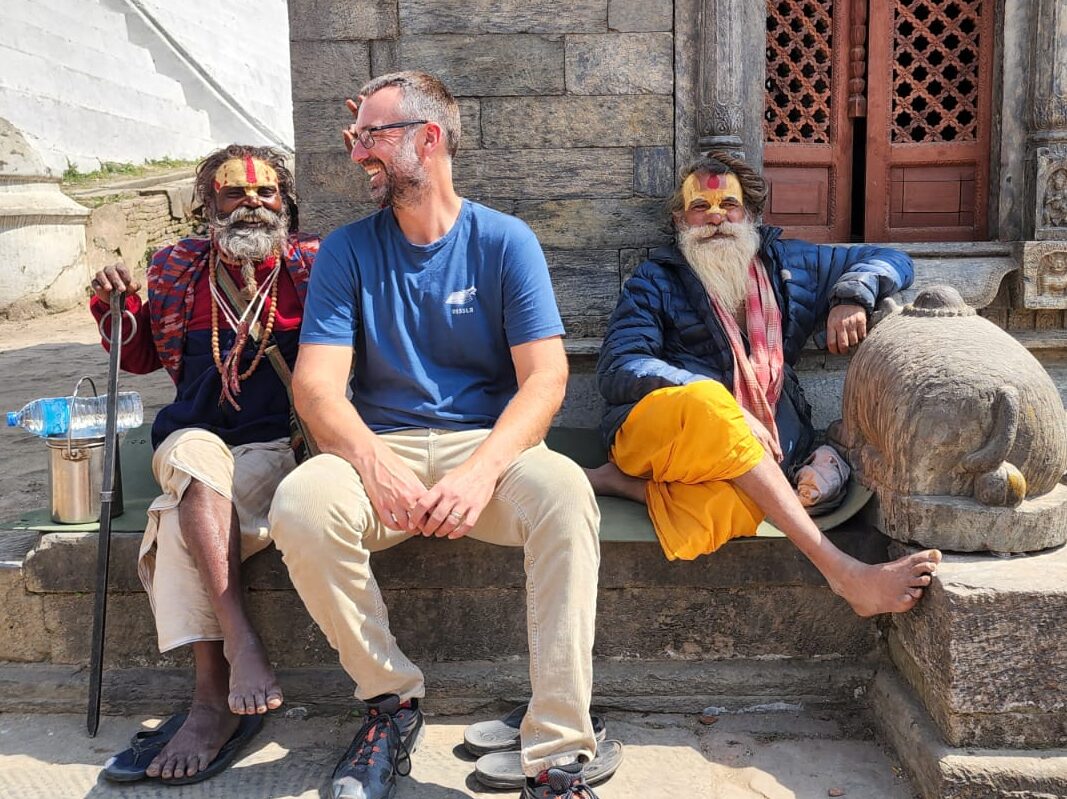
I met the same sadhus who I met with my mother 16 years ago when I first visited Nepal at Pashupatinath Temple
It has been 16 years since I first visited Nepal. Lotus Sculpture has never imported any statues from Nepal so this past week was like a buying trip 20 years ago, exploring Kathmandu valley and searching for new artisans with exceptional statues. Happily, we found them!
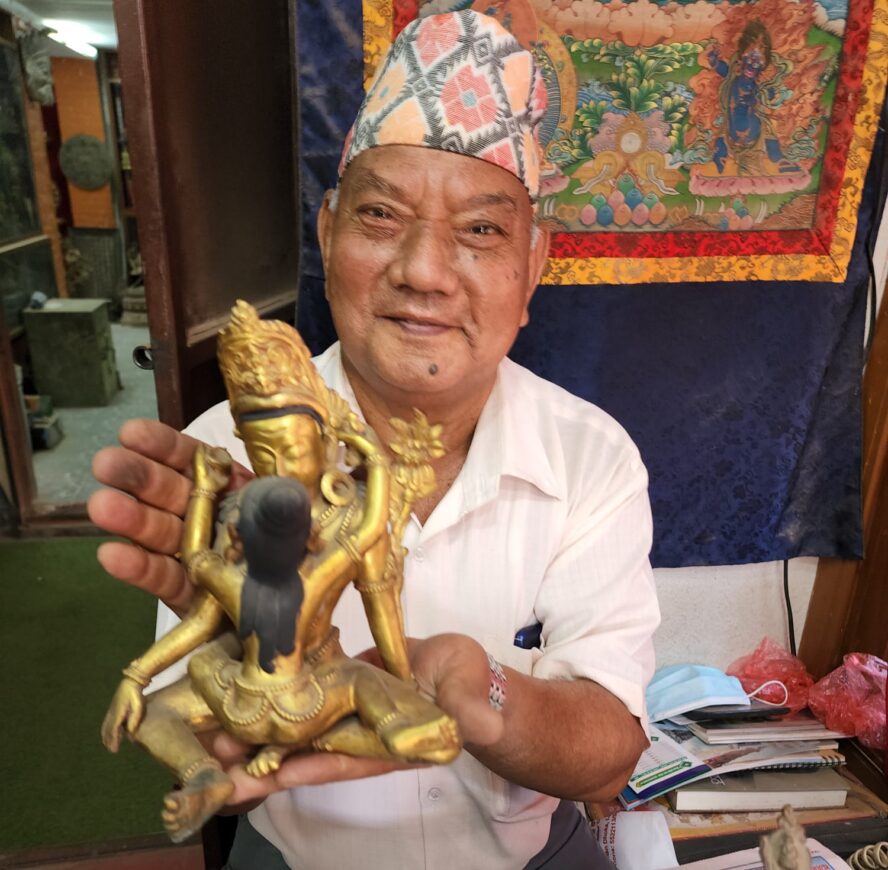
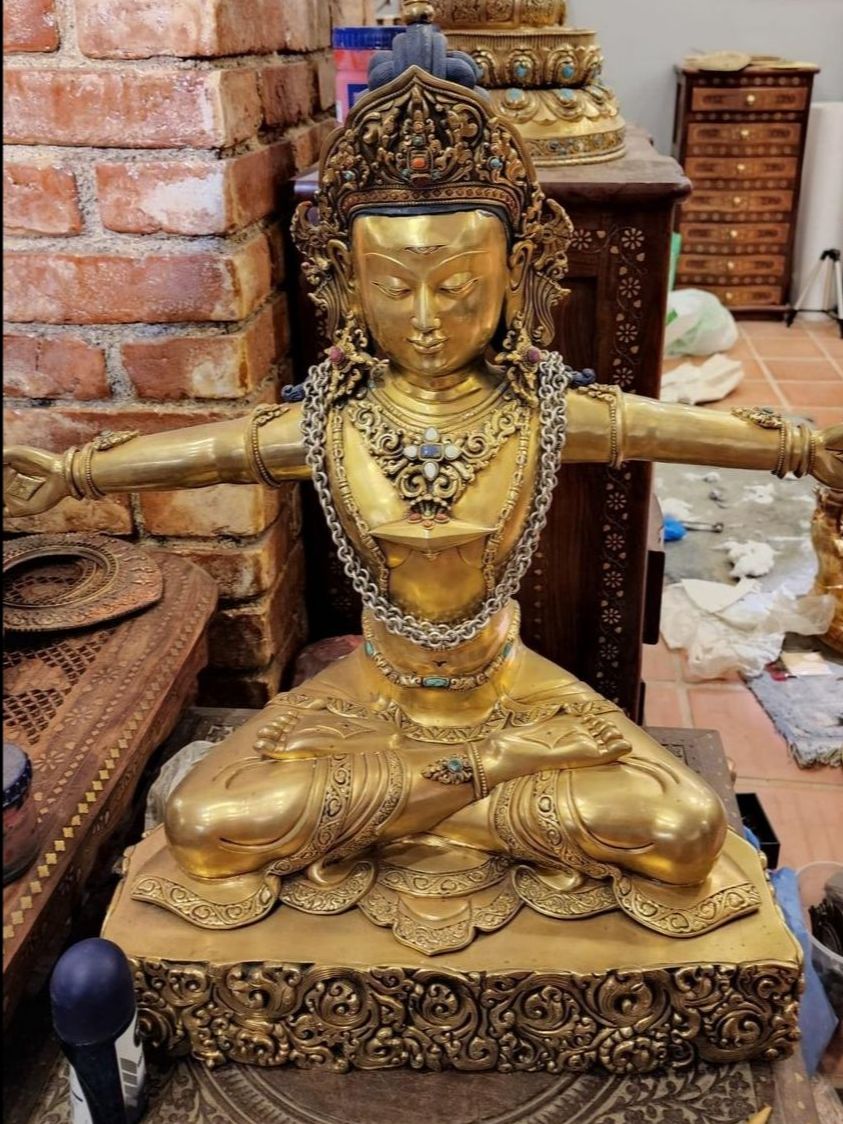
Here is Mr. Shakya holding a gold-plated statue of Indra in a loving embrace with Shakti. I loved this man! he had a youthful charm to him that was infectious.
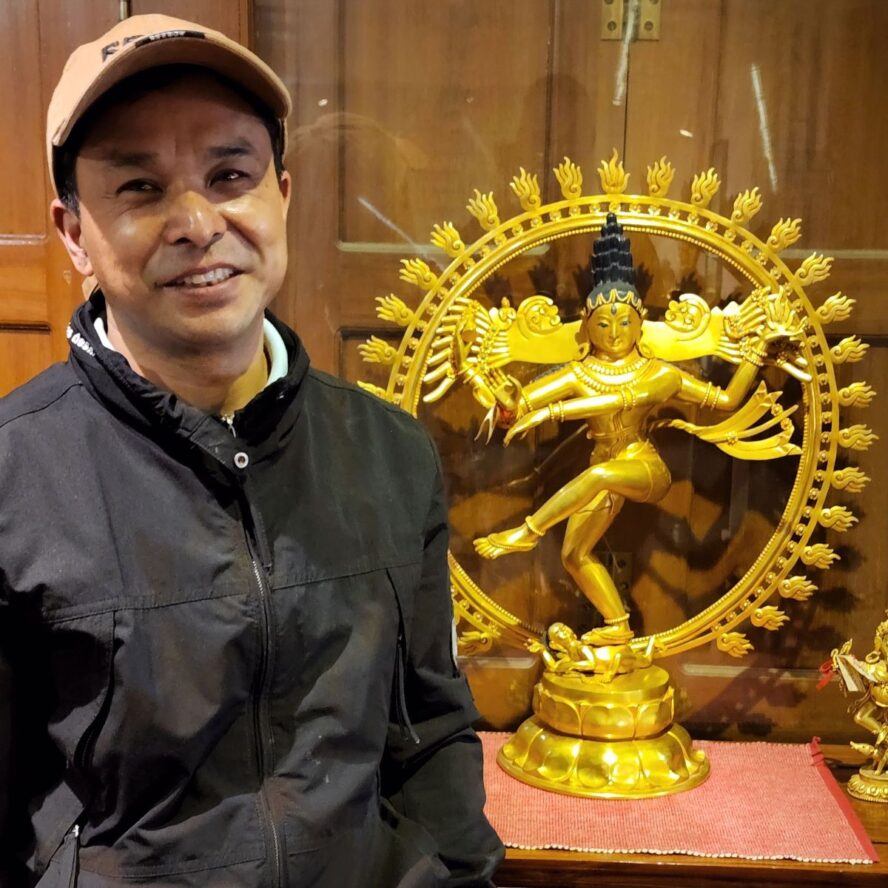
The moment that I laid my eyes on this stunning Nataraj statue I knew I would have to bring Him home with me. I have never before seen a dancing Shiva in this style. It is a perfect statue in casting, form, and painting.
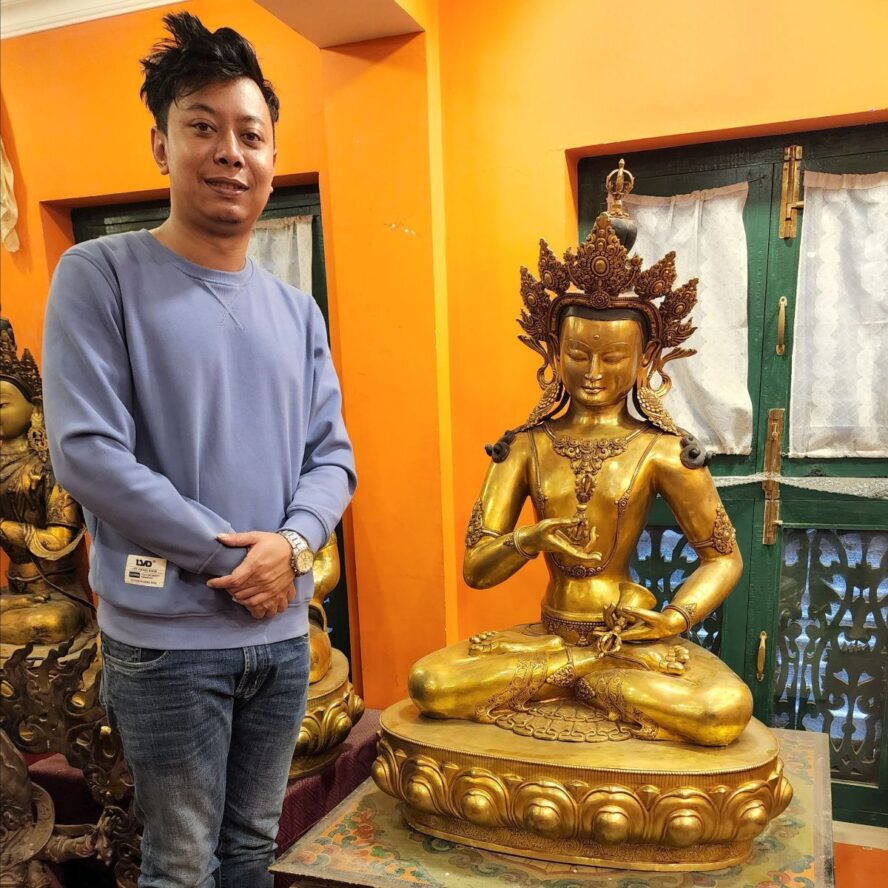
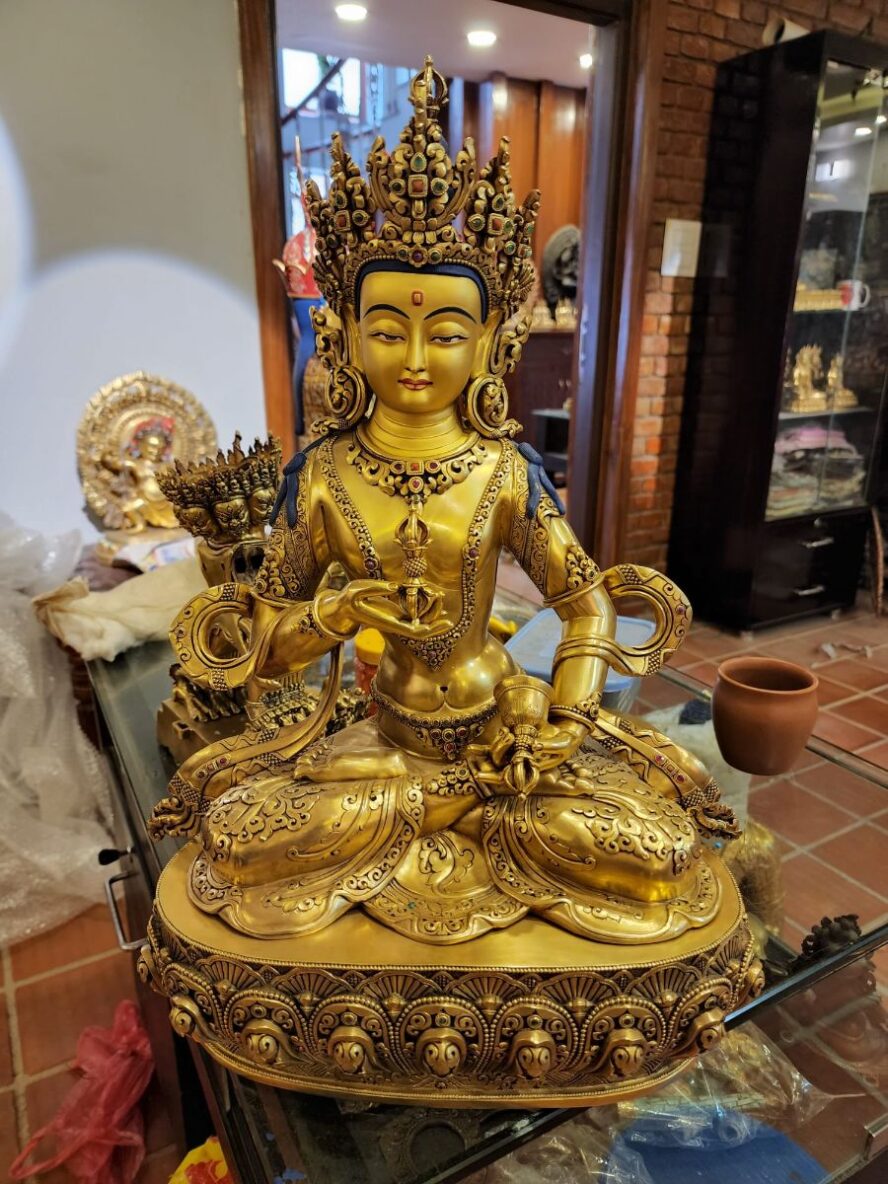
From the moment I met Siddartha I knew I had met a lifelong friend. He has a calm grace and inner peace that emanates from him. And he has some amazing statues like this amazing Vajrasatva (coming to Lotus Sculpture soon)!
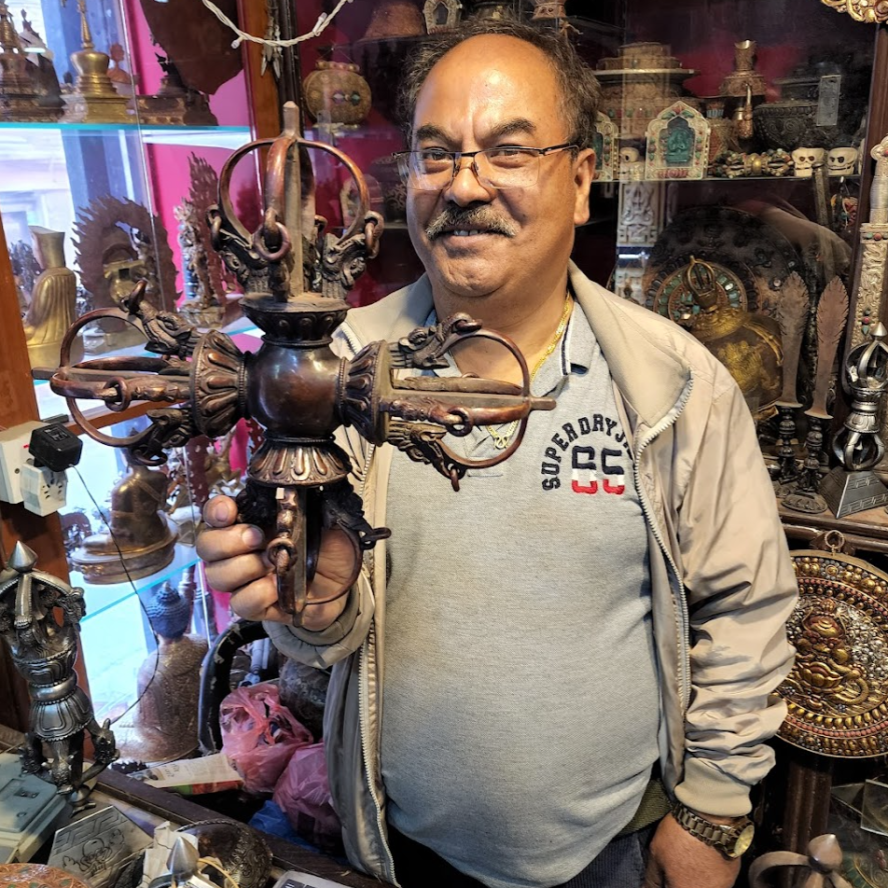
Going from shop to shop finding some hidden treasures like this copper double dorje brings out the inner Indiana Jones in me.
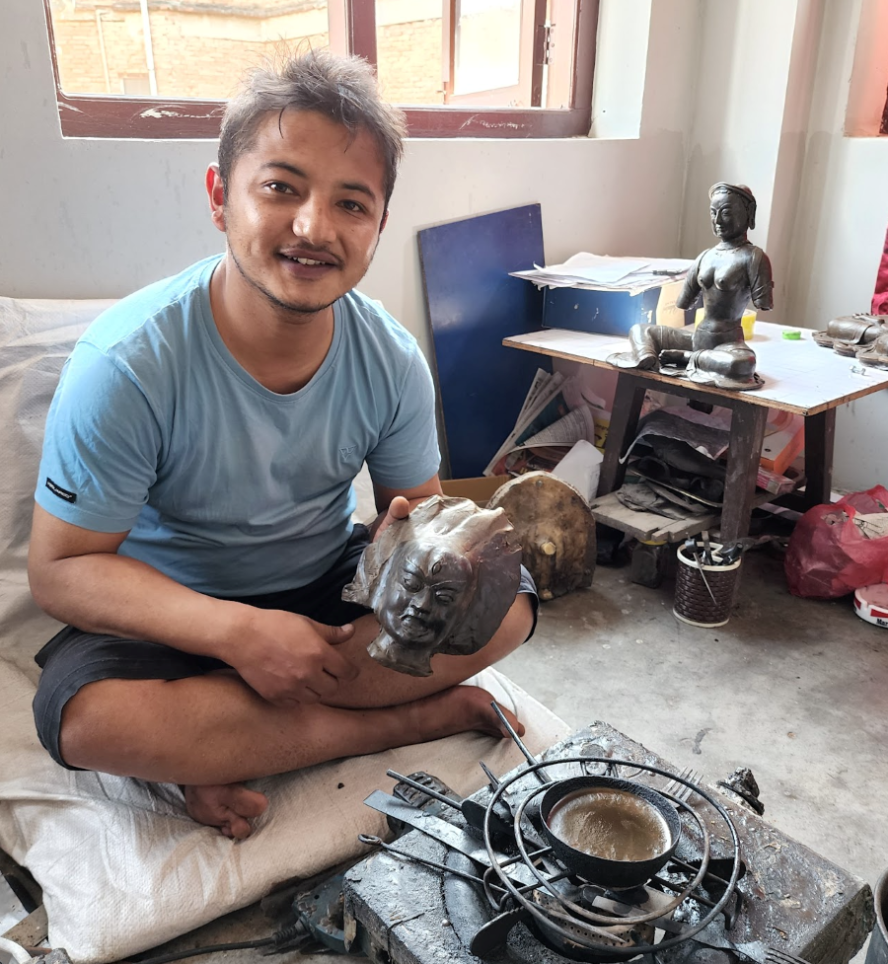
Batsa is a young 29-year-old artist shown creating a wax mold of Vajrayogini. He uses yak bone to shape it. The saliva keeps them from sticking together which differs from how stipathis (wax modelers) of South India create their wax molds. He spends all day drawing and creating wax molds. I loved him. He is a dedicated, true artist!
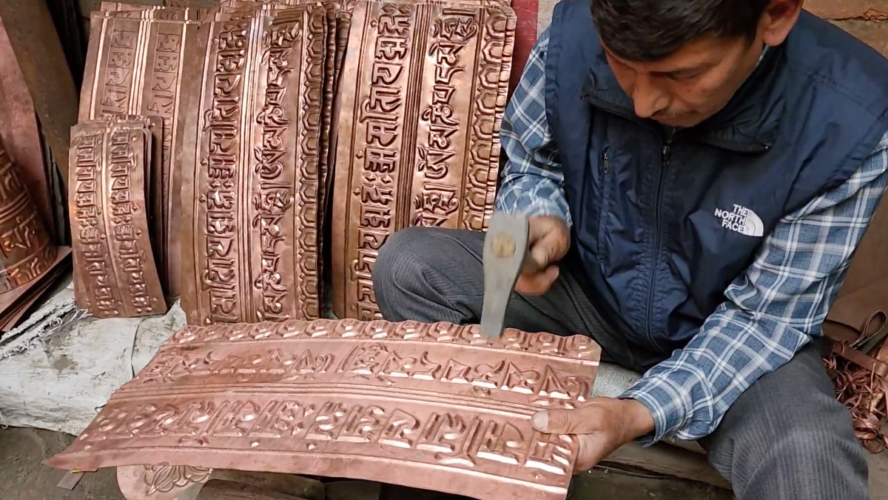
I knew I was going to find amazing statues, but when I saw some amazing prayer wheels I had to learn where and how they are made. The mantra “Om Mani Padme Om” is pounded into copper sheets and then made into a prayer wheel and filled with prayers. I know you will be as excited about them as I am!
Mahesh is a Master craftsman! All of his statues are made at another level of artistry. I can not wait to show them to you!
We are going to have a big selection of masterpieces coming from Nepal! As big a selection as Indra’s arms are wide.
Vajrasatva is jeweled with rubies, red coral, and emeralds. Stunning carving!
“Being in Nepal was like experiencing my first buying trip as a young man 22 years ago. With every step I took on the streets of Kathmandu, I was in search of something new for Lotus Sculpture, a new artisan or a new art form. Every day was exhilarating!”
~Kyle Tortora, Founder, Lotus Sculpture
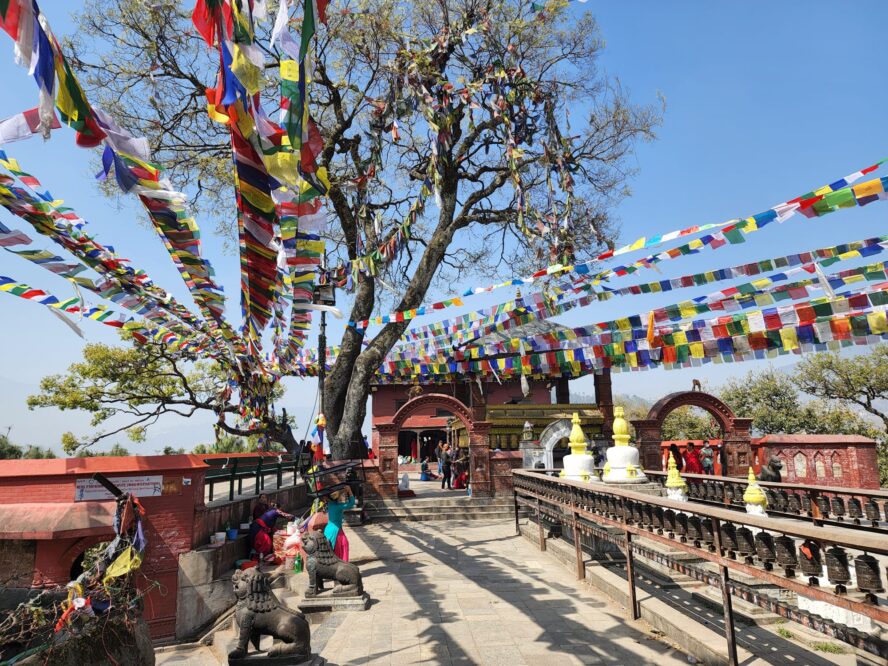
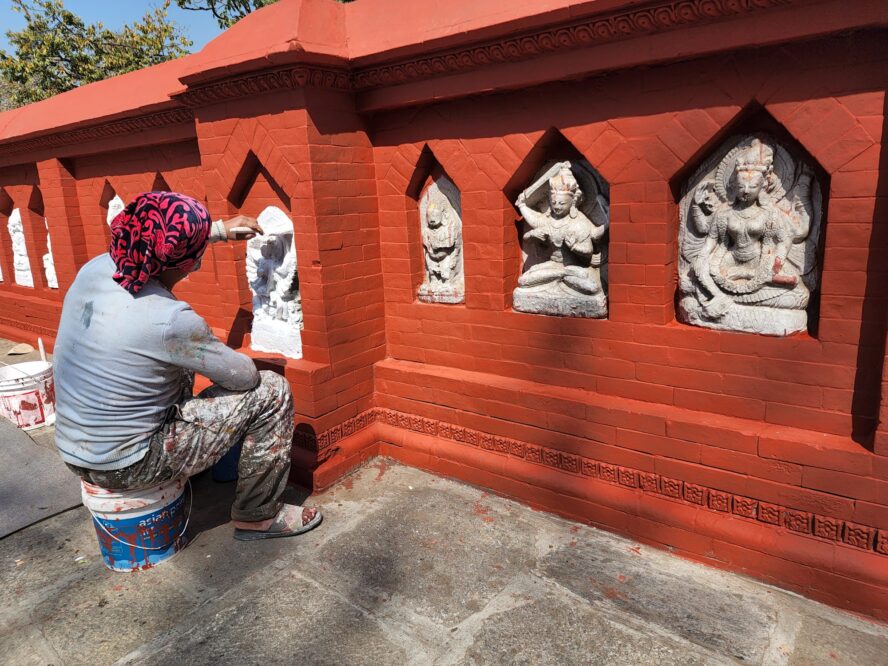
One sees colorful Prayer flags fluttering everywhereRefreshing the temple outdoor deities with a coat of paint.
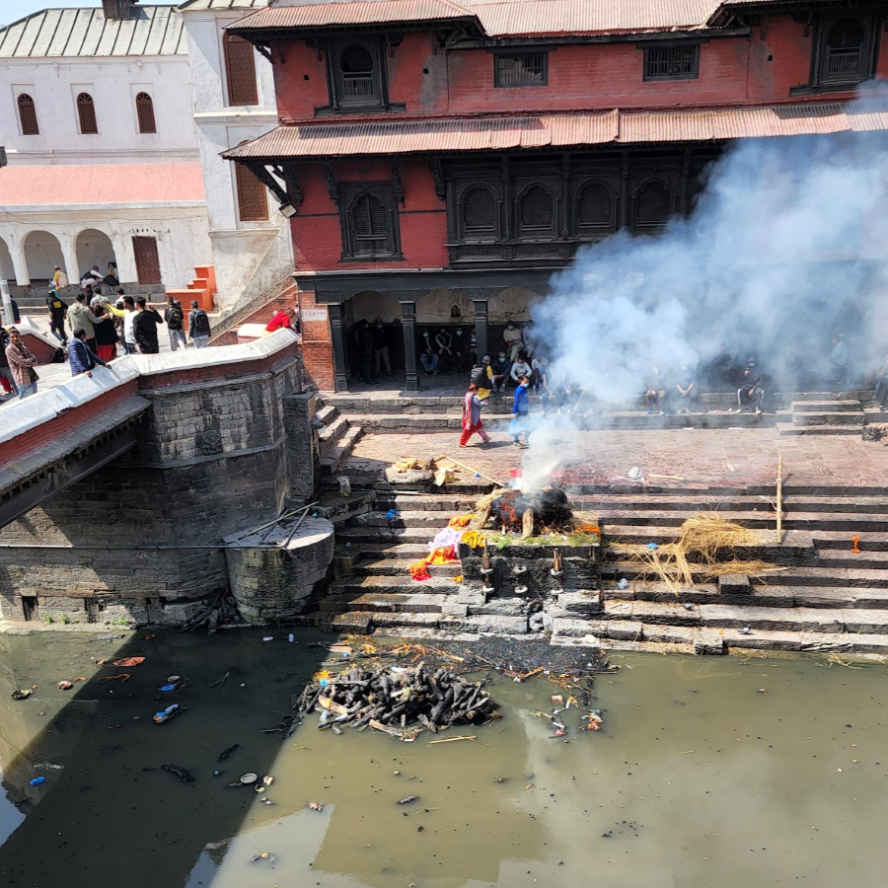
Here are the ghats or steps where bodies are cremated at the Pashupatinath temple in Kathmandu dedicated to Lord Shiva. It was a very heavy difficult day for me. There were children begging, old sadhus laying on the ground in awful health conditions that aren’t appropriate to share, and then seeing bodies burning on funeral pyres really affected me. The Buddha said that “all life is suffering.” It was easy to understand why he uttered those words so long ago. It was also very easy to see the impermanence of all life in those moments as both life and death were on display in front of me.
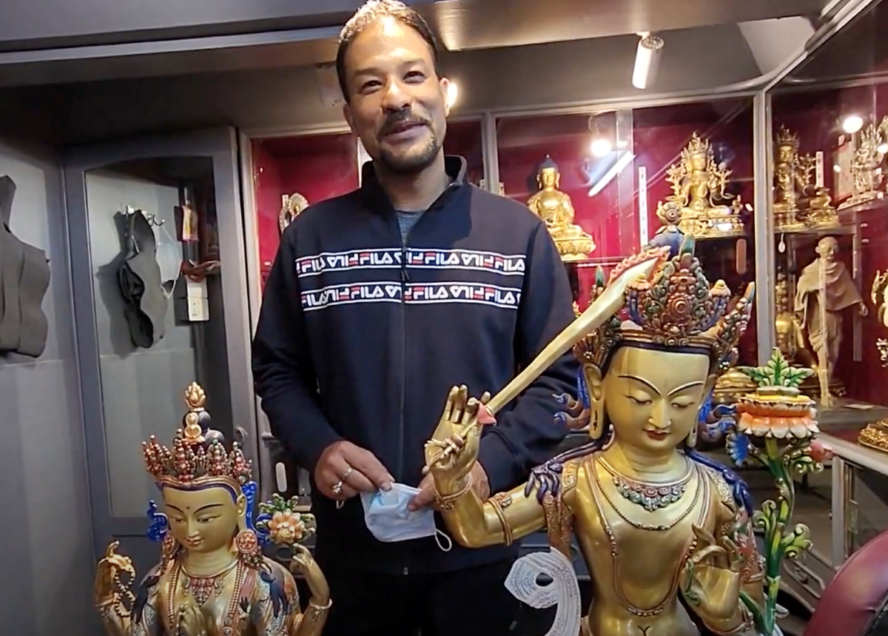
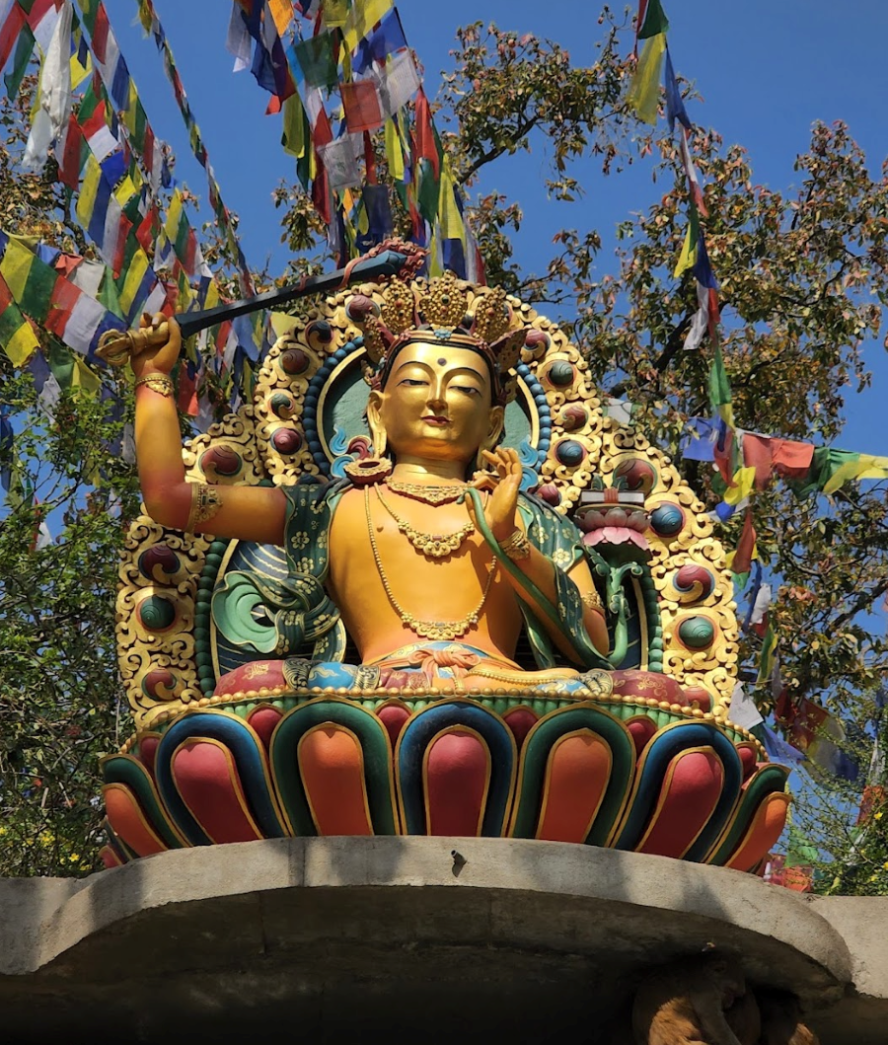
A beautiful Manjushree statue sits with a sword raised beneath a blue sky filled with prayer flags. What a sight!
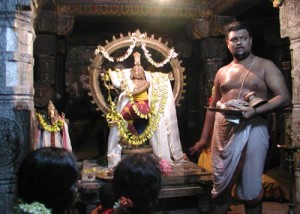
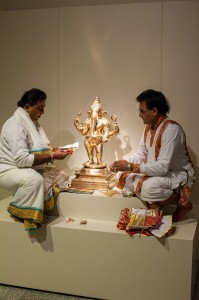
A Hindu brahmin priest performing puja on a bronze Nataraja in Kanchipuram, Tamil Nadu, India
There are numerous forms of worship among Hindus, of which Puja is one of the more popular. The most widely accepted and followed system of Puja is the Shodasa – Upachara Puja, or 16 – Service worship.
The main purpose of this type of Puja is two-fold. Primarily it is to uplift the five senses of the worshiper and by doing so elevate him to a higher level of consciousness that will promote good thoughts and actions. Secondarily it draws upon the Indian traditions of honoring a guest, wherein each upachara is a service to the deity who takes presence in the sculpture for the duration of the Puja.
Dhyaana – Meditating on the deity that is being invoked.
Aavaahana – Inviting the deity into the altar.
Aasana – Giving the deity a seat.
Paadya – Washing the deity’s feet with clean water.
Arghya – Offering the deity water to rinse hands and mouth.
Aachamana – Offering the deity water to drink.
Snaana – Bathing the deity with various auspicious items.
Vasthra – Dressing the deity in clean clothes.
Yagnopaveetha – Offering the deity a clean sacred thread.
Gandha – Spreading fresh sandalwood paste on the deity.
Pushpa – Offering fresh flowers while chanting the deity’s names.
Dhoopa – Spreading incense smoke throughout the altar.
Deepa – Waving a lamp to illuminate the freshly decorated deity.
Naivedya – Offering the deity food.
Taambula – Offering the deity a refreshing mix of betel nut and leaves.
Pradakshina& Namaskara – Circumambulating the altar and bidding farewell to the deity.
Among these sixteen services, five hold more importance than the rest. Together these five services are referred to as the pancha – upacharas, and include gandha, pushpa, dhoopa, deepa, and naivedya. Collectively, these five services engage the five senses.
Gandha – Touch
Sandalwood paste cools the skin and is a natural insect repellant.
Pushpa – Hearing
The recitation of the deity’s names that accompanies each flower engages the ears.
Dhoopa – Smell
Incense envelops the entire temple with a refreshing fragrance for the nose.
Deepa – Sight
The lamp illuminates the deity and brings out the beauty of the icon to the eyes.
Naivedya – Taste
Food that has been offered to the deity is eaten and entices the taste buds.
Bronze Ganesh in opening eye ceremony at the Cleveland Museum of Art
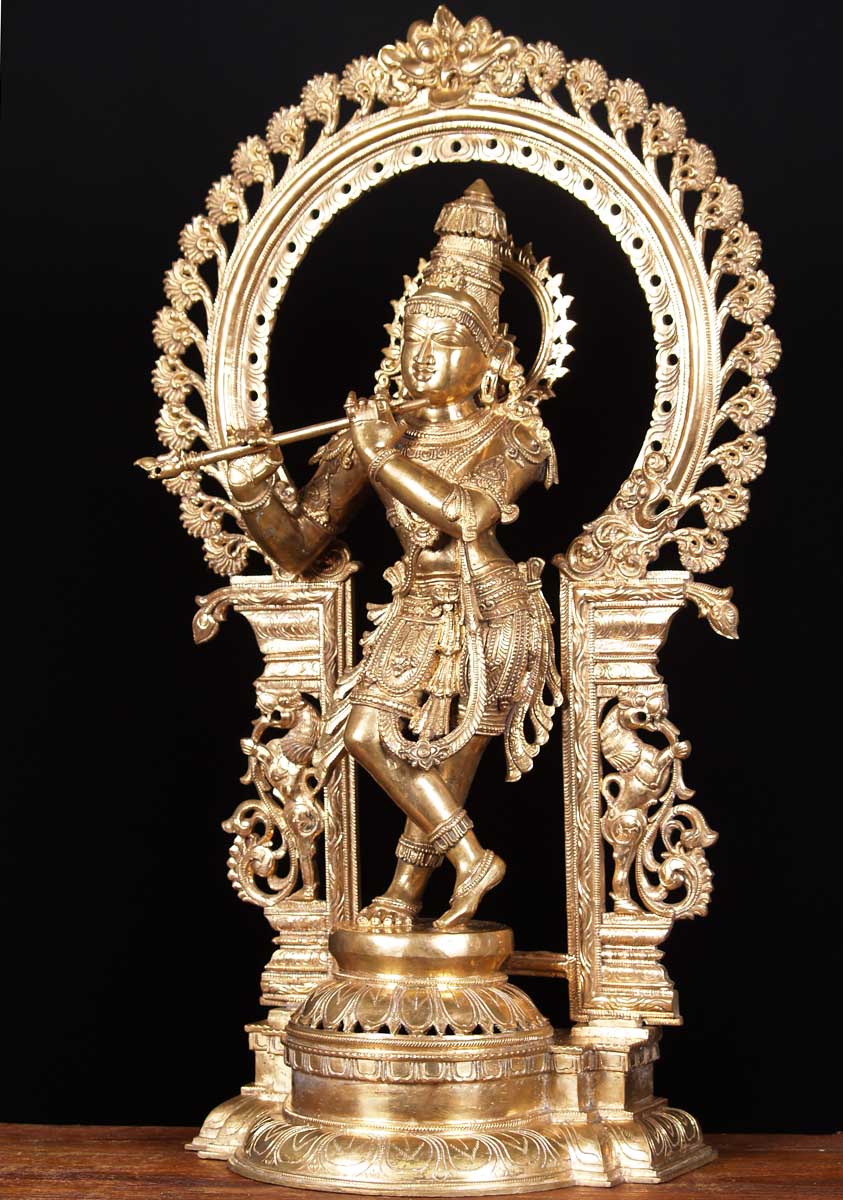
Shri Krishna as the name means – He is the one who is capable of attracting everyone. The name Krishna also means absolute truth. Lord Krishna is the eighth and most famous avatar of Lord Vishnu who is symbolized as the best example of truth, love, dharma, and courage.
One of the most widely revered and most popular of all Indian divinities is Krishna, worshiped as the eighth incarnation (avatar) of Vishnu. Lord Krishna became the focus of a large number of devotional cults, which over the centuries have produced a wealth of religious poetry, music, painting, and sculpture.
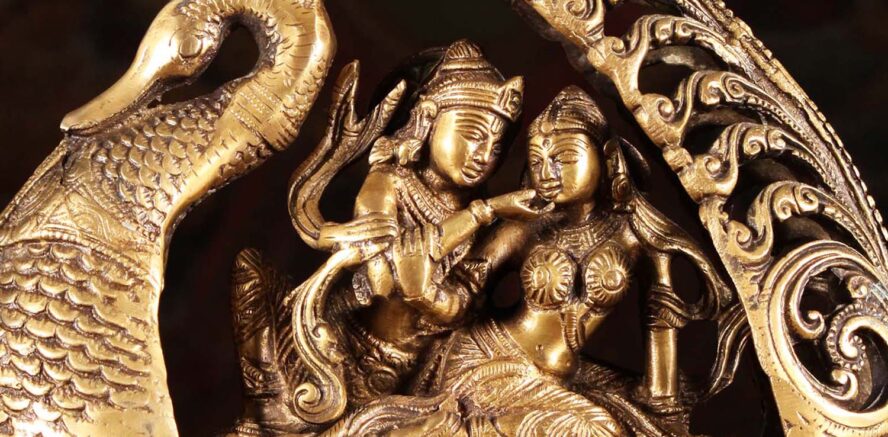
Krishna affirms life in his pranks, music, and lovemaking
The rich variety of legends associated with Krishna’s life led to an abundance of representation in painting and sculpture. The divine lover (the most common representation) is shown playing the flute, surrounded by adoring gopis.
Here, are some of the most popular mantras of Shri Krishna used by devotees all over the world.
1. Moola Mantra
“Om Krishnaya Namaha“
Meaning: Salutations to the Lord Krishna
2. Krishna Gayatri Mantra: This mantra brings in high energy for activities and success in the job.
“Aum Devkinandanaye Vidmahe Vasudevaye Dhi-Mahi Tan No Krishna Prachodayat Aum“
“Aarti Yugal Kishor ki Kijai, Radhe Tan Man dhan nyochhavar kijai. Ravi shashi koti badan ki shobha, Tahi nirakh mera man lobha. Gaur Shyam mukh nirkhat rijhai, Prabhu ko rup nayan bhar pijai. Kanchan thar kapur ki bati, Hari aye nirmal bhai chhati. Phulan ki sej phulan ki mala, Ratna sinhasan baithe Nandlala. Mor mukut kar murli sohai, Natwar vesh dekh manmohe. Oddhe peet neel pat sari, Kunj Bihari Girvardhari. Shri Purshottam Girvar dhari, arti karat sakal Brajanari. Nandnandan Vnishabhanu Kishori, Parmanand svami avichal jori.“
6. Hare Krishna Maha-Mantra: It is a 16-word Vaishnava mantra, the most famous mantra of Lord Krishna, which first appeared in the Kali-Santarana Upanishad.
“Hare Krishna, Hare Krishna, Krishna Krishna, Hare Hare Hare Rama, Hare Rama, Rama Rama, Hare Hare“
Meaning: I memorize the Lord in his infant form (Mukunda), who sleeps in a Banyan leaf. He is the one who puts his lotus life feet to His mouth, with the help of His hands.
Meaning: I sing the praise of Ramachandra, Who is known as Achyuta (infallible), Keshav, Raam, Narayan, Krishna, Damodara, Vasudeva, Hari, Shridhara (possessing Lakshmi), Madhava, Gopikavallabha (Dearest of Gopika), and Janakinayaka (Lord of Janaki or Sita).
Meaning: I memorize the Lord in his infant form (Mukunda), who sleeps in a Banyan leaf. He is the one who puts his lotus life feet to His mouth, with the help of His hands.
Meaning: I offer my respect to Shri Radha rani, who has a molten gold complexion. O Goddess, You are the queen of Vrindavana, the daughter of King Vrishabhanu, and are very dear to Lord Krishna.
Meaning: Radha rani is a resident of Goloka, known as Vrindavan, and is a cowherd damsel. She is the queen of the gopis and the divine mother of the cowherd boys. She is joyful and always experiencing the highest bliss. She incites strong desires in the heart of the son of Nanda (Lord Krishna).
8. Sree Krishna Stuthi – Sandhyanaamam: This stuti is written by the famous devotee Poothanam, praising Lord Krishna.
Meaning: I salute you, pretty Krishna, who is black and who carries Lakshmi with folded hands. Hey happy Krishna, who is decorated. He is also known as Vasudeva, Be pleased to take away all my sorrows.
Hey Krishna who presides all over the universe and who is the consort of Lakshmi, Please appear before me, Hey Krishna who is the only lord of fourteen worlds, You are the one, who fills all the ten directions fully,
Oh lotus-eyed Krishna, who is the baby cowherd, Be pleased to come and live inside me, Oh Krishna, who has taken birth on this earth, Please help me to live without any problems.
Oh Krishna, you should put out the raging, Problems of my heart, oh my baby Krishna, Oh Krishna who is equal to the formidable Banasura, I salute you with the greatest happiness.
Oh Krishna I do not have any desire, And alas I do not have any desire, And Oh Krishna the curiosity within me is great, To see the beauty of your body, Oh Krishna
Oh Krishna, along with the music of your flute with drum beats, Oh Lad of the cowherds, please come running to me, Oh pretty and charitable Krishna, who is playful, There is no comparison at all for your qualities.
I salute your lotus-like feet with love for you, Oh Lord with lotus-like eyes, Oh most pretty one, Ok Krishna, oh son of Nanda, Please drive away my problems and take care of me.
Oh cloud colored Krishna, Oh star of the clan of Vrushnees, Oh Krishna with lotus-like eyes, I salute you, Victory to Krishna who is hari, Victory to Krishna who is Hari, Victory to Krishna, who is Hari
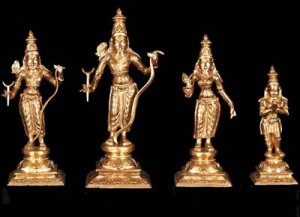
Bronze Lord Ram Set with Lakshmana, Sita and Hanuman
Shri Ram is the seventh incarnation of Lord Vishnu, is one of the most worshiped deity by Hindus in India. Diwali, the festival of lights, is probably the most celebrated and biggest festival, and is observed by Hindus, Buddhist, Jain’s and Sikhs, commemorates Lord Ram’s victory over the demon king, Ravan, and the return to his kingdom Ayodhya after completing his 14-year exile.
Purpose of the incarnation: The purpose of incarnation of Vishnu was to slay the demon Ravan, the king of Lanka. Ravan acquired a boon from Lord Brahma, which made him invincible and indestructible by Devas (The Gods) or Asuras (The demons). The sages were put into great misery and hardship by this demon and it became necessary to put an end to his reign, this lead lord Vishnu to to the earth as a man as only a human can slay the demon Ravan.
Sri Ram: According to the great epic Ramayan, Ram was born in Treta Yug (era), as the son of Dasharatha, the king of Ayodhya. Dasharatha had three wives and four sons, Ram being the eldest and his mother was Kaushalya. He was an ideal son, and idol of chivalry, prowess and virtue. Ram and his brother, Lakshman grew up to the princely stature and became masters of all weapons under the guidance of the great sage Viswamitra. In the mean time, Ram got married to Sita, daughter of Janaka, the princess of Mithila, and Lakshman marries Urmila, sister of Sita. Dasharatha was planning for the coronation of Rama as the king of Ayodhya, but he was in extreme agony, when this idea was strongly objected by Kaikeyi, one of his wives, as she wanted her son, Bharath to become the king. She also demanded that Ram must not enter the kingdom without completing 14 years of exile.
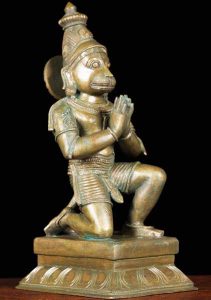
View all our Lord Hanuman Statues
Exile: Knowing the demands of his step-mother, Ram agreed to go for the exile and ignoring his contempt Lakshman and Sita joins him. Even though, Urmila wanted to accompany her husband, Lakshman. However, Lakshman refuses the wish and assigns her to take care of his parents. Though disappointed, the broad minded Urmila accepts her husband’s orders and stays back to look after the old in-laws. During the period of exile, Ram meets Lord Hanuman, the great monkey, who is a true devotee of Ram. During his exile, Lord Hanuman protected the Saints from the vindictive actions of the demons.
During the exile, Ram settled in a calm and beautiful place, Panchavadi and lived a happy life. In the mean time, Surpanakha, the sister of Ravan, meets the charming brothers and becomes so attracted to Ram and proposes to marry him. Ram denies the request, and asks her to propose his brother, who is alone without a wife. Surpanakha follows Ram’s advice, but Lakshman rejects her, and this makes her angry. The outraged demon tries to harm Sita as she considers Sita to be the obstacle that prevents her from getting the love of Ram. Ram saved Sita and asks Lakshman to teach Surpanakha a lesson. Lakshman attacked her with his sword causing injuries to her nose and breast.
Disgraced and mutilated, Surpanaka, thirsty to take revenge, complains to her brother about the attack and how she was insulted by the two handsome princes. Ravan came to know about the immense love Ram had for Sita and this made the clever Ravan think of separating Sita from Ram, as Ram will not be able to bear the departure of his love. Ravan in his golden chariot reaches the ashram of Maricha and seeks his help to work out his plan. Maricha first denies the request for help from Ravan, but coming under the pressure of his king, finally he agrees to help him. Maricha gets killed by Ram, during the abduction, while Ravana succeeds in kidnapping Sita away from the ashram.
Ravan was much enchanted by the beauty of Sita, and pleaded her to marry him. However, Sita denied the powerful demon. She was taken to Lanka, where she spent her days alone in her beloved memories and wept. Ram was so desperate, and began to search for Sita everywhere. Finally he meets Jedayu, who witnessed the cruel act of Ravan. Jedayu reveals Ram that she was taken to Lanka in a flying golden chariot. With the help of Hanuman and army of monkeys, Ram constructs a floating bridge “Ram Setu” to Lanka and reaches Lanka to regain his kidnapped wife. After a ferocious war, which lasted for many days, ended with the carnage of Ravan, and Ram got his wife back, safe and sound.
Return to Ayodhya: After 14 years of exile, Ram, Sita along with Lakshman reaches Ayodhya and resumes the throne, as per the wish of Bharath, who was ruling the empire on behalf of Ram. The death of Ravan restored peace and happiness to the world. People began to worship Ram and it still continues. You can find a lot of temples around the world where Ram is the main idol of devotion.
You can easily identify statues of Lord Rama. He is always depicted in a standing position, with a bow and arrow in his left and right hands respectively. He always carries a quiver on the back and is normally accompanied by Sita, Lakshman and Hanuman. He will be always be wearing princely adornments.
Ram and Sita started to live a happy life again, but the fate was cruel to Sita, as the people of Ayodhya began to talk ill about her. Ram who was an ideal ruler, felt unhappy to know that his people doubt about the innocence of his wife. Finally, he decides to leave Sita, even though she proves her loyalty in the fire ordeal.
Even though, Sita was so devoted and loyal to Ram, she had to live a lonely life. Urmila is often considered as a forgotten heroine since no one values her sacrifice as she sacrificed her valuable 14 years away from her husband for the sake of Ram and Sita.
After reviewing all these points, whom can we consider as the real leading lady – Sita or Urmila?
Like many of the Hindu deities, Hindu God Shiva is said to have many Avatars. One such Avatar is that of Virabhadra. Virabhadra is said to have been born when Shiva grabbed a lock of his own hair and threw it upon the ground. He was a powerful being created by Shivas wrath when we wanted to destroy Dakshas Yagna, or fire sacrifice.
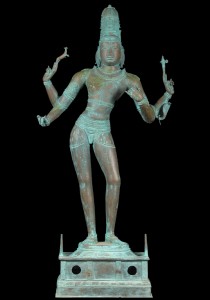
View All Our Hindu God Shiva Statues
Legend has it that Dashkas youngest daughter Sati set her sights on Shiva at a young age. When she was at an age to marry, Dashka invited all the gods and princes together to find a suttor for her, leaving out Shiva. Furious that he did not invite the one she loved, Sati threw her wreath into the air calling upon Shiva. Shiva appeared with the wreath around his neck, forcing Dashka to allow her to marry her. Disapproving of the match however, Dashka again omitted Shivas attendance to a great fire sacrifice. Sati, out of fury, confronted her father. She condemned his actions and fell dead at her father’s feet.
When Shiva heard of this, he became enraged. Out of anger, her tore out a lock of his hair that with glowing with his furious energy. At this moment Virabhadra was born. His tall menacing body had a thousand arms, 3 burning eyes, and fiery hair. He was draped in skulls and carried unfathomable weapon. Shiva instructed him to destroy the fire sacrifice of Daksha and sever Daksha’s head. Vuraghadra is a said to be a tremendous warrior causing other gods to flee the battle field whenever he appears. No gods are a match to his fury and strength in battle.
For a limited time we are offering free UPS Ground shipping on all orders within the 48 States. International customers will receive a 40% discount off the price of shipping. This discount will be extended to our Canadian customers as well!
Items weighing over 150 pounds including packing materials will be shipped using a freight service. Domestic Freight will be discounted by 35%!